The moped theory test in Ireland (AM) asks 40 questions in 45 minutes, and 35 correct answers pass it, so 5 mistakes are allowed. It covers licence categories AM, A1, A2 and A. A moped learner permit starts at 16. Source: Citizens Information, page edited 6 May 2026, checked on 15 September 2026.

Official format

The test format

The format of the real test, with the source and the date we checked it.

Theory test formats
TestQuestionsMinutesCorrect to pass
Motorcycle and moped (AM)404535

Source: Motorcycle and moped (AM), 2026-05-06, checked on 2026-09-15

Study areas

What the moped theory test covers

Every question in our bank for this test, grouped by the study area it belongs to.

Before you book

What you need to know

Test fee

€45

Source: Prometric Ireland Ltd (Driver Theory Test Service), Driver Theory Test Car or Bike, dated 2025-02-20, checked on 2026-09-15

Licence categories covered

A, A1, A2 and AM

Source: Prometric Ireland Ltd (Driver Theory Test Service), Driver Theory Test FAQs, dated 2026-08-14, checked on 2026-09-15

Minimum age, category AM (mopeds and light quadricycles)

16 years

Source: Citizens Information, Categories of motor vehicles and minimum age of drivers in Ireland, dated 2025-07-07, checked on 2026-09-15

Legal minimum ages for a driving licence or learner permit, Reg. 9(1) of S.I. No. 537 of 2006 as substituted

A1, AM or W 16; B, BE 17; A2, C1, C1E 18; A 20; C, CE, D1, D1E 21; D, DE 24 years

Source: Irish Statute Book, Road Traffic (Licensing of Drivers) (Amendment) (No. 2) Regulations 2011, S.I. No. 483 of 2011, reg. 2(d), substituting Reg. 9 of S.I. No. 537 of 2006, undated, checked on 2026-09-15

Age below which no vehicle may be used in a public place (Citizens Information learner permit page)

16 years

Source: Citizens Information, Learner driving permits for cars and work vehicles, dated 2025-09-29, checked on 2026-09-15

First learner permit, all categories

A theory test pass is needed before a first learner permit in any category

Source: Citizens Information, Learner driving permits for cars and work vehicles, dated 2025-09-29, checked on 2026-09-15

Motorcycle Initial Basic Training (IBT) for a first AM or A1 learner permit

16 hours in 4 modules

Source: Citizens Information, Learner permit rules for specific vehicle categories, dated 2025-09-29, checked on 2026-09-15

Motorcycle learner permit holder with a valid IBT certificate

May ride unaccompanied on public roads; L plates on a yellow fluorescent hi-viz tabard; no passengers; no motorway

Source: Citizens Information, Learner permit rules for specific vehicle categories, dated 2025-09-29, checked on 2026-09-15

Validity from the test date

2 years

Source: Prometric Ireland Ltd (Driver Theory Test Service), Driver Theory Test FAQs, dated 2026-08-14, checked on 2026-09-15

Sample questions

Try some questions

Choose an answer, then open the explanation to see the rule it comes from.

1 of 20
  1. Question 1

    You see a red X beside the lane you are using. Which rule applies?

    • AThe lane remains open to vehicles below 80 km/h
    • BThe signal is advice to change lanes when convenient
    • CTraffic in that lane must not go past the signalCorrect answer
    • DOnly heavy vehicles must leave the lane
    Show the answerHide the answer

    Correct answer: C

    Under regulation 37 of the Road Traffic (Traffic Signs) Regulations 2025, traffic in the lane controlled by a red X must not proceed beyond that signal.

    Citation

    Source: Road Traffic (Traffic Signs) Regulations 2025 (S.I. No. 433 of 2025), Reg. 37, checked on 2026-09-15.

  2. Question 2

    A goods van is unloading beside double yellow lines. How long may it remain there for that purpose?

    • ANo more than 30 minutes from when it parkedCorrect answer
    • BNo more than 10 minutes
    • CNo more than one hour
    • DAs long as unloading continues
    Show the answerHide the answer

    Correct answer: A

    The goods-loading exception in article 5 permits parking on double yellow lines for loading or unloading for no more than 30 minutes.

    Citation

    Source: Road Traffic (Traffic and Parking) Regulations 1997 (S.I. No. 182 of 1997), Article 5(4), as substituted by S.I. No. 274 of 1998, reg. 5, checked on 2026-09-15.

  3. Question 3

    One of these signs tells traffic to keep straight ahead. Which one?

    • ASign A
    • BSign B
    • CSign C
    • DSign DCorrect answer
    Show the answerHide the answer

    Correct answer: D

    Sign D is the keep straight ahead sign. Under Regulation 4(1) of the Road Traffic (Traffic Signs) Regulations 2025 a mandatory sign shows the route traffic must take, and this one, in Part 1 of Schedule 1, requires traffic to go straight on rather than turn.

    Citation

    Source: Road Traffic (Traffic Signs) Regulations 2025 (S.I. No. 433 of 2025), Regulation 4(1)(a); Schedule 1, Part 1, checked on 2026-09-16.

  4. Question 4

    You are in a shared zone. A pedestrian steps off the kerb in the middle of the street in front of you. What must you do?

    • ASound the horn because pedestrians must keep to the edges
    • BYield to the pedestrianCorrect answer
    • CContinue, because drivers have priority if they slow down
    • DContinue unless the pedestrian is at a marked crossing
    Show the answerHide the answer

    Correct answer: B

    In a shared zone pedestrians may step onto the road at any point, and drivers must yield to them. Article 45A of the Road Traffic (Traffic and Parking) Regulations 1997, inserted in October 2025, does not keep pedestrians to the edges or to marked crossings, and slowing down does not give you priority.

    Citation

    Source: Road Traffic (Traffic and Parking) Regulations 1997 (S.I. No. 182 of 1997), Article 45A, inserted by S.I. No. 473 of 2025, reg. 2(n), checked on 2026-09-15.

  5. Question 5Road sign

    Ahead, a splitter island divides the traffic stream and this sign stands at its near end. How do you read this sign?

    • ATurn left at the junction ahead
    • BYield right of way to traffic on the major road ahead
    • CNo entry for vehicles
    • DYou may pass the sign on either sideCorrect answer
    Show the answerHide the answer

    Correct answer: D

    You are looking at the pass either side sign. Listed in Part 1 of Schedule 1 to the Road Traffic (Traffic Signs) Regulations 2025, it is a mandatory sign under Regulation 4(1) and shows that traffic may go by on the left or on the right.

    Citation

    Source: Road Traffic (Traffic Signs) Regulations 2025 (S.I. No. 433 of 2025), Regulation 4(1)(a); Schedule 1, Part 1, checked on 2026-09-16.

  6. Question 6

    You are riding a motorcycle on a public road. What does the law require you to wear?

    • AA crash helmetCorrect answer
    • BA high-visibility jacket
    • CArmoured trousers
    • DMotorcycle boots
    Show the answerHide the answer

    Correct answer: A

    Article 10 of the 1978 crash helmet regulations requires a motorcycle rider in a public place to wear a crash helmet.

    Citation

    Source: Road Traffic (Construction, Equipment and Use of Vehicles) (Amendment) (No. 2) Regulations 1978 (S.I. No. 360 of 1978), Article 10, checked on 2026-09-15.

  7. Question 7

    At night on a narrow local road, a blind bend hides the road ahead. What does the 60 km/h default limit mean for the driver's speed?

    • AThe driver should always travel at 60 km/h
    • BIt is a maximum, and the driver must be able to stop in the clear distanceCorrect answer
    • CIt applies only after the blind bend
    • DThe driver may exceed it when the road is quiet
    Show the answerHide the answer

    Correct answer: B

    Traffic and Parking Regulations 1997, Article 7 requires a safe stopping distance within view; the speed limit is not a target.

    Citation

    Source: Road Traffic (Traffic and Parking) Regulations 1997 (S.I. No. 182 of 1997), Article 7, checked on 2026-09-15.

  8. Question 8

    Does the tram lane line work on its own, or with the tram lane sign?

    • AThe line and the tram lane sign work together to indicate a tram laneCorrect answer
    • BIt is an ordinary lane line on its own, with no tram meaning
    • CIt means no overtaking on its own, without any tram lane sign
    • DIt marks the edge of the roadway on its own, without a tram lane sign
    Show the answerHide the answer

    Correct answer: A

    Under Regulation 90 of the Road Traffic (Traffic Signs) Regulations 2025, the nearside or offside tram lane sign, in association with the tram lane line, indicates a tram lane. The line is not an ordinary lane line, a no overtaking marking, or an edge marking.

    Citation

    Source: Road Traffic (Traffic Signs) Regulations 2025 (S.I. No. 433 of 2025), Regulation 90(1), (4), checked on 2026-09-15.

  9. Question 9

    You have received your first motorcycle learner permit but have not started IBT. When may you ride on a public road?

    • AWhenever a full licence holder follows you
    • BOnly during daylight
    • CAfter completing the first IBT module
    • DOnly while taking part in an IBT courseCorrect answer
    Show the answerHide the answer

    Correct answer: D

    Regulation 4(1) of the 2011 Motorcycle Courses Regulations allows road riding before certification only as part of the IBT course.

    Citation

    Source: Road Traffic (Courses of Instruction) (Motorcycles) Regulations 2011 (S.I. No. 681 of 2011), Regulation 4(1), as amended by S.I. No. 433 of 2018, checked on 2026-09-15.

  10. Question 10

    A lane control signal shows a red X over your lane. What must you do at that signal?

    • AContinue if the lane ahead looks clear
    • BDo not proceed past the signal in that laneCorrect answer
    • CPass the signal and then move left
    • DStop only if another vehicle is ahead
    Show the answerHide the answer

    Correct answer: B

    Regulation 37 of the Road Traffic (Traffic Signs) Regulations 2025 makes a red X a prohibition on proceeding past the signal in the lane it controls.

    Citation

    Source: Road Traffic (Traffic Signs) Regulations 2025 (S.I. No. 433 of 2025), Reg. 37, checked on 2026-09-15.

  11. Question 11

    You drive while disqualified and are convicted. What penalty can the court impose?

    • APenalty points with no fine or prison sentence
    • BA fine of up to €5,000, up to 6 months in prison, or bothCorrect answer
    • CA fine of up to €1,000 with no prison sentence
    • DUp to 3 months in prison with no fine
    Show the answerHide the answer

    Correct answer: B

    Section 12 of the Road Traffic Act 2006 sets the penalty for driving while disqualified at a fine of up to €5,000, imprisonment for up to 6 months, or both.

    Citation

    Source: Road Traffic Act 2006 (No. 23 of 2006), Section 12, substituting section 38 of the Road Traffic Act 1961 (subsection (5)), checked on 2026-09-15.

  12. Question 12Road sign

    On a one-way street, this sign stands at the approach end of a traffic island. Which side must you pass?

    • AOn either side when the road is clear
    • BThe sign applies to cyclists only
    • CThe sign marks the edge of the road
    • DTo the right of the signCorrect answer
    Show the answerHide the answer

    Correct answer: D

    The keep right sign is a mandatory sign under Regulation 4 of the Road Traffic (Traffic Signs) Regulations 2025, Schedule 1, Part 1. Traffic must pass to the right of the sign. That is a different sign from keep left. It is not optional when the road is quiet, not limited to cyclists, and not an edge marking.

    Citation

    Source: Road Traffic (Traffic Signs) Regulations 2025 (S.I. No. 433 of 2025), Regulation 4(1)(a); Schedule 1, Part 1, checked on 2026-09-15.

  13. Question 13

    A group of pedal cyclists is riding along a country road. How many may ride side by side?

    • AThree abreast on a wide road
    • BSingle file at all times
    • CNo more than two abreastCorrect answer
    • DAny number on a quiet road
    Show the answerHide the answer

    Correct answer: C

    Pedal cyclists and e-moped users must not ride more than two side by side, except while overtaking other cyclists or e-moped users where that does not endanger or obstruct anyone. Article 47 of the Road Traffic (Traffic and Parking) Regulations 1997 does not require single file at all times, and it does not raise the limit on a wide or quiet road.

    Citation

    Source: Road Traffic (Traffic and Parking) Regulations 1997 (S.I. No. 182 of 1997), Article 47, as substituted by S.I. No. 473 of 2025, reg. 2(p), checked on 2026-09-15.

  14. Question 14

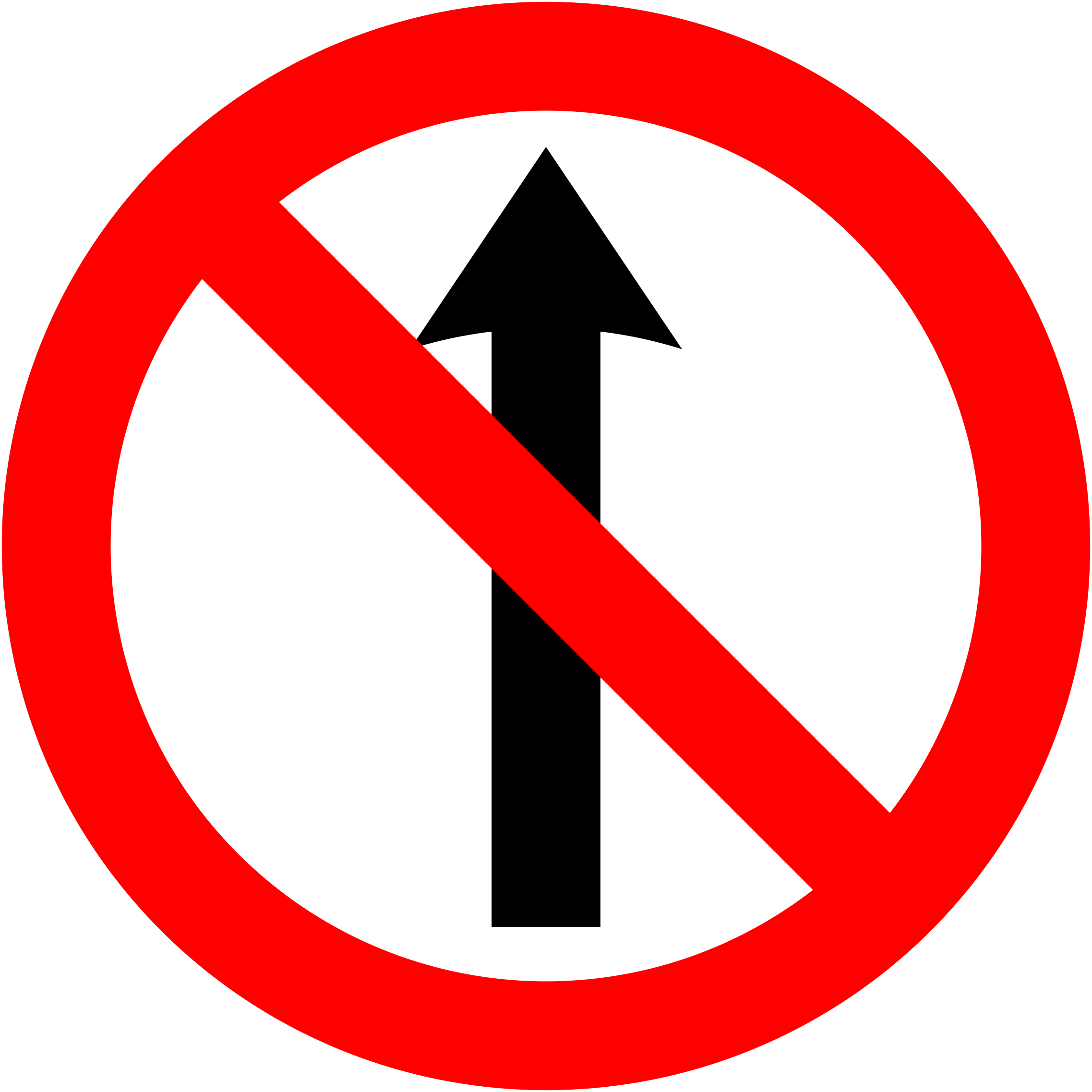
    Which sign bans going straight ahead?

    • ASign A
    • BSign B
    • CSign C
    • DSign DCorrect answer
    Show the answerHide the answer

    Correct answer: D

    Sign D is the no straight ahead sign. It is a prohibitory sign in Part 1 of Schedule 2 to the Road Traffic (Traffic Signs) Regulations 2025. Under Regulation 14(2)(a) a vehicle must not go in the direction of the arrow shown, which here is straight on.

    Citation

    Source: Road Traffic (Traffic Signs) Regulations 2025 (S.I. No. 433 of 2025), Regulation 14(2)(a); Schedule 2, Part 1, checked on 2026-09-16.

  15. Question 15

    You ride a bicycle on a public road during lighting-up hours. Which lamps must be lit?

    • AA white or yellow front lamp and a red rear lampCorrect answer
    • BA red front lamp and a white rear lamp
    • CA white front lamp with reflectors instead of a rear lamp
    • DLamps only when the road has no street lighting
    Show the answerHide the answer

    Correct answer: A

    The 1963 Lighting Regulations, article 29(1), (3), (4), require a lit white or yellow front lamp and a lit red rear lamp on a bicycle ridden during lighting-up hours.

    Citation

    Source: Road Traffic (Lighting of Vehicles) Regulations 1963 (S.I. No. 189 of 1963), Article 29(1), (3), (4), checked on 2026-09-15.

  16. Question 16

    A driver's blood contains cannabis at or above the set level, but the driving appeared normal. Can the set-level offence apply?

    • AYes, proof of impaired driving is not requiredCorrect answer
    • BNo, poor control must always be proved
    • CNo, unless alcohol is also present
    • DYes, but only after a collision
    Show the answerHide the answer

    Correct answer: A

    Road Traffic Act 2010, section 4 provides a set-level drug offence that does not depend on proof that driving was impaired.

    Citation

    Source: Road Traffic Act 2010 (No. 25 of 2010), as amended by the Road Traffic Act 2016 (No. 21 of 2016), Section 4(1A) and (1B), checked on 2026-09-15.

  17. Question 17

    For a holder under 65, how long does a full car, motorcycle, moped or tractor licence normally run?

    • A5 years
    • B10 yearsCorrect answer
    • C3 years
    • DFor the holder's lifetime
    Show the answerHide the answer

    Correct answer: B

    Regulation 10(2), inserted by regulation 3 of the Road Traffic (Licensing of Drivers) (Amendment) Regulations 2022, gives these full licence categories a normal duration of 10 years for a holder under 65.

    Citation

    Source: Road Traffic (Licensing of Drivers) (Amendment) Regulations 2022 (S.I. No. 53 of 2022), Regulation 3, inserting Regulation 10(2) of S.I. No. 537 of 2006, checked on 2026-09-15.

  18. Question 18

    A no overtaking sign applies to the stretch of road you are using. What must you do?

    • ADo not overtake on that stretchCorrect answer
    • BOvertake only on the left
    • COvertake only during daylight
    • DOvertake only one vehicle at a time
    Show the answerHide the answer

    Correct answer: A

    Article 10(3) of the Road Traffic (Traffic and Parking) Regulations 1997 prohibits overtaking on a road stretch to which a no overtaking sign applies.

    Citation

    Source: Road Traffic (Traffic and Parking) Regulations 1997 (S.I. No. 182 of 1997), Art. 10(3), as substituted by S.I. No. 473 of 2025, reg. 2(c), checked on 2026-09-15.

  19. Question 19Road sign

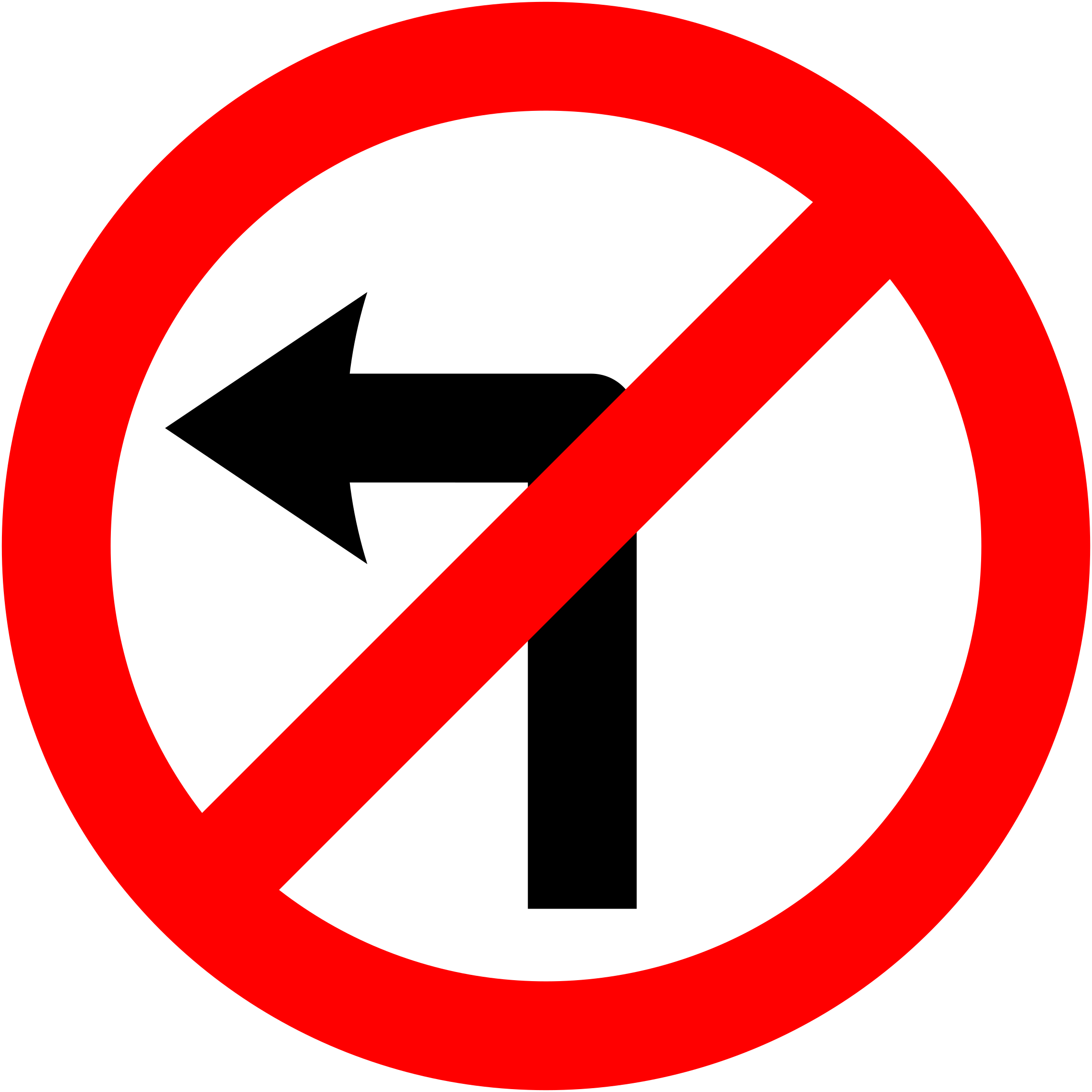
    Driving through a town, you come up to a junction with this sign. What does it mean?

    • AYield right of way to traffic on the major road ahead
    • BA mini-roundabout ahead
    • CStop before entering the major road
    • DVehicles must not turn leftCorrect answer
    Show the answerHide the answer

    Correct answer: D

    That is the no left turn sign. Part 1 of Schedule 2 to the Road Traffic (Traffic Signs) Regulations 2025 lists it as a prohibitory sign. Regulation 14(2)(a) means a vehicle must not go the way its arrow points, which is a left turn.

    Citation

    Source: Road Traffic (Traffic Signs) Regulations 2025 (S.I. No. 433 of 2025), Regulation 14(2)(a); Schedule 2, Part 1, checked on 2026-09-16.

  20. Question 20

    What is a continuous white line along a tram lane?

    • AAn ordinary lane line
    • BA no overtaking line
    • CThe edge of the roadway
    • DThe tram lane lineCorrect answer
    Show the answerHide the answer

    Correct answer: D

    Regulation 90 of the Road Traffic (Traffic Signs) Regulations 2025 provides that the tram lane line is a continuous white line which, with the tram lane sign, indicates a tram lane. It is not an ordinary lane line, not a no overtaking marking, and not an edge of roadway marking.

    Citation

    Source: Road Traffic (Traffic Signs) Regulations 2025 (S.I. No. 433 of 2025), Regulation 90(1), (4), checked on 2026-09-15.

There is no separate moped paper: a moped is category AM, and category AM sits the motorcycle theory test. The pass covers the whole motorcycle group, so the standard does not drop because the machine is small. What is genuinely different about a moped is the licence around the test, and that is where this page starts.

The paper you sit is the motorcycle paper

Book a theory test for a moped and you are booking the motorcycle group test, the same one sat by a learner going for a scooter on A1 or a full size motorcycle on A. One certificate comes out of it and it serves the whole group, which is the reason nothing is scaled down for a smaller engine. Say that plainly at the start because the alternative is a rider arriving expecting a short paper about mopeds.

Riders who already hold a car licence often assume it carries over. It does not. The car test covers its own set of categories and AM is not among them, so a moped permit still needs this test even with a full car licence in your pocket. Citizens Information sets out which theory test covers which licence categories, and it is worth reading that table once before paying for anything.

The same point works in your favour going up. The certificate this test produces is the one you would hand in later for an A1 or an A2 permit, so a rider who starts on a moped and moves to a bigger machine does not sit the theory test again, as long as the certificate is still in force when that permit application goes in. Riders who leave it too long pay twice.

What category AM covers, and how young you can start

Category AM is the licence category for mopeds and light quadricycles. In the age table set by the Road Traffic (Licensing of Drivers) (Amendment) (No. 2) Regulations 2011 it sits on the entry rung alongside A1 and category W, which is why a moped is the first motor vehicle most people in Ireland can legally ride on a public road.

Below that entry age no vehicle may be used in a public place at all. The age attaches to using the vehicle, not to owning it, and nothing about the moped itself moves it: a slow machine on a quiet road is a motor vehicle as far as the licence table is concerned, and a field or a yard is not the escape hatch people think it is once the public has access to it.

One limit shows up the moment the licence is in your hand rather than while you are learning. The Roads Regulations 1994 let a vehicle onto a motorway only where it can hold 50 kilometres per hour on the level and, where an internal combustion engine drives it, only where that engine is over 50 cc. Most mopeds fail on one limb or the other. So the motorway rule a car learner reads as a temporary restriction is a standing one for a moped, and questions about motorway use are worth reading with that in mind.

The order of the steps, and where the theory pass sits

The theory test comes first. A pass is the precondition for a first learner permit in any category under the Road Traffic (Licensing of Drivers) Regulations 2006, so the moped sequence runs theory test, then learner permit, then initial basic training with an approved instructor. People lose weeks by doing it in the wrong order, usually by buying the machine first and then discovering they cannot ride it home.

Initial basic training is the step moped riders most often underestimate. It is not a formality and it is not an afternoon: the modules for AM and A1 run in a set order and finish on the road. The Road Traffic (Courses of Instruction) (Motorcycles) Regulations 2011 also require you to carry the certificate while riding, so it is a document that lives in your jacket rather than in a drawer at home.

After that the permit conditions apply, and they are the ones named above rather than the car ones. This is the part a car learner never has to think about: there is nobody in a passenger seat to catch a misread junction, because there is no passenger seat. Every early mistake is made alone. That is the honest argument for doing the reading before the permit rather than after it. The mock test and the practice sets on this page run on the same category the exam runs on, so the time goes into the paper you will actually sit.

Sources

Source: Citizens Information, Categories of motor vehicles and minimum age of drivers in Ireland, checked on 2026-09-16

Source: Citizens Information, Driver theory test, checked on 2026-09-16

Source: Citizens Information, Learner permit rules for specific vehicle categories, checked on 2026-09-16

Source: Irish Statute Book, Road Traffic (Licensing of Drivers) (Amendment) (No. 2) Regulations 2011, reg. 2(d), checked on 2026-09-16

Source: Irish Statute Book, Road Traffic (Licensing of Drivers) Regulations 2006, reg. 20(5)(a)(v), checked on 2026-09-16

Source: Irish Statute Book, Road Traffic (Courses of Instruction) (Motorcycles) Regulations 2011, regs. 3 and 4, checked on 2026-09-16

Source: Irish Statute Book, Roads Regulations 1994, art. 7(2), checked on 2026-09-16
FAQ

Moped theory test: questions people ask

How many questions are on the moped theory test, and how many do you need to pass?

The moped theory test has 40 questions in 45 minutes, and you pass with 35 correct answers.

Source: Prometric Ireland Ltd (Driver Theory Test Service), Driver Theory Test FAQs, dated 2026-08-14, checked on 2026-09-15

How much does the moped theory test cost?

The test fee is €45. No limit on the number of attempts; the fee is paid each time.

Source: Prometric Ireland Ltd (Driver Theory Test Service), Driver Theory Test Car or Bike, dated 2025-02-20, checked on 2026-09-15

Source: Prometric Ireland Ltd (Driver Theory Test Service), Driver Theory Test FAQs, dated 2026-08-14, checked on 2026-09-15

Which licence categories does the moped theory test cover?

One pass of this test covers licence categories A, A1, A2 and AM.

Source: Prometric Ireland Ltd (Driver Theory Test Service), Driver Theory Test FAQs, dated 2026-08-14, checked on 2026-09-15

What is the minimum age to drive in the moped categories?

The minimum age for category AM (moped) is 16 years.

Source: Citizens Information, Categories of motor vehicles and minimum age of drivers in Ireland, dated 2025-07-07, checked on 2026-09-15

Can you take the moped theory test in Irish?

Yes, the test is available in Irish as well as English.

Source: Prometric Ireland Ltd (Driver Theory Test Service), Driver Theory Test FAQs, dated 2026-08-14, checked on 2026-09-15

What training do you need after the moped learner permit?

For a first AM or A1 learner permit, Initial Basic Training (IBT) is 16 hours in 4 modules.

Source: Citizens Information, Learner permit rules for specific vehicle categories, dated 2025-09-29, checked on 2026-09-15

What can you do on a moped learner permit once IBT is done?

With a valid IBT certificate you may ride unaccompanied on public roads. The conditions that still apply: L plates on a yellow fluorescent hi-viz tabard, no passengers and no motorway.

Source: Citizens Information, Learner permit rules for specific vehicle categories, dated 2025-09-29, checked on 2026-09-15

What does a moped learner permit cost, and how long does the theory pass last?

A learner permit application to the NDLS costs €45, first time or renewal. Your theory test pass certificate is valid for 2 years from the date of the test.

Source: National Driver Licence Service (NDLS), Fees, undated, checked on 2026-09-15

Source: Prometric Ireland Ltd (Driver Theory Test Service), Driver Theory Test FAQs, dated 2026-08-14, checked on 2026-09-15