Rules of the road is one of the study areas behind the driver theory test in Ireland, where the car test asks 40 questions in 45 minutes and 35 correct answers pass. This lesson gives the rules, the law behind them and questions on this area. Source: Citizens Information, page edited 6 May 2026, checked on 15 September 2026.
By the Irish Mock Test teamFacts checked 15 September 2026How we check facts
The theory test asks how Irish traffic law works in ordinary situations: which limit applies where there is no sign, who yields at a junction, what a stop line means, what you must produce when a Garda stops you. Each rule below names the provision it rests on.
The rules
Drive on the left, so that oncoming traffic passes on your right and traffic overtaking you also passes on your right.
The junction rules are built on top of it: the side you approach from, and the side a pedestrian checks first.
Outside a built-up area the default is 60 km/h on a local road, 80 km/h on a regional road, 100 km/h on a national road and 120 km/h on a motorway.
Local roads fell from 80 km/h to 60 km/h on 7 February 2025 while regional roads did not change, and a pending cut of some national roads to 80 km/h has not been commenced.
Entering a roundabout you turn left and go round clockwise. At a signed mini-roundabout you must yield to traffic already on it.
No general give way to the right rule for roundabouts sits in the Regulations, so elsewhere priority comes from the yield signs and lines at your entry.
3 questions on the rules above before you read on.
1 of 3
Question 1
You enter a housing estate within a built-up area and no other speed limit is set. Which default applies?
A20 km/h
B30 km/h
C40 km/h
D50 km/hCorrect answer
Show the answerHide the answer
Correct answer: D
The default for a public road in a built-up area is 50 km/h under section 5 of the Road Traffic Act 2004. A different figure applies only where a special or roadworks limit replaces it.
At the entrance to a street you see this sign. What must a driver do?
ANot go past the signCorrect answer
BGo past for a quick delivery
CGo past if you reverse in
DGo past if you are on a motorcycle
Show the answerHide the answer
Correct answer: A
Regulation 24 of the Road Traffic (Traffic Signs) Regulations 2025 provides that, at the entrance to a road, a driver of a vehicle must not go past the no entry sign. A short delivery, reversing in, or being on a motorcycle does not lift that duty unless a separate cyclist plate applies.
The bus priority facility sign over a motorway hard shoulder is not being displayed. What does that tell you?
AThe facility is in operation at all hours, whether or not the sign is displayed
BThe wide yellow line on its own keeps the facility in operation
CThe line means no parking, so the shoulder is reserved in any case
DThe facility is not in operation, because the sign shows when it isCorrect answer
Show the answerHide the answer
Correct answer: D
Under Regulation 10A of the Road Traffic (Traffic Signs) Regulations 2025, as inserted, the bus priority facility sign is operated to display when the facility is in operation, and it is that sign, with the wide continuous yellow line, that indicates the facility. The line does not keep the facility in operation on its own, the sign is not displayed at all hours, and the line is not a no-parking marking.
What must you be able to produce when a Garda stops you?
Your driving licence or learner permit, and your certificate of insurance. If the licence is not with you, produce it at a Garda station that you name within ten days. Sections 40 and 69 of the Road Traffic Act 1961 set that rule and the matching one for insurance.
Which rules of the road changed most recently?
The local road default fell to 60 km/h on 7 February 2025. S.I. No. 473 of 2025 then rewrote the articles on overtaking, cycle tracks, traffic lights, bus lanes and pedestrians, and added shared zones and school streets, so older material on those is out of date.
On the road
A right turn across a yellow box in a town
You are on a town street with no speed limit sign, so the built-up default of 50 km/h applies.
The junction ahead is painted with a yellow box, the light is green, and you want to turn right.
The general rule bars you from entering the box, but the right-turn exception lets you wait inside it, so you move in.
Article 8(7) still applies, so you hold there and yield to oncoming traffic going straight ahead or turning left.
When a gap opens you complete the turn and clear the box, finishing the turn even if the lights change first.
Where learners go wrong
Answering 30 km/h for a built-up area. That change has not been commenced, so the default is still 50 km/h.
Assuming every rural road fell to 60 km/h. Only local roads did, and a regional road is still 80 km/h.
Expecting a give way to the right rule at every roundabout. The yield duty on entry belongs to the signed mini-roundabout.
Treating a default limit as a target. It is the most you may do in good conditions.
Looking for a red and amber phase. The signs Regulations give the lamp colours and no sequence.
Choose an answer, then open the explanation to see the rule behind it.
1 of 17
Question 1
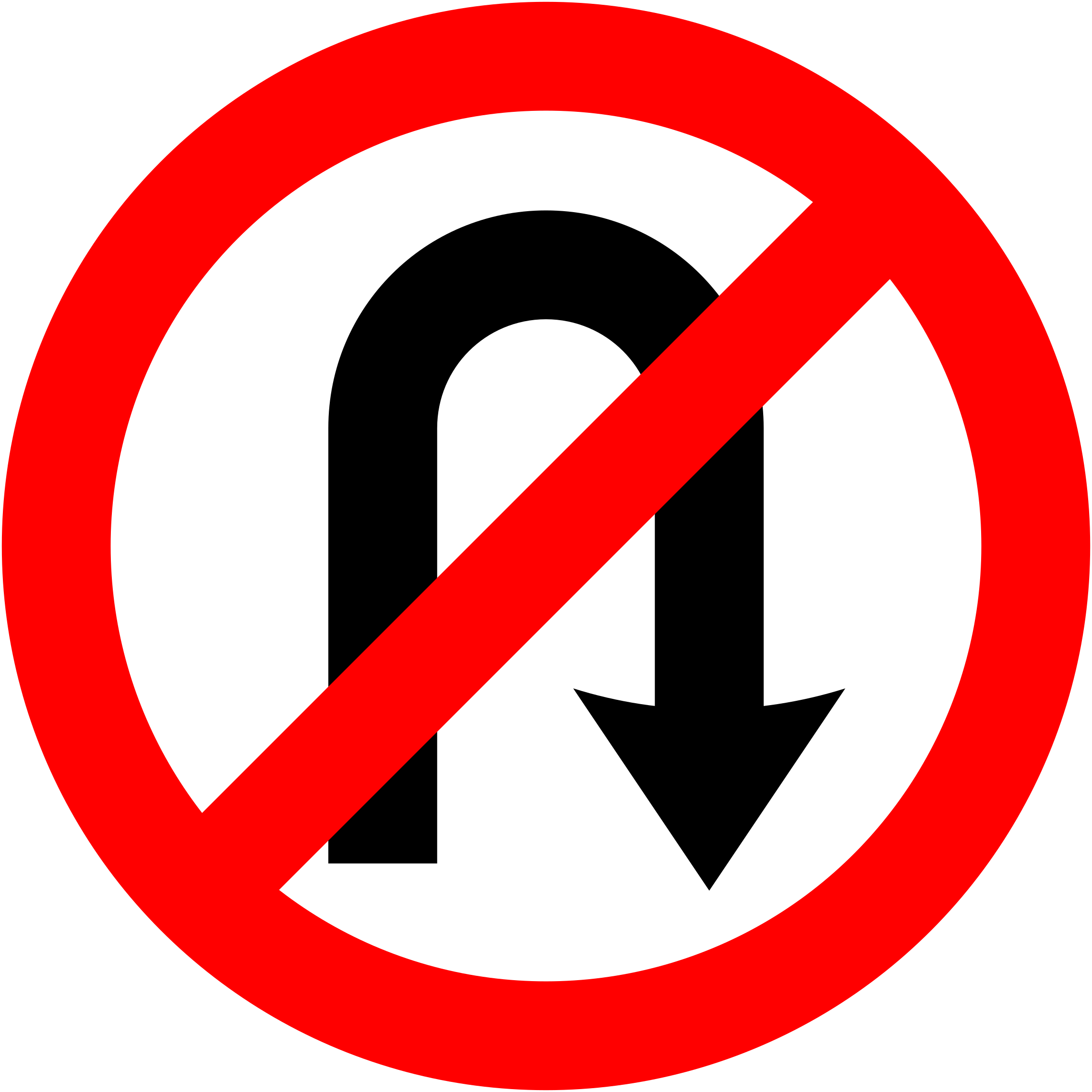
You have driven past the road you wanted on a town street and see this sign. May you turn round past it?
AYes, when the road is clear
BYes, at a gap in a central reserve
CNo, you must not make a U-turn past the signCorrect answer
DThe sign only forbids reversing
Show the answerHide the answer
Correct answer: C
Regulation 14 of the Road Traffic (Traffic Signs) Regulations 2025, Schedule 2, Part 1, makes the no U-turn sign a prohibitory sign: you must not make a U-turn past it. A clear road or a gap in a central reserve does not lift that. The sign forbids the U-turn, not reversing as such.
At the entrance to a one-way system you see this sign, and the right-hand gap looks shorter. Which side must you pass?
AOn either side because the system is one-way
BThe sign applies to cyclists only at this entrance
CTo the left of the signCorrect answer
DThe sign marks the road edge, so the shorter gap is allowed
Show the answerHide the answer
Correct answer: C
Under Regulation 4 of the Road Traffic (Traffic Signs) Regulations 2025, the keep left sign requires traffic to pass to the left of the sign. A shorter gap on the other side does not change that. The sign is not limited to cyclists and it does not mark the edge of the road.
A regional road leaves a built-up area and has no special speed limit. Which default applies beyond the boundary?
A50 km/h
B60 km/h
C70 km/h
D80 km/hCorrect answer
Show the answerHide the answer
Correct answer: D
Once the regional road is outside the built-up area, its default is 80 km/h under section 6(1) of the Road Traffic Act 2004, as substituted by the Road Traffic Act 2024.
You are driving a motor vehicle on a road marked as a cycle street. What overtaking rule applies?
AYou may overtake only cyclists
BYou must not overtake on that stretchCorrect answer
CYou may overtake when no cyclist is present
DYou may overtake below 30 km/h
Show the answerHide the answer
Correct answer: B
Article 10(3) of the Road Traffic (Traffic and Parking) Regulations 1997 bars a motor vehicle driver from overtaking on a cycle street. The exception is for cyclists, e-moped users and e-scooter users.
Which default limit applies to a public road in a built-up area that is not a motorway?
A50 km/hCorrect answer
B40 km/h
C30 km/h
D20 km/h
Show the answerHide the answer
Correct answer: A
Section 5 of the Road Traffic Act 2004 provides a 50 km/h built-up area default. The rule gives way where a special speed limit or roadworks speed limit applies.
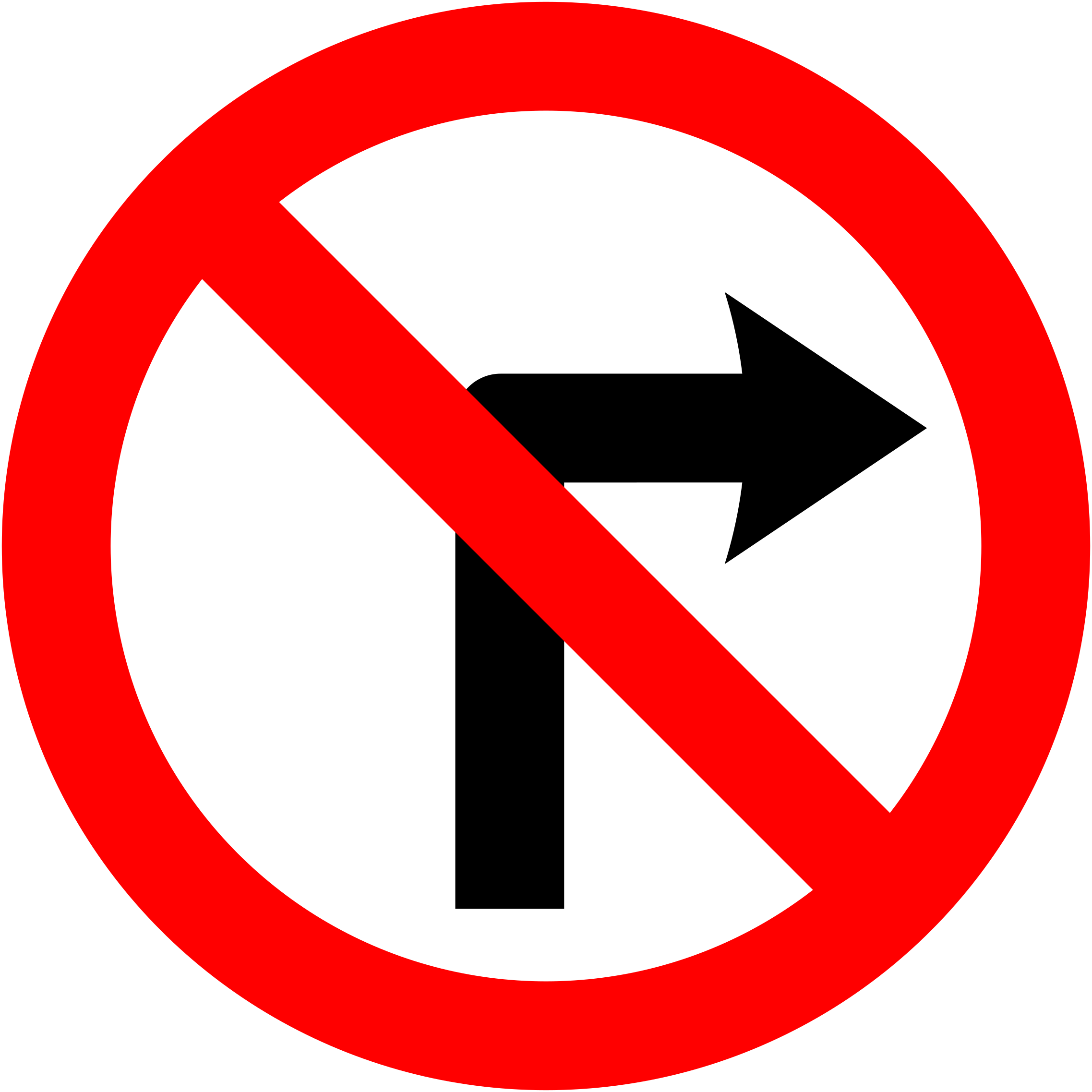
At a junction on a local road, this sign faces you. What manoeuvre must you not make past it?
AThe sign allows a right turn when nothing is coming
BThe sign allows a right turn for a quick drop off
CThe sign applies to large vehicles only
DTurning right past the signCorrect answer
Show the answerHide the answer
Correct answer: D
Regulation 14 of the Road Traffic (Traffic Signs) Regulations 2025, Schedule 2, Part 1, makes the no right turn sign a prohibitory sign: you must not turn right past it. An empty junction, a short drop off, or vehicle size does not lift the prohibition.
A plate under a prohibitory sign on a town street shows hours of the day. What do those hours mean?
AThe period during which the prohibition shown on the sign appliesCorrect answer
BThe fine that applies if you ignore the sign
CThe distance along the street that the sign covers
DThe class of vehicle the prohibition applies to
Show the answerHide the answer
Correct answer: A
Regulation 2 of the Road Traffic (Traffic Signs) Regulations 2025, read with Regulation 14, treats an information plate under a sign as showing the period during which the prohibition or restriction applies, unless the Regulations say otherwise. It does not state a fine, a distance, or the vehicle class. A different plate is used for vehicle class.
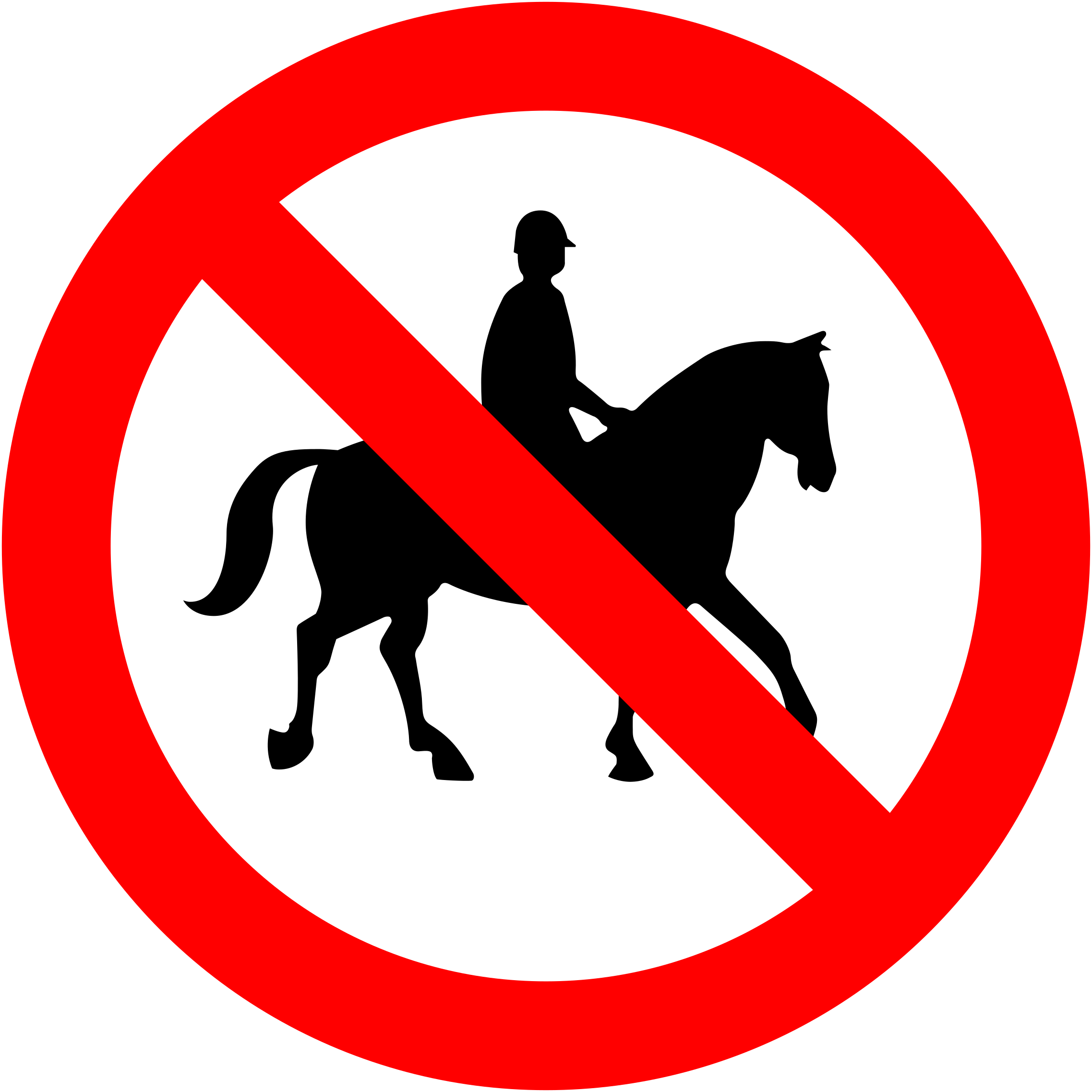
You are on horseback on a rural local road and meet this sign. What applies?
AOnly ridden horses on market days are caught
BThe sign catches dogs on a lead, not horses
CYou must not go past the signCorrect answer
DThe sign applies only on market days
Show the answerHide the answer
Correct answer: C
Regulation 18 of the Road Traffic (Traffic Signs) Regulations 2025 provides that a person riding, leading or driving a horse or animal, or in charge of one, must not go past the sign. A rider on horseback is caught. The sign is not limited to market days.
A white arrow painted in your lane points straight ahead. What must traffic in that lane do?
AGo straight aheadCorrect answer
BTreat the arrow as a suggestion when the lane is empty
CRead it as showing where other traffic will go
DObey it only at traffic lights
Show the answerHide the answer
Correct answer: A
Regulation 60 of the Road Traffic (Traffic Signs) Regulations 2025 provides that a white arrow painted in a lane shows the direction in which traffic in that lane must go. A straight-ahead arrow requires traffic in that lane to go straight ahead. It is not a suggestion, not a hint about other traffic, and not limited to traffic lights.
On which side should you normally overtake, and when should you return to the left?
AOn the left, returning when the other driver signals
BOn either side, returning at the next junction
COn the right, returning to the left only when it is safeCorrect answer
DOn the right, returning as soon as your front wheels pass
Show the answerHide the answer
Correct answer: C
Article 10(4) of the Road Traffic (Traffic and Parking) Regulations 1997 sets overtaking on the right as the general rule and requires a safe return to the left.
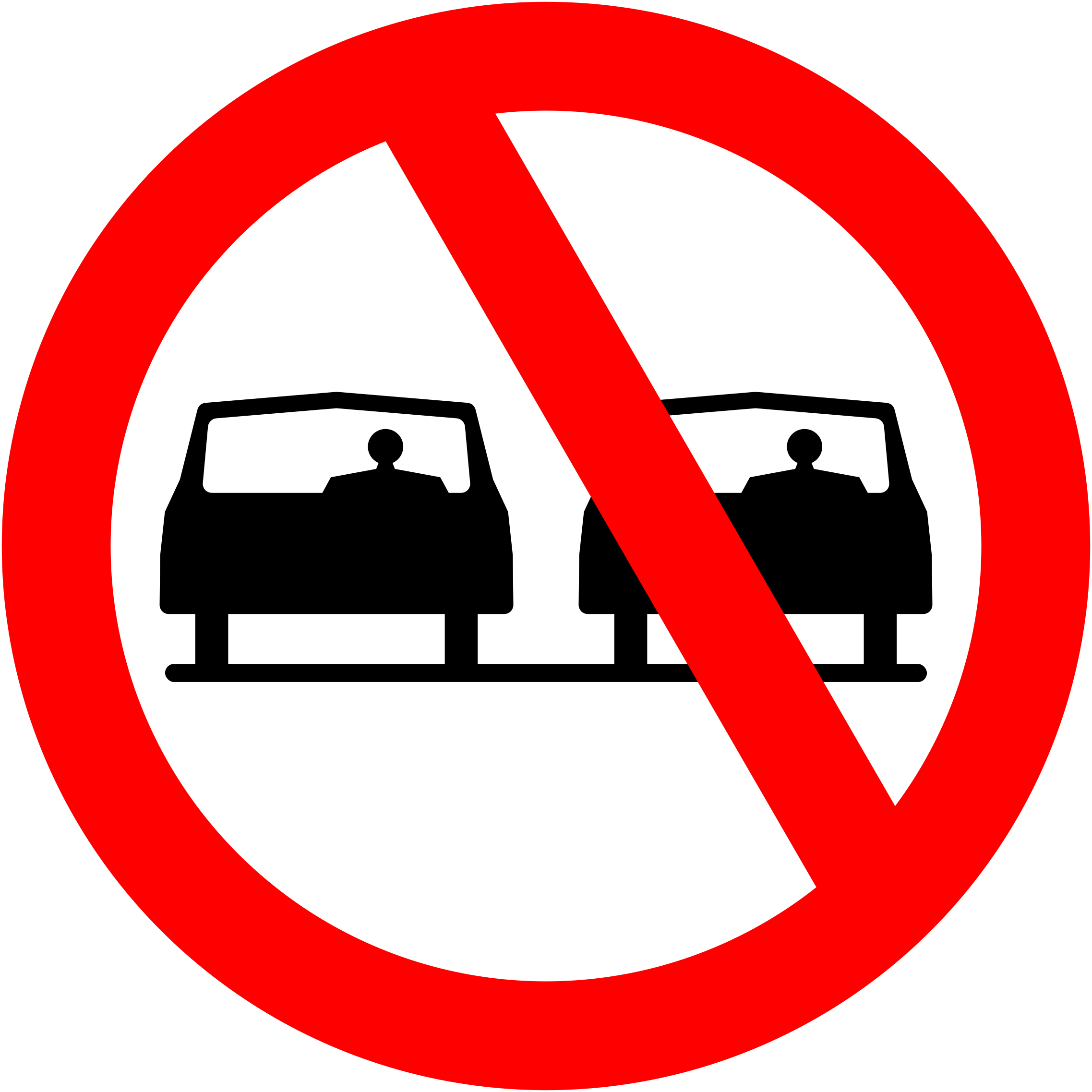
Behind a slow tractor on a winding country road, you see this sign. Which of these does it not allow?
AOvertake other vehiclesCorrect answer
BTurn left at the next junction
CPark at the side of the road
DMake a U-turn
Show the answerHide the answer
Correct answer: A
This is the no overtaking sign in Part 1 of Schedule 2 to the Road Traffic (Traffic Signs) Regulations 2025. Article 10(3) of the Road Traffic (Traffic and Parking) Regulations 1997 says a driver must not overtake, or try to overtake, on a stretch of road where it is provided. Turning, parking and U-turns are dealt with by other signs.
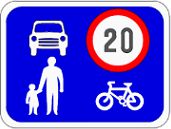
BA shared zone for pedestrians, cyclists and vehiclesCorrect answer
CA cycle track running against the flow of traffic
DA mini-roundabout ahead
Show the answerHide the answer
Correct answer: B
This is the shared zone sign. Regulation 13 of the Road Traffic (Traffic Signs) Regulations 2025 provides that it indicates a shared surface street used by pedestrians and vehicles, and the sign carries a 20 km/h speed limit sign inside it.
What is the default limit for a rural regional road when no special or roadworks limit applies?
A120 km/h
B100 km/h
C80 km/hCorrect answer
D60 km/h
Show the answerHide the answer
Correct answer: C
The regional road default outside a built-up area is 80 km/h under section 6(1) of the Road Traffic Act 2004, as substituted by the Road Traffic Act 2024.