Theory test

Car Theory Test Ireland (BW): Free Practice and Mock Exams

Everything for the car theory test: a full mock in the real format, practice sets and lessons.

The car theory test in Ireland (BW) asks 40 questions in 45 minutes, and 35 correct answers pass it, so 5 mistakes are allowed. It covers licence categories B, BE and W. Source: Citizens Information, page edited 6 May 2026, checked on 15 September 2026.

Official format

The test format

The format of the real test, with the source and the date we checked it.

Theory test formats
TestQuestionsMinutesCorrect to pass
Car, tractor and work vehicle (BW)404535

Source: Car, tractor and work vehicle (BW), 2026-05-06, checked on 2026-09-15

Study areas

What the car theory test covers

Every question in our bank for this test, grouped by the study area it belongs to.

Before you book

What you need to know

Licence categories covered

B, BE and W

Source: Prometric Ireland Ltd (Driver Theory Test Service), Driver Theory Test FAQs, dated 2026-08-14, checked on 2026-09-15

Test fee

€45

Source: Prometric Ireland Ltd (Driver Theory Test Service), Driver Theory Test Car or Bike, dated 2025-02-20, checked on 2026-09-15

Availability in Irish

yes

Source: Prometric Ireland Ltd (Driver Theory Test Service), Driver Theory Test FAQs, dated 2026-08-14, checked on 2026-09-15

Minimum age, category B (car, up to 8 passengers and 3,500 kg)

17 years

Source: Citizens Information, Categories of motor vehicles and minimum age of drivers in Ireland, dated 2025-07-07, checked on 2026-09-15

Minimum age for a category W (work vehicle and land tractor) learner permit or licence

16 years

The official sources disagree

The Regulations set 16 as the minimum age for a category W learner permit, and Citizens Information, the Rules of the Road and a written answer agree. Two theorytest.ie pages and one Citizens Information page say a W tractor permit is possible at 15.

Source: Irish Statute Book, Road Traffic (Licensing of Drivers) (Amendment) (No. 2) Regulations 2011, S.I. No. 483 of 2011, reg. 2(d), substituting Reg. 9(1) of S.I. No. 537 of 2006, undated, checked on 2026-09-15

Source: Citizens Information, Categories of motor vehicles and minimum age of drivers in Ireland, dated 2025-07-07, checked on 2026-09-15

Source: Road Safety Authority, Rules of the Road, Revision No. 9 (May 2026), printed p. 12 (PDF p. 14), undated, checked on 2026-09-15

Source: Houses of the Oireachtas, Dáil written answers, 18 November 2025, question 293 [63556/25], Minister of State at the Department of Transport, dated 2025-11-18, checked on 2026-09-15

Source: Citizens Information, Driver theory test, dated 2026-05-06, checked on 2026-09-15

Source: theorytest.ie (Prometric Ireland Ltd for the Road Safety Authority), General information: FAQs, dated 2026-08-14, checked on 2026-09-15

Source: theorytest.ie (Prometric Ireland Ltd for the Road Safety Authority), Minimum age for Driver Theory Test changing to 15 years old from 1st November 2026, dated 2026-05-05, checked on 2026-09-15

First learner permit, all categories

A theory test pass is needed before a first learner permit in any category

Source: Citizens Information, Learner driving permits for cars and work vehicles, dated 2025-09-29, checked on 2026-09-15

Essential Driver Training (EDT) with an RSA Approved Driving Instructor, first car (B) learner permit

12 one-hour lessons

Source: Citizens Information, Learner permit rules for specific vehicle categories, dated 2025-09-29, checked on 2026-09-15

Validity from the test date

2 years

Source: Prometric Ireland Ltd (Driver Theory Test Service), Driver Theory Test FAQs, dated 2026-08-14, checked on 2026-09-15

Sample questions

Try some questions

Choose an answer, then open the explanation to see the rule it comes from.

1 of 20
  1. Question 1

    What appearance must the N plates on your novice car have?

    • AA green letter N on a white background, 15 cm high
    • BA red letter N on a white background, at least 15 cm highCorrect answer
    • CA black letter N on a yellow background, with the letter 10 cm high
    • DA red letter N on a white background, 10 cm high
    Show the answerHide the answer

    Correct answer: B

    Section 4 of the Road Traffic Act 2014 requires a red letter N on a white background, with the letter at least 15 cm high, at the front and rear.

    Citation

    Source: Road Traffic Act 2014 (No. 3 of 2014), Section 4, checked on 2026-09-15.

  2. Question 2

    What indicates a tram lane, and are the nearside and offside signs the same?

    • AThe tram lane sign together with the tram lane line, and nearside and offside are separate signsCorrect answer
    • BThe rails in the street alone, without any tram lane sign or tram lane line beside them
    • CA single white line painted alone, without the tram lane sign, is enough to indicate the lane
    • DA blue disc on its own, without a tram lane line, is enough to indicate the lane
    Show the answerHide the answer

    Correct answer: A

    Regulation 90 of the Road Traffic (Traffic Signs) Regulations 2025 provides that the nearside or offside tram lane sign, together with the tram lane line, indicates a tram lane. Nearside and offside are separate signs. The rails alone, a white line alone, or a blue disc alone does not indicate the lane.

    Citation

    Source: Road Traffic (Traffic Signs) Regulations 2025 (S.I. No. 433 of 2025), Regulation 90(1), checked on 2026-09-15.

  3. Question 3

    Which vehicle condition prevents a petrol moped with an engine of exactly 50 cc from using a motorway?

    • AIt must display a minimum speed notice
    • BA combustion engine must exceed 50 cc, and the vehicle must also sustain 50 km/h on the levelCorrect answer
    • CIt must be able to reach the motorway default speed
    • DIts rider must promise to stay on the hard shoulder
    Show the answerHide the answer

    Correct answer: B

    Article 7 of the Roads Regulations 1994 requires a combustion engine to exceed 50 cc and the vehicle to sustain 50 km/h on the level under its own power. This is an access condition, not a minimum driving speed.

    Citation

    Source: Roads Regulations 1994 (S.I. No. 119 of 1994), Art. 7(2)(c), (d), checked on 2026-09-15.

  4. Question 4

    A 9-year-old is 135 cm tall and weighs 30 kg. The car has rear belts and room for a child seat. What must be used?

    • AThe adult belt alone because the child is over 125 cm
    • BAn appropriate child restraintCorrect answer
    • CNo restraint because the child is over 25 kg
    • DThe adult belt alone because the child is over 8
    Show the answerHide the answer

    Correct answer: B

    The child definition and restraint rule in the 2006 Safety Belts Regulations, regulation 2(1) and regulation 7, cover a person under 150 cm and under 36 kg.

    Citation

    Source: European Communities (Compulsory Use of Safety Belts and Child Restraint Systems in Motor Vehicles) Regulations 2006 (S.I. No. 240 of 2006), Regulation 2(1), definition of child, and Regulation 7, checked on 2026-09-15.

  5. Question 5

    Which of these does a mandatory sign indicate?

    • AA bus laneCorrect answer
    • BA hazard ahead
    • CThe distance to a town
    • DA road surface defect
    Show the answerHide the answer

    Correct answer: A

    Under Regulation 4 of the Road Traffic (Traffic Signs) Regulations 2025, a mandatory sign indicates the direction or route traffic must take, a cycle track, a bus lane, or a mini-roundabout. It does not warn of a hazard, give a distance to a town, or mark a surface defect.

    Citation

    Source: Road Traffic (Traffic Signs) Regulations 2025 (S.I. No. 433 of 2025), Regulation 4(1), checked on 2026-09-15.

  6. Question 6

    In RSA guidance, which two parts make up total stopping distance?

    • AVehicle length and road width
    • BSpeed limit and following gap
    • CReaction distance and braking distanceCorrect answer
    • DTyre width and engine size
    Show the answerHide the answer

    Correct answer: C

    RSA guidance in the Rules of the Road adds reaction distance to braking distance, such as 6 metres plus 6 metres at 30 km/h.

    Citation

    Source: Rules of the Road, Road Safety Authority, Revision No. 9, May 2026 (guidance, not law), Stopping distances in dry conditions, Table 5, PDF page 125, checked on 2026-09-15.

  7. Question 7

    When may you stop or park on a motorway under the motorway stopping rule?

    • AOnly when held up by an obstruction or after a crash or breakdownCorrect answer
    • BWhenever you need to check the vehicle
    • CWhenever the hard shoulder is empty
    • DWhenever you intend to remain briefly
    Show the answerHide the answer

    Correct answer: A

    Article 33 of the Road Traffic (Traffic and Parking) Regulations 1997 prohibits stopping or parking on a motorway except when an obstruction holds you up or a crash or breakdown forces the stop.

    Citation

    Source: Road Traffic (Traffic and Parking) Regulations 1997 (S.I. No. 182 of 1997), Art. 33(1)(c), (3), (4), as substituted by S.I. No. 222 of 2024, reg. 4(g), checked on 2026-09-15.

  8. Question 8

    An unmarked space is 3 metres from the corner of a side road. May you park there?

    • AYes, because there are no yellow lines
    • BYes, if the side road is quiet
    • CNo, it is within 5 metres of the junctionCorrect answer
    • DYes, if you leave room for traffic
    Show the answerHide the answer

    Correct answer: C

    The junction-parking rule in article 36 prohibits parking within 5 metres of a road junction, whether or not yellow lines are present.

    Citation

    Source: Road Traffic (Traffic and Parking) Regulations 1997 (S.I. No. 182 of 1997), Article 36(2)(c), as substituted by S.I. No. 332 of 2012, reg. 16(m), checked on 2026-09-15.

  9. Question 9

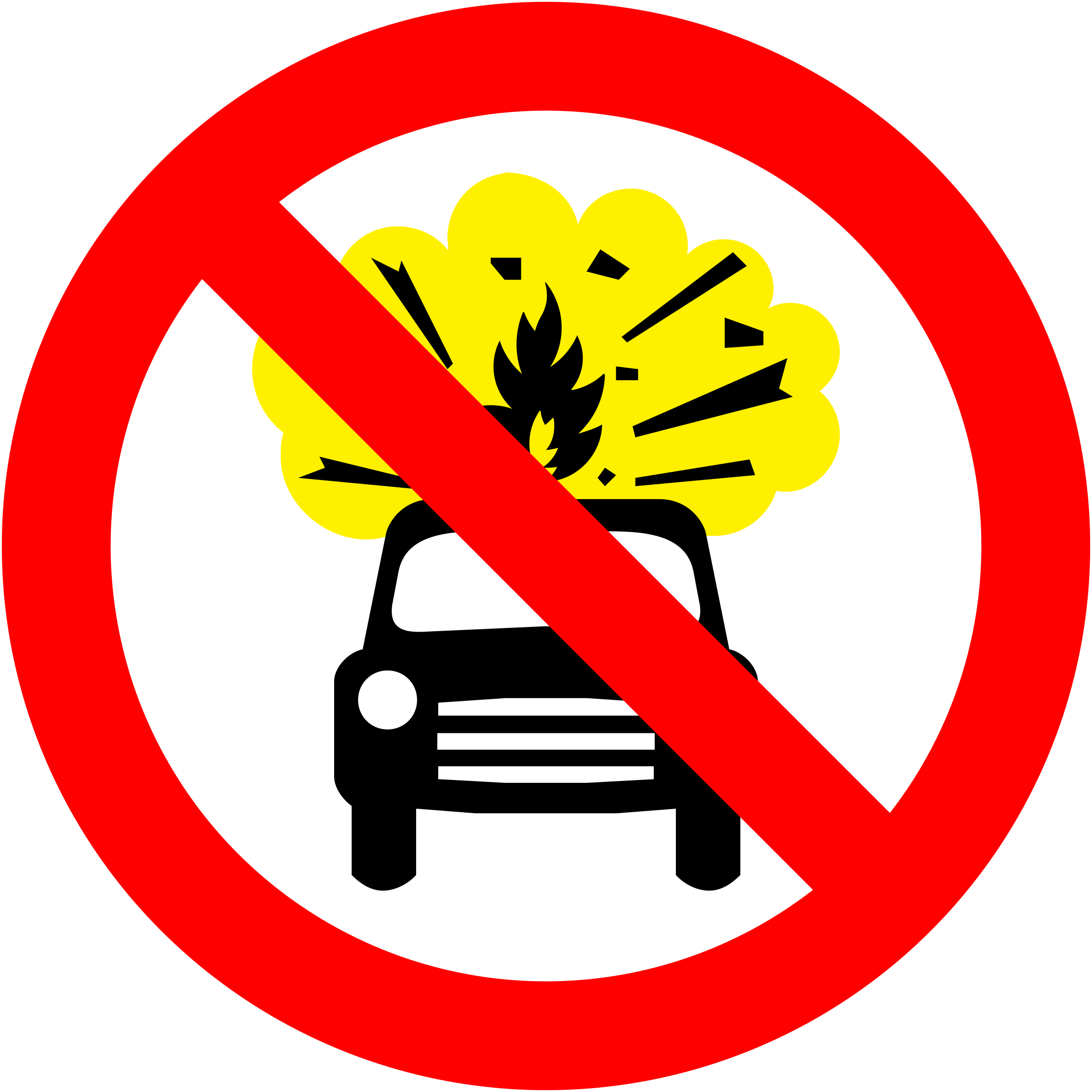
    Which sign bans vehicles carrying explosive material?

    • ASign A
    • BSign B
    • CSign CCorrect answer
    • DSign D
    Show the answerHide the answer

    Correct answer: C

    Sign C is the no vehicles carrying explosives sign. Regulation 20 of the Road Traffic (Traffic Signs) Regulations 2025 provides that, at or near the entrance to a road tunnel, the driver of a vehicle carrying explosive material must not go past it.

    Citation

    Source: Road Traffic (Traffic Signs) Regulations 2025 (S.I. No. 433 of 2025), Regulation 20(1), (4); Schedule 2, Part 1, checked on 2026-09-16.

  10. Question 10

    A white disc with a black border and black diagonal lines is used on a local road. What limit does it show?

    • A100 km/h
    • B80 km/h
    • C60 km/hCorrect answer
    • DNo limit applies
    Show the answerHide the answer

    Correct answer: C

    Regulation 33 of the Road Traffic (Traffic Signs) Regulations 2025 permits this alternative sign for a 60 km/h local road limit. It does not remove the speed limit.

    Citation

    Source: Road Traffic (Traffic Signs) Regulations 2025 (S.I. No. 433 of 2025), Reg. 33(4), (5), checked on 2026-09-15.

  11. Question 11

    What is the difference between a single yellow line and double yellow lines?

    • ABoth prohibit parking at every time
    • BA single line bans stopping while double lines ban parking
    • CDouble lines allow parking at night
    • DA single line restricts parking at stated times while double lines prohibit it at all timesCorrect answer
    Show the answerHide the answer

    Correct answer: D

    The yellow-line meaning rule in regulations 62 and 63 distinguishes timed restrictions on a single line from an all-times parking ban on double lines.

    Citation

    Source: Road Traffic (Traffic Signs) Regulations 2025 (S.I. No. 433 of 2025), Regulations 62(1) and 63(1), checked on 2026-09-15.

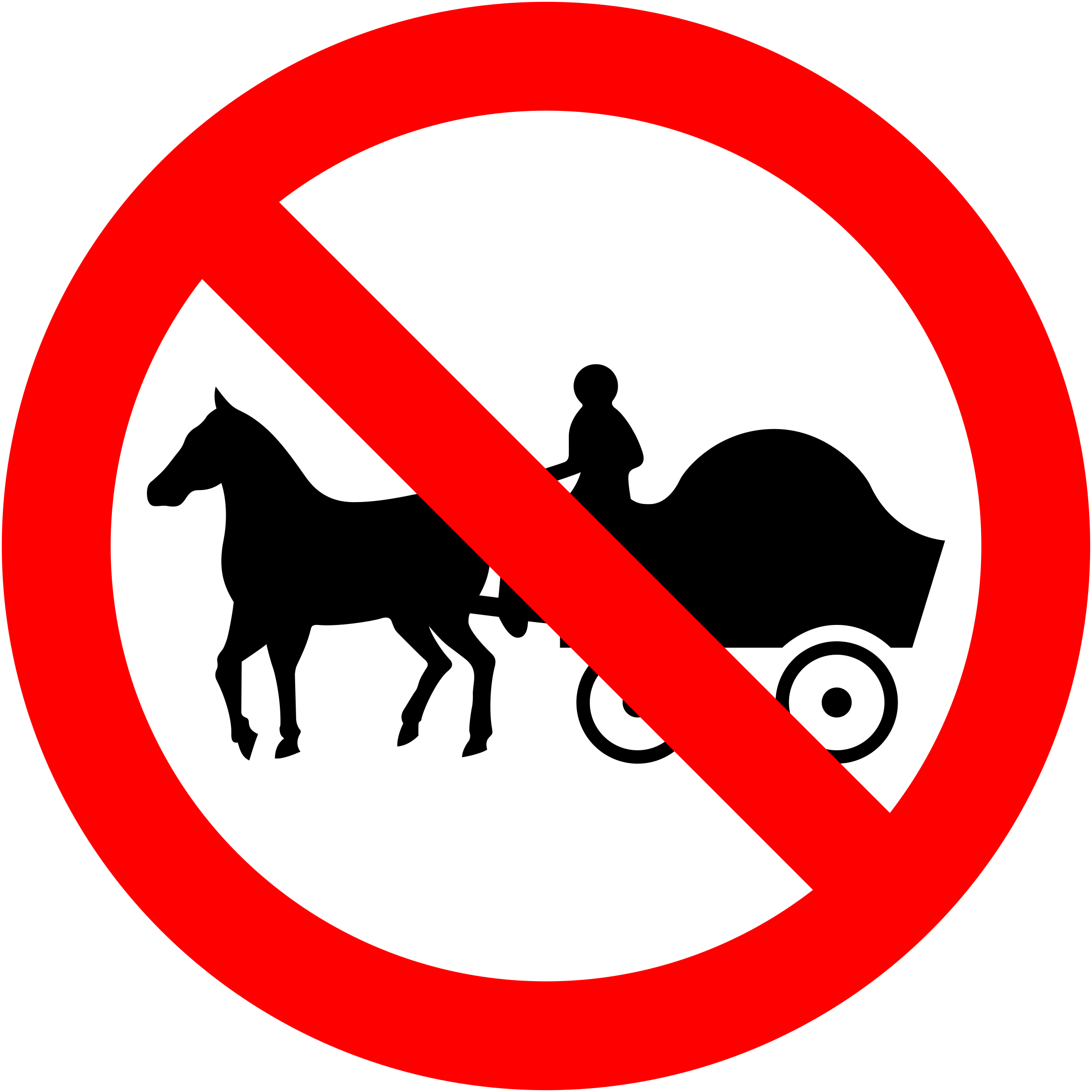
  12. Question 12Road sign

    Who does this sign bind?

    • AAnyone riding a horse
    • BDrivers of farm tractors
    • CDrivers of animal-drawn vehicles at night only
    • DA person driving or in charge of a vehicle drawn by an animalCorrect answer
    Show the answerHide the answer

    Correct answer: D

    Under Regulation 19 of the Road Traffic (Traffic Signs) Regulations 2025, the sign binds a person driving or in charge of an animal-drawn vehicle. It is not a horse-riding ban, it is not a tractor ban, and it is not limited to night.

    Citation

    Source: Road Traffic (Traffic Signs) Regulations 2025 (S.I. No. 433 of 2025), Regulation 19(1), checked on 2026-09-15.

  13. Question 13

    A yellow box is at a junction without traffic lights, and traffic blocks your exit. What should you do?

    • AEnter because the rule applies only at traffic lights
    • BEnter if the vehicle ahead is moving slowly
    • CStop with your front wheels inside the box
    • DWait outside until you can clear the box without stoppingCorrect answer
    Show the answerHide the answer

    Correct answer: D

    The yellow box rule in article 29 applies on public roads whether or not traffic lights are present, so a blocked exit means you must wait.

    Citation

    Source: Road Traffic (Traffic and Parking) Regulations 1997 (S.I. No. 182 of 1997), Article 29(1) to (3), as substituted by S.I. No. 332 of 2012, reg. 16(l), checked on 2026-09-15.

  14. Question 14

    What following gap does RSA guidance advise on a dry road?

    • AAt least two secondsCorrect answer
    • BExactly one second
    • COne car length at every speed
    • DA fixed distance of 10 metres
    Show the answerHide the answer

    Correct answer: A

    RSA guidance in the Rules of the Road advises a gap of at least two seconds behind the vehicle in front in dry conditions.

    Citation

    Source: Rules of the Road, Road Safety Authority, Revision No. 9, May 2026 (guidance, not law), Following distance guidance, PDF page 117, checked on 2026-09-15.

  15. Question 15

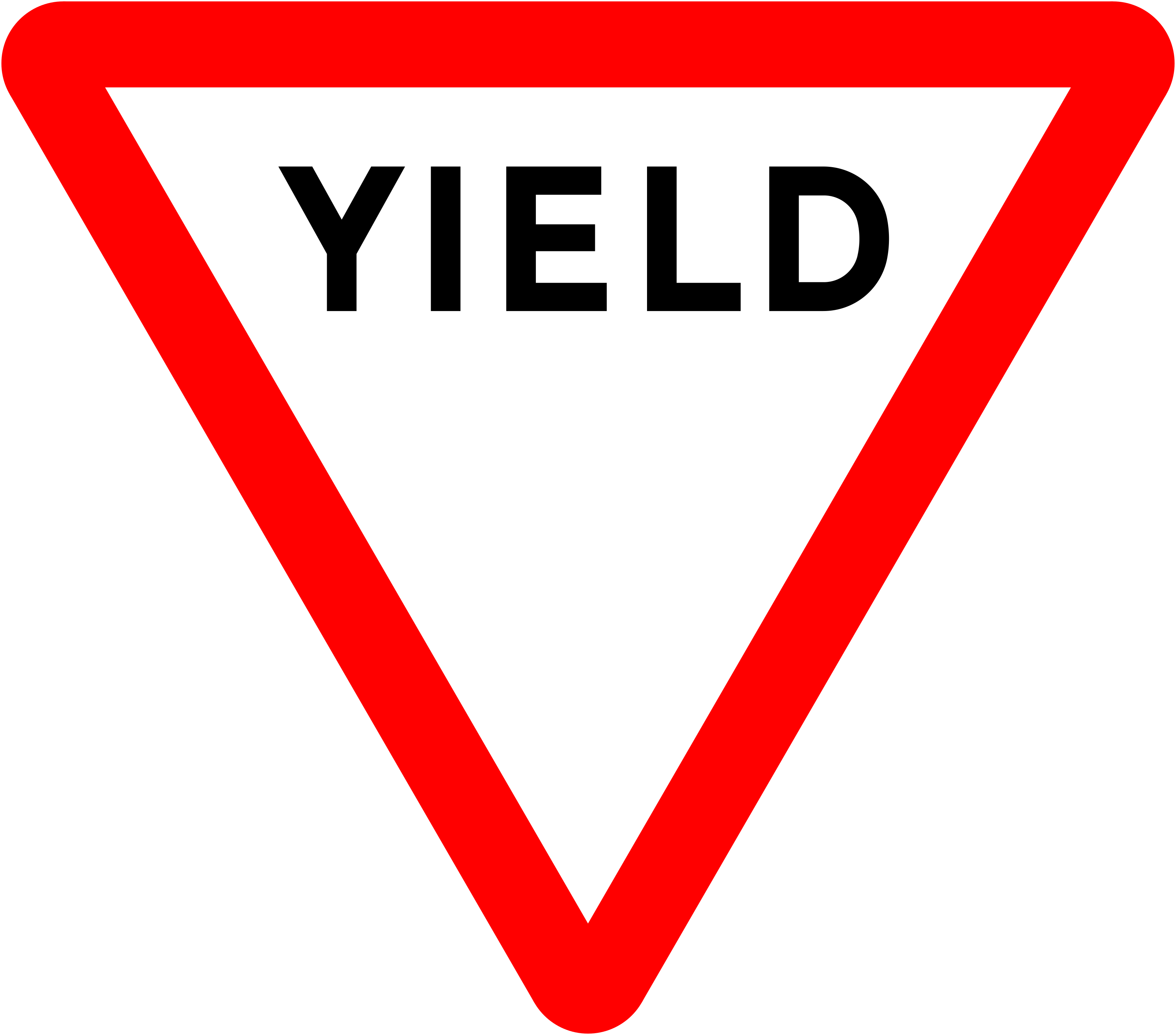
    Which one of these signs bans vehicles from entering the road?

    • ASign A
    • BSign BCorrect answer
    • CSign C
    • DSign D
    Show the answerHide the answer

    Correct answer: B

    Sign B is the no entry to vehicles sign. Regulation 24 of the Road Traffic (Traffic Signs) Regulations 2025 provides that, at the entrance to a road, a driver must not go past it. A plate below may exempt pedal cyclists and e-moped and electric scooter drivers.

    Citation

    Source: Road Traffic (Traffic Signs) Regulations 2025 (S.I. No. 433 of 2025), Regulation 24(1), (2), (4); Schedule 2, Part 2, checked on 2026-09-16.

  16. Question 16

    During the 2 years after your first full driving licence, what penalty point total causes automatic disqualification?

    • A10 penalty points
    • B12 penalty points
    • C7 penalty pointsCorrect answer
    • D15 penalty points
    Show the answerHide the answer

    Correct answer: C

    Section 3(1)(b) of the Road Traffic Act 2002, as substituted by section 8 of the Road Traffic Act 2014, applies the lower 7 point threshold throughout the novice period.

    Citation

    Source: Road Traffic Act 2014 (No. 3 of 2014), Section 8(c), substituting section 3(1)(b) of the Road Traffic Act 2002, checked on 2026-09-15.

  17. Question 17

    A driver passes a 50 km/h sign and claims the true limit is higher. What presumption applies in a speeding case?

    • AThe displayed limit is presumed to apply unless shown otherwiseCorrect answer
    • BThe sign is guidance until a Garda confirms it
    • CThe usual road limit replaces the displayed limit
    • DThe sign applies only to heavy vehicles
    Show the answerHide the answer

    Correct answer: A

    The displayed-speed presumption in section 47 treats the limit shown on the traffic sign as the road's limit unless the contrary is proved.

    Citation

    Source: Road Traffic Act 1961 (No. 24 of 1961), Section 47(2A), inserted by Road Traffic Act 2010, s. 76, checked on 2026-09-15.

  18. Question 18

    A no left turn sign has a plate reading Except Cyclists, with the Irish legend Ach Amháin Rothaithe. Who does that plate let through?

    • APedal cyclists, and drivers of e-mopeds and electric scootersCorrect answer
    • BMotorcyclists and moped riders as well as cyclists
    • CEvery vehicle after close of business
    • DCyclists only as advice, so other traffic may follow them
    Show the answerHide the answer

    Correct answer: A

    Under Regulation 14 of the Road Traffic (Traffic Signs) Regulations 2025, the Except Cyclists plate means the prohibition does not apply to pedal cyclists or to e-moped or electric scooter drivers. An e-moped in Irish law is a pedal assisted electric bicycle, not a category AM moped, so motorcyclists and moped riders stay bound by the sign.

    Citation

    Source: Road Traffic (Traffic Signs) Regulations 2025 (S.I. No. 433 of 2025), Regulation 14(5), checked on 2026-09-15.

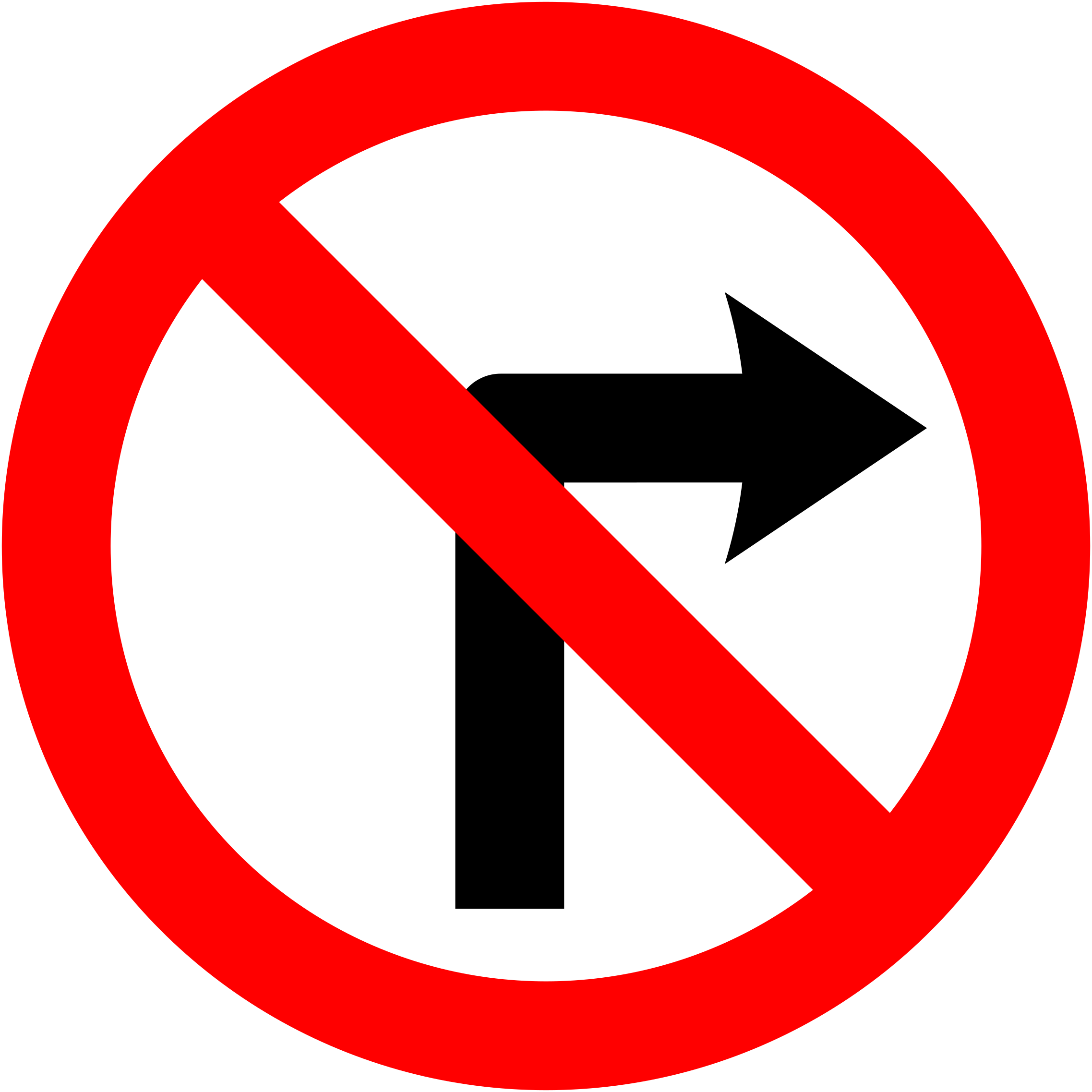
  19. Question 19Road sign

    You see this sign on a housing estate road. The street to the right is empty and a short detour would take you around the block. May you turn right past the sign?

    • AYes, because nothing is coming
    • BNo, you must not turn right past the signCorrect answer
    • CYes, if you signal early
    • DYes, because the sign applies to large vehicles only
    Show the answerHide the answer

    Correct answer: B

    Under Regulation 14 of the Road Traffic (Traffic Signs) Regulations 2025, the no right turn sign forbids a right turn past it. An empty street, an early signal, or a short detour does not authorise the turn. The sign is not limited to large vehicles.

    Citation

    Source: Road Traffic (Traffic Signs) Regulations 2025 (S.I. No. 433 of 2025), Regulation 14(2)(a); Schedule 2, Part 1, checked on 2026-09-15.

  20. Question 20

    What was the default limit on a local road outside a built-up area before 7 February 2025?

    • A50 km/h
    • B60 km/h
    • C70 km/h
    • D80 km/hCorrect answer
    Show the answerHide the answer

    Correct answer: D

    Before 7 February 2025 the local road default was 80 km/h. Section 6(2) of the Road Traffic Act 2004, as substituted by the Road Traffic Act 2024, changed it to 60 km/h from that date.

    Citation

    Source: Road Traffic Act 2004 (No. 44 of 2004), s. 6(2), as substituted by Road Traffic Act 2024 (No. 10 of 2024), s. 7, checked on 2026-09-15.

If you are learning to drive a car, to tow a trailer behind one, or to work a tractor, the same theory test covers you: the Car, Tractor and Work Vehicles test, which the test operator codes BW. Sitting it is the first formal step, because a learner permit application will not be accepted without a theory test certificate for the category.

One test, three licence categories

Learners often expect three separate exams: one for the car, one for towing and one for the farm. There is one paper. The test operator lists the same theory test against the ordinary car category, the car and trailer category, and the work vehicle and land tractor category, so one sitting answers for all of them. Somebody who learns in a hatchback and later takes the tractor out on the road does not sit the theory test a second time for it.

What does not carry across is permission to drive. A learner permit for the car category does not let you tow anything: a car, truck or bus learner must not draw a trailer, under regulation 17(6)(b)(vi) of the Road Traffic (Licensing of Drivers) Regulations 2006. The work vehicle category has its own limit on passengers, because a W learner may carry somebody only where the vehicle was built to carry a passenger and that passenger is a qualified person, under regulation 17(6)(b)(v) of the same Regulations.

So the paper is common ground and the road rules that follow it are not. Read the permit conditions for the category you actually mean to drive, rather than assuming that a broad pass carries broad permission.

What you need before you sit it, and what follows

Nothing stands between you and the theory test itself. No lessons are required first, and no permit is needed to book one. What the certificate does is let the learner permit application go in: the requirement for it sits in regulation 20(5)(a)(v) of the Road Traffic (Licensing of Drivers) Regulations 2006, so it bites at the licence counter rather than at the test centre. That is why most people sit the theory test before a first driving lesson has been booked.

Once a first car permit is issued, Essential Driver Training follows. A first category B permit holder must complete the course with an approved driving instructor and cannot sit the driving test without the stamped logbook, under regulations 2 and 3(1) of the Road Traffic (Courses of Instruction) (Learner Permit Holders) Regulations 2011. A tractor learner has no equivalent course to complete.

The permit then carries conditions that the theory paper asks about in the abstract and that a Garda can ask about on the road. L plates go to the front and rear of the vehicle under regulation 2(b)(ii) of the Road Traffic (Licensing of Learner Drivers) Regulations 2007, a qualified driver sits with you, and a motorway is out: the Roads Regulations 1994 admit a vehicle to a motorway only where the person driving it holds a driving licence for it, which leaves permit holders off motorways altogether.

Where the paper catches people out

The questions are written around what the law requires rather than around what is customary, and the gap between the two is where marks go. Habits that pass unremarked on an Irish road, at a yellow box, on a filter arrow or at a pedestrian crossing, can still be the wrong answer on screen. Reading each question for must and may, rather than for the situation it describes, is the most useful habit to build before you book.

Sign questions reward separation rather than recognition. Two signs in the same family often differ by one element, and the answer options are usually built from exactly that difference. Working through one family at a time, instead of shuffling every sign together, makes the distinguishing element the thing you end up learning.

The other soft spot is the topic split. The Road Safety Authority and the test operator both describe the test as covering the rules of the road, risk perception, eco-driving, hazard awareness and safe driving behaviour, and learners tend to prepare hard for the first of those and thinly for the rest. Risk perception and eco-driving ask for reasons rather than for recall, so they repay a second read more than the signs do.

Practise in short sets against the clock rather than in long open sessions. What tightens the room on the day is time spent on unfamiliar phrasing, not difficulty, and the way to find out which phrasings slow you down is to meet them while a timer is running.

Sources

Source: Irish Statute Book, Road Traffic (Licensing of Drivers) Regulations 2006, S.I. No. 537 of 2006, regs. 17(6)(b)(v), 17(6)(b)(vi) and 20(5)(a)(v), checked on 2026-09-16

Source: Irish Statute Book, Road Traffic (Courses of Instruction) (Learner Permit Holders) Regulations 2011, S.I. No. 173 of 2011, regs. 2 and 3(1), checked on 2026-09-16

Source: Irish Statute Book, Road Traffic (Licensing of Learner Drivers) Regulations 2007, S.I. No. 719 of 2007, reg. 2(b)(ii), checked on 2026-09-16

Source: Irish Statute Book, Roads Regulations 1994, S.I. No. 119 of 1994, art. 7(2), checked on 2026-09-16

Source: Road Safety Authority, Theory test: what it is, checked on 2026-09-16

Source: Prometric Ireland Ltd (Driver Theory Test Service), Tractors and the Driver Theory Test: your questions answered, checked on 2026-09-16


FAQ

Car theory test: questions people ask

How many questions are on the car theory test, and how many do you need to pass?

The car theory test has 40 questions in 45 minutes, and you pass with 35 correct answers.

Source: Prometric Ireland Ltd (Driver Theory Test Service), Driver Theory Test FAQs, dated 2026-08-14, checked on 2026-09-15

How much does the car theory test cost?

The test fee is €45. No limit on the number of attempts; the fee is paid each time.

Source: Prometric Ireland Ltd (Driver Theory Test Service), Driver Theory Test Car or Bike, dated 2025-02-20, checked on 2026-09-15

Source: Prometric Ireland Ltd (Driver Theory Test Service), Driver Theory Test FAQs, dated 2026-08-14, checked on 2026-09-15

Which licence categories does the car theory test cover?

One pass of this test covers licence categories B, BE and W.

Source: Prometric Ireland Ltd (Driver Theory Test Service), Driver Theory Test FAQs, dated 2026-08-14, checked on 2026-09-15

What is the minimum age to drive in the car categories?

The minimum age for a category B car licence is 17 years.

Source: Citizens Information, Categories of motor vehicles and minimum age of drivers in Ireland, dated 2025-07-07, checked on 2026-09-15

Can you take the car theory test in Irish?

Yes, the test is available in Irish as well as English.

Source: Prometric Ireland Ltd (Driver Theory Test Service), Driver Theory Test FAQs, dated 2026-08-14, checked on 2026-09-15

What training do you need after the car learner permit?

For a first category B learner permit, Essential Driver Training (EDT) with an approved driving instructor is 12 one-hour lessons.

Source: Citizens Information, Learner permit rules for specific vehicle categories, dated 2025-09-29, checked on 2026-09-15

What rules apply while you drive on a car learner permit?

You display L plates to the front and rear of the vehicle. The qualified person with you must have held a full licence for at least 2 years. Learner permit holders must not drive on a motorway. Gardaí can take and keep the car of an unaccompanied learner.

Source: Citizens Information, Learner permit rules for specific vehicle categories, dated 2025-09-29, checked on 2026-09-15

How much EDT do you need with a car licence from a country Ireland does not exchange?

If your car licence is from a country whose licences cannot be exchanged in Ireland, EDT is 6 one-hour lessons rather than 12 one-hour lessons.

Source: Citizens Information, Learner permit rules for specific vehicle categories, dated 2025-09-29, checked on 2026-09-15

What do the learner permit and the car driving test cost after you pass?

A learner permit application to the NDLS costs €45, and the car driving test fee is €85. Your theory test pass certificate is valid for 2 years from the date of the test.

Source: National Driver Licence Service (NDLS), Fees, undated, checked on 2026-09-15

Source: Citizens Information, Driving test, dated 2026-02-25, checked on 2026-09-15

Source: Prometric Ireland Ltd (Driver Theory Test Service), Driver Theory Test FAQs, dated 2026-08-14, checked on 2026-09-15