Motorcycle theory test

Practise the Motorcycle Theory Test (AM) in Ireland

Work through the numbered sets, drill a topic, then sit a full mock.
Start set 1Take a full mock test15 numbered sets · 4 topics · free

These practice sets prepare the motorcycle theory test in Ireland (AM), which asks 40 questions in 45 minutes and takes 35 correct to pass. Each set gives the answer, the reason and the rule behind it as you go. Source: Citizens Information, page edited 6 May 2026, checked on 15 September 2026.

Step two

Practise by topic

Go deeper on one study area at a time, then read the lesson for anything you get wrong.

Step three

Then sit the real thing

A full mock in the real format of the Motorcycle/Moped Theory Test: 40 questions, 45 minutes, 35 correct to pass.

Start the mock test
After the real test

What the test tells you about weak areas

The score report sent after the test

An emailed score report shows the category areas answered correctly or incorrectly

Source: Prometric Ireland Ltd (Driver Theory Test Service), Driver Theory Test FAQs, dated 2026-08-14, checked on 2026-09-15

Written feedback after a fail

Candidates who fail are given general topic areas of weakness in writing

Source: Prometric Ireland Ltd (Driver Theory Test Service), Policy and customer charter, dated 2025-06-13, checked on 2026-09-15

Try it now

Sample questions and answers

1 of 20
  1. Question 1

    During the hours shown on its plate, may you ride a motorcycle along a with-flow bus lane?

    • AYes, if traffic is stopped
    • BNo, motorcycles are not among the permitted classesCorrect answer
    • CYes, if the engine is below 125 cc
    • DYes, because motorcycles count as taxis
    Show the answerHide the answer

    Correct answer: B

    Article 32(2) of the Traffic and Parking Regulations, as substituted in 2025, excludes motorcycles from a with-flow bus lane during its operating hours.

    Citation

    Source: Road Traffic (Traffic and Parking) Regulations 1997 (S.I. No. 182 of 1997), Article 32(2), as substituted by S.I. No. 473 of 2025, Regulation 2(h), checked on 2026-09-15.
  2. Question 2

    A premises entrance is on the right beyond a continuous white line. What exception can allow you to cross the line?

    • AYou may cross whenever traffic behind is delayed
    • BYou may cross to overtake before the entrance
    • CYou may cross because every right turn has priority
    • DYou may cross to enter or leave premises on the rightCorrect answer
    Show the answerHide the answer

    Correct answer: D

    Article 25 of the Road Traffic (Traffic and Parking) Regulations 1997 provides an exception allowing a continuous white line to be crossed to enter or leave premises on the right.

    Citation

    Source: Road Traffic (Traffic and Parking) Regulations 1997 (S.I. No. 182 of 1997), Art. 25(1) to (4), (6); (6) inserted by S.I. No. 332 of 2012, reg. 16(j), checked on 2026-09-15.

  3. Question 3

    What does the law require when darkness reduces the distance of road you can see to be clear?

    • AKeep the daytime speed whenever the road is familiar and no vehicle is ahead
    • BFollow the speed of the vehicle ahead
    • CChoose a speed that permits a stop within the clear distance visibleCorrect answer
    • DDrive at the road limit until an obstruction appears
    Show the answerHide the answer

    Correct answer: C

    Under article 7 of the Road Traffic (Traffic and Parking) Regulations 1997, your speed must allow you to stop within the distance visible as clear. Reduced visibility can therefore require a lower speed.

    Citation

    Source: Road Traffic (Traffic and Parking) Regulations 1997 (S.I. No. 182 of 1997), Art. 7, checked on 2026-09-15.

  4. Question 4

    You are applying for your first motorcycle or moped learner permit. Which certificate is required?

    • AA theory test certificate still in force for the category soughtCorrect answer
    • BAny car theory test certificate, even if it has expired
    • CA theory test certificate obtained after the permit is granted
    • DNo certificate if you have driven in another country
    Show the answerHide the answer

    Correct answer: A

    Regulation 20(5)(a)(v) of the Road Traffic (Licensing of Drivers) Regulations 2006 requires an in-force theory test certificate for the category covered by the first learner permit.

    Citation

    Source: Road Traffic (Licensing of Drivers) Regulations 2006 (S.I. No. 537 of 2006), Regulation 20(5)(a)(v), checked on 2026-09-15.

  5. Question 5

    When may a driver sound the horn under the vehicle equipment rules?

    • ATo greet a friend beside the road
    • BTo tell a driver that traffic lights have changed
    • COnly when reasonably necessary for safetyCorrect answer
    • DTo announce arrival outside a house
    Show the answerHide the answer

    Correct answer: C

    Vehicle Equipment and Use Regulations 1963, Article 86 permits horn use only when it is reasonably necessary for safety.

    Citation

    Source: Road Traffic (Construction, Equipment and Use of Vehicles) Regulations 1963 (S.I. No. 190 of 1963), Article 86(1) and (2), checked on 2026-09-15.

  6. Question 6

    Your visor is badly scratched and creates glare from oncoming lights. What does RSA training advise?

    • APolish it with petrol
    • BUse it only in bright daylight
    • CCover the scratches with a tinted film
    • DReplace the damaged visorCorrect answer
    Show the answerHide the answer

    Correct answer: D

    RSA IBT advice on personal protective equipment says a scratched visor can distort vision and increase glare, so it should be replaced.

    Citation

    Source: Road Safety Authority, Initial Basic Training course syllabus (guidance), Module 1, Objective 1 (personal protective equipment), checked on 2026-09-15.

  7. Question 7

    A person over the alcohol limit sits in the driver's seat on a public street, holds the keys and plans to drive home. Has an offence already occurred?

    • ANo, because the car has not moved
    • BNo, unless the engine is running
    • CYes, being in charge with intent to drive is enoughCorrect answer
    • DYes, but only after entering a motorway
    Show the answerHide the answer

    Correct answer: C

    Road Traffic Act 2010, section 5 makes being in charge in a public place with intent to drive an offence when over the limit.

    Citation

    Source: Road Traffic Act 2010 (No. 25 of 2010), Section 5, checked on 2026-09-15.

  8. Question 8

    What is the maximum fine a court may impose for drink or drug driving under section 4?

    • A€1,000
    • B€5,000Correct answer
    • C€2,500
    • D€10,000
    Show the answerHide the answer

    Correct answer: B

    Road Traffic Act 2010, section 4 sets the maximum fine on conviction at €5,000.

    Citation

    Source: Road Traffic Act 2010 (No. 25 of 2010), Section 4(5), checked on 2026-09-15.

  9. Question 9

    Your vehicle has its own speed limit and the road has a lower limit. Which limit must you obey?

    • AThe vehicle limit because it is specific to the vehicle
    • BWhichever limit was displayed most recently
    • CThe higher limit when the road is clear
    • DThe lower road limitCorrect answer
    Show the answerHide the answer

    Correct answer: D

    Section 47 of the Road Traffic Act 1961, as substituted by the Road Traffic Act 2004, makes the lower road limit binding where it is below the limit applying to the vehicle.

    Citation

    Source: Road Traffic Act 1961 (No. 24 of 1961), s. 47(1), (2), as substituted by Road Traffic Act 2004 (No. 44 of 2004), s. 11, checked on 2026-09-15.

  10. Question 10

    You see a diesel spill on your intended line. What does RSA training advise?

    • ABrake sharply while crossing it
    • BAvoid the spill safely because it can make the motorcycle slideCorrect answer
    • CAccelerate over it to reduce contact time
    • DLean more to increase tyre grip
    Show the answerHide the answer

    Correct answer: B

    RSA IBT advice on road surfaces identifies diesel as slippery and recommends avoiding poor surfaces where that can be done safely.

    Citation

    Source: Road Safety Authority, Initial Basic Training course syllabus (guidance), Module 3, Objective 4 (road surfaces), checked on 2026-09-15.

  11. Question 11

    White zig-zag lines run along the road beside a zebra crossing. What do they mean for you as a driver looking for a place to park?

    • AThe speed limit on that stretch is 30 km/h
    • BYou must stop there even when nobody is waiting
    • CPedestrians may cross anywhere along those lines
    • DParking is prohibited on that stretch of roadwayCorrect answer
    Show the answerHide the answer

    Correct answer: D

    Zig-zag markings at a zebra crossing or at pedestrian lights mark a stretch where parking is banned. Regulation 56 of the Road Traffic (Traffic Signs) Regulations 2025 does not set a speed limit, a stop duty when the crossing is empty, or a right for pedestrians to cross anywhere along the lines.

    Citation

    Source: Road Traffic (Traffic Signs) Regulations 2025 (S.I. No. 433 of 2025), Regulation 56, checked on 2026-09-15.

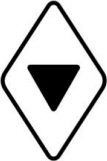
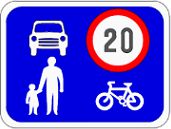
  12. Question 12Road sign

    Which of these explains this sign?

    • AA bus lane running with the flow of traffic
    • BA shared zone for pedestrians, cyclists and vehiclesCorrect answer
    • CA cycle track running against the flow of traffic
    • DA mini-roundabout ahead
    Show the answerHide the answer

    Correct answer: B

    This is the shared zone sign. Regulation 13 of the Road Traffic (Traffic Signs) Regulations 2025 provides that it indicates a shared surface street used by pedestrians and vehicles, and the sign carries a 20 km/h speed limit sign inside it.

    Citation

    Source: Road Traffic (Traffic Signs) Regulations 2025 (S.I. No. 433 of 2025), Regulation 13(1); Schedule 1, Part 7, checked on 2026-09-16.

  13. Question 13

    You are disqualified during your novice period. How is that time treated?

    • AIt counts as normal novice time
    • BIt ends the novice period immediately
    • CIt halves the remaining novice period
    • DIt does not count, so the end date moves laterCorrect answer
    Show the answerHide the answer

    Correct answer: D

    Sections 3(1) and 3(2) of the Road Traffic Act 2014 exclude time spent disqualified or without a licence from the 2-year novice period.

    Citation

    Source: Road Traffic Act 2014 (No. 3 of 2014), Section 3(1) and (2), checked on 2026-09-15.

  14. Question 14

    Which sign marks a tram lane?

    • ASign A
    • BSign BCorrect answer
    • CSign C
    • DSign D
    Show the answerHide the answer

    Correct answer: B

    Sign B is the nearside tram lane sign. Regulation 90(1) of the Road Traffic (Traffic Signs) Regulations 2025 provides that, with the tram lane line, it indicates a tram lane.

    Citation

    Source: Road Traffic (Traffic Signs) Regulations 2025 (S.I. No. 433 of 2025), Regulation 90(1), (2); Schedule 7, Part 5, checked on 2026-09-16.

  15. Question 15

    Thick fog limits how far a driver can see on a national road. How should the driver choose a speed?

    • ADrive slowly enough to stop within the clear distance aheadCorrect answer
    • BKeep at the posted limit until traffic slows
    • CUse hazard lights and keep the same speed
    • DKeep a two-second gap and ignore visibility
    Show the answerHide the answer

    Correct answer: A

    Traffic and Parking Regulations 1997, Article 7 requires a speed that allows the driver to stop within the distance seen to be clear.

    Citation

    Source: Road Traffic (Traffic and Parking) Regulations 1997 (S.I. No. 182 of 1997), Article 7, checked on 2026-09-15.

  16. Question 16

    You reach a prohibitory sign at the mouth of a side street off a town road. What does that sign forbid there?

    • AIt only warns that the street is narrow ahead
    • BEntering that road at the entrance where the sign standsCorrect answer
    • CIt is advice you may ignore when the street looks clear
    • DIt applies only to goods vehicles using the street
    Show the answerHide the answer

    Correct answer: B

    Regulation 14 of the Road Traffic (Traffic Signs) Regulations 2025 provides that a prohibitory sign at the entrance to a road forbids a vehicle from entering that road. It is not a warning, and it is not limited to goods vehicles or to times when the street is busy.

    Citation

    Source: Road Traffic (Traffic Signs) Regulations 2025 (S.I. No. 433 of 2025), Regulation 14(2), checked on 2026-09-15.

  17. Question 17

    You approach a Garda from behind while the Garda holds the left arm horizontally. What does the signal require?

    • AProceed past the Garda slowly
    • BTurn into the lane being indicated
    • CStop because you are approaching from behindCorrect answer
    • DContinue because only pedestrians at the junction must stop
    Show the answerHide the answer

    Correct answer: C

    The Garda stop-signal rule in article 19 and Table C requires traffic and pedestrians approaching from behind to halt for the horizontal left arm.

    Citation

    Source: Road Traffic (Traffic and Parking) Regulations 1997 (S.I. No. 182 of 1997), Article 19, as substituted by S.I. No. 98 of 2003, reg. 4, and Second Schedule, Table C, checked on 2026-09-15.

  18. Question 18

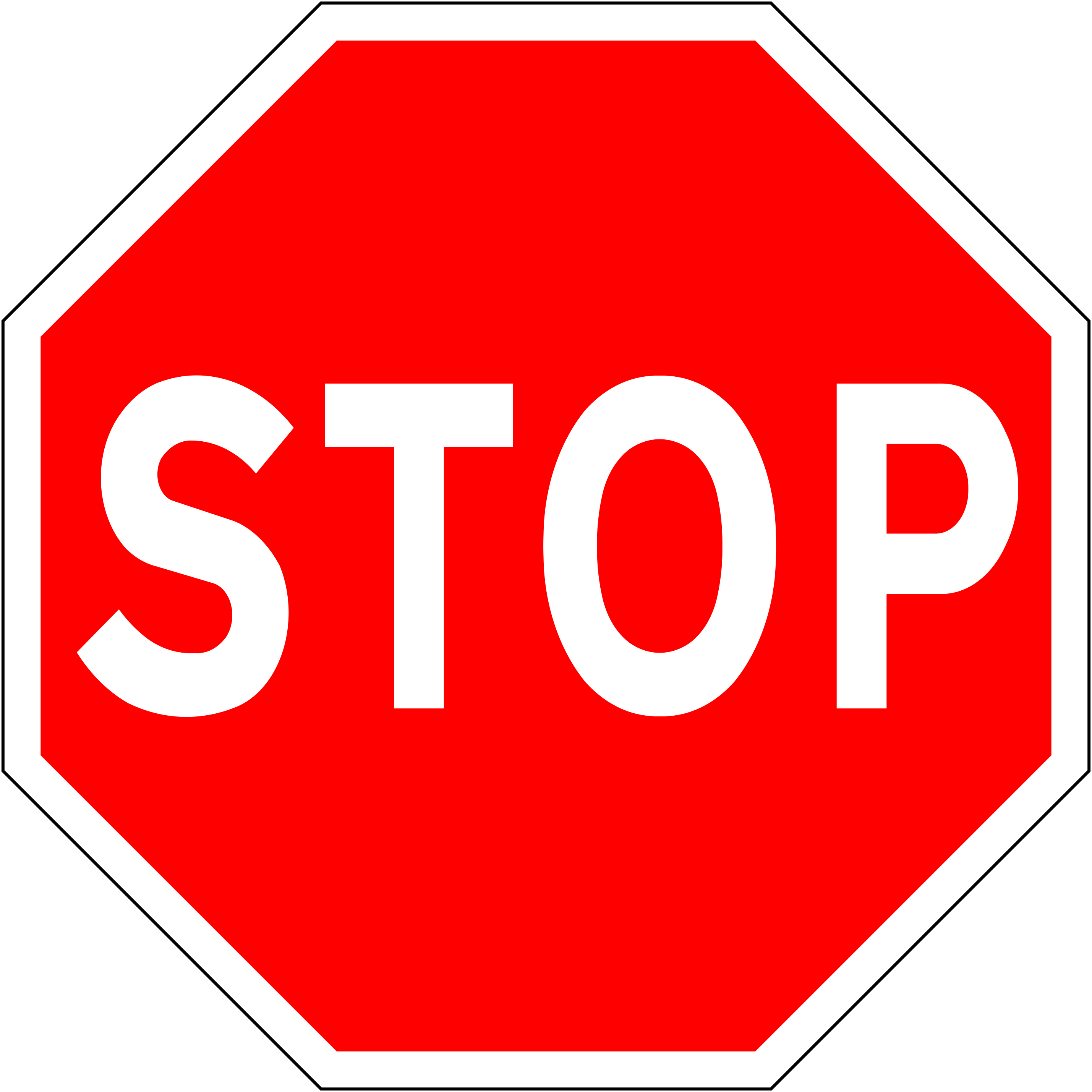
    Only one of these signs tells traffic to stop before entering the major road. Which is it?

    • ASign ACorrect answer
    • BSign B
    • CSign C
    • DSign D
    Show the answerHide the answer

    Correct answer: A

    Sign A is the stop sign. Regulation 29(4) of the Road Traffic (Traffic Signs) Regulations 2025 provides that traffic must stop before entering a major road, and Regulation 29(5) describes the sign as a red octagon showing the word Stop.

    Citation

    Source: Road Traffic (Traffic Signs) Regulations 2025 (S.I. No. 433 of 2025), Regulation 29(4), (5); Schedule 2, Part 3, checked on 2026-09-16.

  19. Question 19

    You want to overtake a cyclist, but doing so would inconvenience the cyclist. What must you do?

    • AOvertake if you sound the horn first
    • BOvertake if you stay within the road limit
    • CDo not overtake while it would cause danger or inconvenienceCorrect answer
    • DOvertake before another vehicle approaches
    Show the answerHide the answer

    Correct answer: C

    Article 10(1) of the Road Traffic (Traffic and Parking) Regulations 1997 prohibits overtaking or attempting to overtake when it would endanger or inconvenience the cyclist or another person.

    Citation

    Source: Road Traffic (Traffic and Parking) Regulations 1997 (S.I. No. 182 of 1997), Art. 10(1), as substituted by S.I. No. 473 of 2025, reg. 2(c), checked on 2026-09-15.

  20. Question 20

    You are turning left into a side road. A pedestrian has already stepped out and is crossing the mouth of that road. What must you do?

    • AContinue, because you have priority leaving the main road
    • BSound the horn so the pedestrian speeds up
    • CContinue if the pedestrian is not on a marked crossing
    • DYield to the pedestrian who has already started to crossCorrect answer
    Show the answerHide the answer

    Correct answer: D

    A driver approaching a junction must yield to a pedestrian who has already started to cross there, marked stripes or not. Article 8(3) of the Road Traffic (Traffic and Parking) Regulations 1997, substituted in October 2025, does not give turning traffic priority over someone already in the mouth of the side road.

    Citation

    Source: Road Traffic (Traffic and Parking) Regulations 1997 (S.I. No. 182 of 1997), Article 8(3), as substituted by S.I. No. 473 of 2025, reg. 2(b)(i), checked on 2026-09-15.