The bus theory test in Ireland (D) asks 100 questions in 120 minutes, and 74 correct answers pass it, so 26 mistakes are allowed. It covers licence categories D1, D, DE and D1E. Source: Citizens Information, page edited 6 May 2026, checked on 15 September 2026.

Official format

The test format

The format of the real test, with the source and the date we checked it.

Theory test formats
TestQuestionsMinutesCorrect to pass
Bus (D)10012074

Source: Bus (D), 2026-05-06, checked on 2026-09-15

Study areas

What the bus theory test covers

Every question in our bank for this test, grouped by the study area it belongs to.

Before you book

What you need to know

Licence categories covered

D, DE, D1 and D1E

Source: Prometric Ireland Ltd (Driver Theory Test Service), Driver Theory Test FAQs, dated 2026-08-14, checked on 2026-09-15

Test fee

€72

Source: Prometric Ireland Ltd (Driver Theory Test Service), Driver Theory Test Bus or Truck, dated 2025-06-13, checked on 2026-09-15

Validity from the test date

2 years

Source: Prometric Ireland Ltd (Driver Theory Test Service), Driver Theory Test FAQs, dated 2026-08-14, checked on 2026-09-15

First truck or bus (C1, C, D1, D) learner permit

A full category B licence plus a C or D theory test certificate

Source: Citizens Information, Learner permit rules for specific vehicle categories, dated 2025-09-29, checked on 2026-09-15

Minimum age, category D1 (minibus up to 16 passengers)

21 years

Source: Citizens Information, Categories of motor vehicles and minimum age of drivers in Ireland, dated 2025-07-07, checked on 2026-09-15

Minimum age, category D (bus)

24; 21 with a Driver CPC years

Source: Citizens Information, Categories of motor vehicles and minimum age of drivers in Ireland, dated 2025-07-07, checked on 2026-09-15

Official topic names used for the theory test by the RSA, theorytest.ie and Citizens Information

Rules of the road; Risk perception; Eco-driving; Hazard awareness; Safe driving behaviour

Source: Road Safety Authority, Theory test: what it is, undated, checked on 2026-09-15

Extra identity documents for C, D and CPC case study candidates

Truck, bus and CPC case study candidates also bring a full current category B licence (Irish, EU, EEA, Swiss or Ukrainian), or a current C or D Irish learner permit, or a full C or D licence

Source: Prometric Ireland Ltd (Driver Theory Test Service), ID requirements, dated 2025-02-20, checked on 2026-09-15

Skipping and flagging questions

Questions can be skipped or marked and returned to at any stage within the test time

Source: Prometric Ireland Ltd (Driver Theory Test Service), Driver Theory Test FAQs, dated 2026-08-14, checked on 2026-09-15

Sample questions

Try some questions

Choose an answer, then open the explanation to see the rule it comes from.

1 of 20
  1. Question 1

    What does the law say about the driver card you hold and use?

    • AYou may hold a separate card for each vehicle you drive
    • BYou may lend your card to another driver for a single shift
    • CYou may hold two valid cards where you work for two employers
    • DYou may hold only one valid card and you may use only your ownCorrect answer
    Show the answerHide the answer

    Correct answer: D

    The driver card is personal to the driver, who may hold only one valid card and may use only their own card. Lending or borrowing a card is not permitted. This is Article 27(1) and (2) of Regulation (EU) No 165/2014.

    Citation

    Source: Regulation (EU) No 165/2014 on tachographs in road transport, Article 27(1), (2), checked on 2026-09-16.

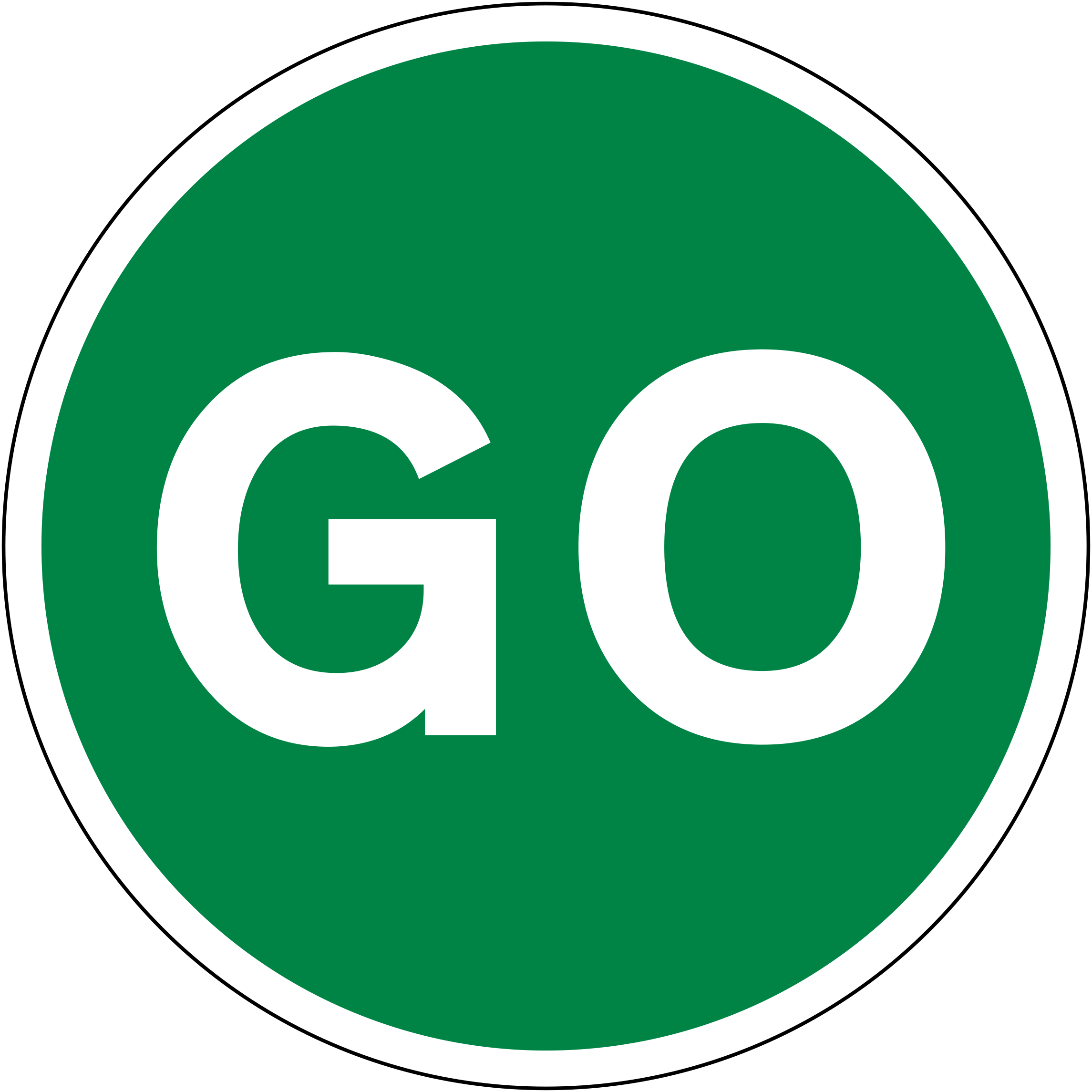
  2. Question 2Road sign

    Because of this sign, what must you do?

    • ATurn right at the junction ahead
    • BYield to traffic on the major road ahead
    • CGo straight aheadCorrect answer
    • DKeep to the left of the sign
    Show the answerHide the answer

    Correct answer: C

    The keep straight ahead sign is a mandatory sign under Regulation 4(1) of the Road Traffic (Traffic Signs) Regulations 2025, listed in Part 1 of Schedule 1. It requires traffic to go straight on. Keeping left, turning right further on and yielding are what other signs ask for.

    Citation

    Source: Road Traffic (Traffic Signs) Regulations 2025 (S.I. No. 433 of 2025), Regulation 4(1)(a); Schedule 1, Part 1, checked on 2026-09-16.

  3. Question 3

    You have already driven 9 hours today on a national road run and still have one delivery to make. What does the daily driving limit allow?

    • AYou may keep driving because the limit is on the working day rather than on driving
    • BYou may keep driving if your employer authorises a longer day
    • CYou may drive for up to 10 hours only if you have not already used both longer days this weekCorrect answer
    • DYou must stop at once, because 9 hours can never be extended
    Show the answerHide the answer

    Correct answer: C

    Daily driving is ordinarily 9 hours and may run to 10 hours no more than twice in a week. The cap is on driving time, not on the working day, and an employer cannot authorise a longer day beyond that limit. This is the daily driving limit in Article 6 of Regulation (EC) No 561/2006.

    Citation

    Source: Regulation (EC) No 561/2006 on the harmonisation of certain social legislation relating to road transport, Article 6(1), checked on 2026-09-15.

  4. Question 4

    A person drives a vehicle without holding a licence for that vehicle. Which drink-limit group applies?

    • AThe specified-person groupCorrect answer
    • BThe experienced-driver group
    • CNo drink limit applies
    • DThe passenger limit applies
    Show the answerHide the answer

    Correct answer: A

    Road Traffic Act 2010, section 3 defines a person driving without a licence for that vehicle as a specified person.

    Citation

    Source: Road Traffic Act 2010 (No. 25 of 2010), as amended by the Road Traffic (No. 2) Act 2011 (No. 28 of 2011), Section 3(1), definition of specified person, checked on 2026-09-15.

  5. Question 5

    Does Irish law set a zero blood alcohol limit for learner and newly licensed drivers?

    • AYes, any trace of alcohol breaks the limit
    • BYes, but only for learner permit holders
    • CNo, it sets 20 mg per 100 ml of bloodCorrect answer
    • DNo, it sets 50 mg per 100 ml of blood
    Show the answerHide the answer

    Correct answer: C

    Road Traffic Act 2010, section 4 sets a lower limit of 20 mg per 100 ml of blood for specified persons, rather than zero.

    Citation

    Source: Road Traffic Act 2010 (No. 25 of 2010), Section 4(2)(b), (3)(b) and (4)(b), checked on 2026-09-15.

  6. Question 6

    Which tyre fault makes a tyre illegal on a bus?

    • AA cut longer than 10 millimetres anywhere in the tread pattern
    • BA cut of any length that does not reach the ply or cord
    • CA cut over 25 millimetres that reaches the ply or cordCorrect answer
    • DA cut in the sidewall that has been repaired
    Show the answerHide the answer

    Correct answer: C

    A tyre is illegal if it has a cut over 25 millimetres or more than 10 per cent of the section width reaching the ply or cord. The other faults in the rule include a wrongly inflated or unsuitable tyre, a lump, bulge or tear, and ply or cord exposed. A short cut that does not reach the cord is not the fault the rule names. The source is the construction and use regulations for vehicles.

    Citation

    Source: Road Traffic (Construction and Use of Vehicles) Regulations 2003 (S.I. No. 5 of 2003), Regulation 55(1)(a) to (e) and (h), checked on 2026-09-16.

  7. Question 7

    What is the minimum distance from a road junction at which you may park?

    • A2 metres
    • B10 metres
    • C15 metres
    • D5 metresCorrect answer
    Show the answerHide the answer

    Correct answer: D

    The junction-parking rule in article 36 sets a 5 metre exclusion area around a road junction.

    Citation

    Source: Road Traffic (Traffic and Parking) Regulations 1997 (S.I. No. 182 of 1997), Article 36(2)(c), as substituted by S.I. No. 332 of 2012, reg. 16(m), checked on 2026-09-15.

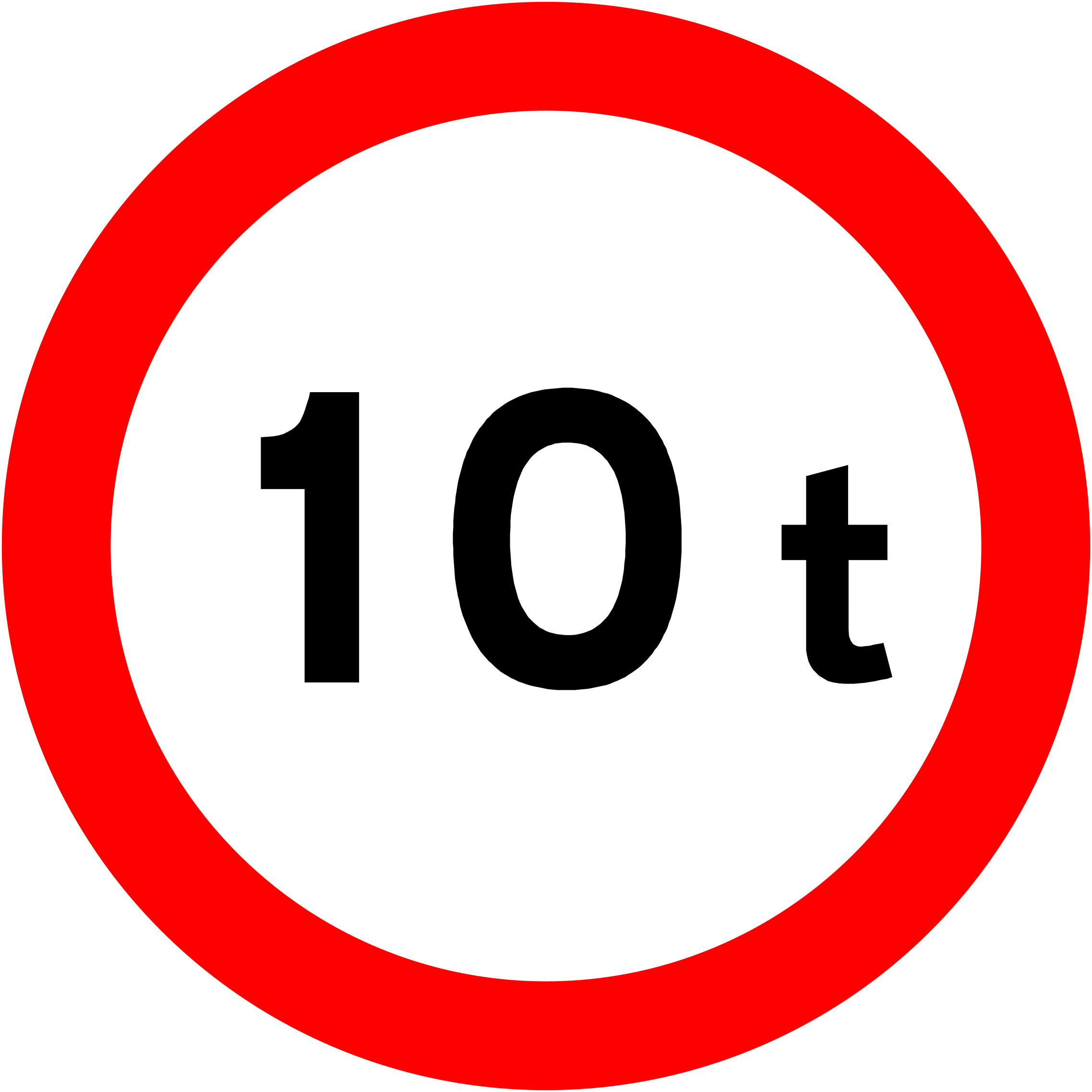
  8. Question 8Road sign

    Before a small bridge on a rural road, this sign faces you. What does it mean?

    • AA speed limit of 20 km/h
    • BOvertaking is not allowed
    • CPeople riding, leading or driving animals must not go past
    • DVehicles over the design gross weight shown must not go pastCorrect answer
    Show the answerHide the answer

    Correct answer: D

    This is the maximum design gross vehicle weight sign. Under Regulation 27 of the Road Traffic (Traffic Signs) Regulations 2025, the driver of a vehicle whose design gross vehicle weight is over the figure shown, in tonnes, must not go past it.

    Citation

    Source: Road Traffic (Traffic Signs) Regulations 2025 (S.I. No. 433 of 2025), Regulation 27(1), (2); Schedule 2, Part 2, checked on 2026-09-16.

  9. Question 9Road sign

    Before a major road, you face this sign. What does it require?

    • AStop before entering the major roadCorrect answer
    • BSlow right down and go if the road is clear
    • CStop only when traffic is coming
    • DStop only if you are turning right
    Show the answerHide the answer

    Correct answer: A

    Regulation 29 of the Road Traffic (Traffic Signs) Regulations 2025 provides that the stop sign indicates that traffic shall stop before entering a major road. Slowing and continuing, or stopping only when traffic is coming, does not meet that requirement, and the duty applies whichever way you are turning.

    Citation

    Source: Road Traffic (Traffic Signs) Regulations 2025 (S.I. No. 433 of 2025), Regulation 29(4), (5), checked on 2026-09-15.

  10. Question 10

    Who must you yield to when pulling away from a kerbside parking space?

    • AAll other traffic and pedestriansCorrect answer
    • BOnly vehicles approaching from behind
    • COnly pedestrians already on the road
    • DNobody once you have indicated
    Show the answerHide the answer

    Correct answer: A

    The moving-off rule requires a driver or rider starting from a stationary position to yield to other traffic and to pedestrians.

    Citation

    Source: Road Traffic (Traffic and Parking) Regulations 1997 (S.I. No. 182 of 1997), Article 8(2), checked on 2026-09-15.

  11. Question 11

    Which sign keeps a space for electric vehicles that are recharging?

    • ASign A
    • BSign BCorrect answer
    • CSign C
    • DSign D
    Show the answerHide the answer

    Correct answer: B

    Sign B is the electric vehicle recharging only sign. Part 2 of Schedule 2 to the Road Traffic (Traffic Signs) Regulations 2025 lists it among the restrictive signs made under Regulation 22. It keeps the space for electric vehicles while they recharge.

    Citation

    Source: Road Traffic (Traffic Signs) Regulations 2025 (S.I. No. 433 of 2025), Regulation 22(1); Schedule 2, Part 2, checked on 2026-09-16.

  12. Question 12

    How many reduced daily rests may you take between two weekly rests?

    • AAs often as the work needs
    • BTwo reduced rests only
    • CNo more than three timesCorrect answer
    • DOne reduced rest only
    Show the answerHide the answer

    Correct answer: C

    Daily rest may be reduced to at least 9 hours no more than three times between two weekly rests. The work cannot demand more reduced rests than that, and the cap is three, not one or two. This is the daily rest rule in Article 8 of Regulation (EC) No 561/2006.

    Citation

    Source: Regulation (EC) No 561/2006 on the harmonisation of certain social legislation relating to road transport, Article 4(g) and Article 8(2), (4), checked on 2026-09-15.

  13. Question 13

    Your lane has a road arrow pointing left. Which direction must you follow from that lane?

    • AStraight ahead if the junction is clear
    • BEither direction chosen by the vehicle ahead
    • CLeft, as indicated by the lane arrowCorrect answer
    • DRight if you signal before the arrow
    Show the answerHide the answer

    Correct answer: C

    Article 27 of the Road Traffic (Traffic and Parking) Regulations 1997 requires traffic in a lane marked with a directional arrow to proceed in the direction that arrow shows.

    Citation

    Source: Road Traffic (Traffic and Parking) Regulations 1997 (S.I. No. 182 of 1997), Art. 27(2), (3); (3) as substituted by S.I. No. 473 of 2025, reg. 2(f), checked on 2026-09-15.

  14. Question 14

    What following gap does RSA guidance advise on a wet road?

    • AAt least two seconds
    • BAt least four secondsCorrect answer
    • CExactly three seconds
    • DA fixed distance of 20 metres
    Show the answerHide the answer

    Correct answer: B

    RSA guidance in the Rules of the Road advises at least double the dry gap in wet conditions, giving at least four seconds.

    Citation

    Source: Rules of the Road, Road Safety Authority, Revision No. 9, May 2026 (guidance, not law), Following distance guidance, PDF page 117, checked on 2026-09-15.

  15. Question 15

    A driver who was not wearing a seat belt pays the fixed charge. How many penalty points apply?

    • A2 penalty points
    • B3 penalty pointsCorrect answer
    • C5 penalty points
    • DA fine with no penalty points
    Show the answerHide the answer

    Correct answer: B

    The current Road Traffic Act 2002, Schedule 1, Part 7, applies 3 penalty points when the fixed charge is paid. The 5-point value applies on conviction.

    Citation

    Source: Road Traffic Act 2002 (No. 12 of 2002), Schedule 1, Part 7, references 1 to 6, as substituted by Road Traffic Act 2014, section 10(f), checked on 2026-09-15.

  16. Question 16

    How long is the automatic disqualification when a fully licensed driver who is not a learner or novice reaches 12 points?

    • A6 monthsCorrect answer
    • B3 months
    • C9 months
    • D12 months
    Show the answerHide the answer

    Correct answer: A

    Section 3(1)(a) of the Road Traffic Act 2002, as substituted by section 8 of the Road Traffic Act 2014, sets a 6 month disqualification when this driver reaches 12 points.

    Citation

    Source: Road Traffic Act 2014 (No. 3 of 2014), Section 8(c), substituting section 3(1)(a) of the Road Traffic Act 2002, checked on 2026-09-15.

  17. Question 17

    You drive a coach with belts fitted and a child aged four is sitting in a belted seat. Which rule applies?

    • AThe child must wear the belt or use an appropriate child restraintCorrect answer
    • BThe child may travel without a belt if an adult holds the child on a lap
    • CThe child needs a belt only on a motorway journey
    • DBelts do not apply to a child of that age on a coach
    Show the answerHide the answer

    Correct answer: A

    On a bus or coach of category M2 or M3 with belts fitted, every adult and every child aged 3 or over occupying a seat must wear a safety belt or an appropriate child restraint. Holding a child on a lap does not replace a belt or a restraint, and the duty is not limited to motorway travel.

    Citation

    Source: European Communities (Compulsory Use of Safety Belts and Child Restraint Systems in Motor Vehicles) Regulations 2006 (S.I. No. 240 of 2006), Regulation 9(1) and (2), checked on 2026-09-16.

  18. Question 18

    You are driving a bus carrying passengers on a scheduled service. As a specified person at work, what is the blood alcohol limit that applies to you?

    • A50 milligrammes of alcohol per 100 millilitres of blood for all drivers
    • B20 milligrammes of alcohol per 100 millilitres of bloodCorrect answer
    • C27 milligrammes of alcohol per 100 millilitres of blood
    • D9 milligrammes of alcohol per 100 millilitres of blood
    Show the answerHide the answer

    Correct answer: B

    Where the driver of a bus is a specified person, the blood alcohol limit is 20 milligrammes of alcohol per 100 millilitres of blood. The figure of 50 milligrammes is the general limit for drivers who are not specified persons. The lower figures for urine and breath are separate limits with their own units. The source is the Road Traffic Act 2010.

    Citation

    Source: Road Traffic Act 2010 (No. 25 of 2010), Section 4(2)(b), checked on 2026-09-16.

  19. Question 19

    A bus with seating for more than 8 passengers and no standing passengers is on a public road that is neither a motorway nor a dual carriageway. What vehicle limit applies?

    • A80 km/hCorrect answer
    • B90 km/h
    • C100 km/h
    • D120 km/h
    Show the answerHide the answer

    Correct answer: A

    Regulation 3 of the Road Traffic (Ordinary Speed Limits Buses, Heavy Goods Vehicles, etc) Regulations 2008 sets an 80 km/h limit for this bus on other public roads.

    Citation

    Source: Road Traffic (Ordinary Speed Limits Buses, Heavy Goods Vehicles, etc) Regulations 2008 (S.I. No. 546 of 2008), Reg. 3, checked on 2026-09-15.

  20. Question 20

    What unit is shown on a maximum design gross vehicle weight sign?

    • AThe unladen weight in kilograms
    • BThe weight of the load alone in kilograms
    • CThe weight on one axle in kilograms
    • DTonnesCorrect answer
    Show the answerHide the answer

    Correct answer: D

    Under Regulation 27 of the Road Traffic (Traffic Signs) Regulations 2025, the sign displays figures with the unit t, meaning the design gross vehicle weight in tonnes. It is not an unladen weight, not the weight of the load alone, and not an axle weight.

    Citation

    Source: Road Traffic (Traffic Signs) Regulations 2025 (S.I. No. 433 of 2025), Regulation 27(1); Schedule 2, Part 2, checked on 2026-09-15.

The test you sit for a bus is the Bus Theory Test, coded D, and one sitting of it serves every bus category rather than one test for each vehicle. A pass on it is what the National Driver Licence Service looks for before it grants a first bus learner permit, so the theory comes before the permit, before the training and before the driving test.

Where the bus test sits in the licence route

A bus theory pass is not a standing start. It is one document in a sequence, and the order catches people out: certificate first, then the learner permit, then the training, then the driving test. Regulation 20(5)(a)(v) of the Road Traffic (Licensing of Drivers) Regulations 2006 makes a theory test certificate for the category a condition of a first learner permit. The certificate expires, and a long wait for a permit or a test slot can run it out, which means sitting and paying for the same test twice.

The bus categories do not share a single minimum age, and holding a Driver CPC moves some of them. Two people of the same age can be in different positions, one able to apply and one not, depending on the category on the application. Read the age against the category you are applying for rather than against buses in general: the minibus categories and the full bus categories are set apart from each other in regulation 9 of those Regulations as substituted.

The learner conditions bite harder on a bus than on a car. A bus learner must not tow a trailer, and no learner permit holder may carry passengers for reward, both under regulation 17(6)(b). Breaking a condition on the permit is an offence in its own right under the Road Traffic (Licensing of Learner Drivers) Regulations 2007, so a bus learner permit is not a way to start the work you are training for.

What the bus questions are built on

The topic list is the one every category is tested against, but the questions are written for a long, heavy vehicle carrying people who are mostly not belted in, and that changes what a right answer looks like. A gap that is fine in a car is not a gap a coach can take from a standing start. A braking question is asking about the weight behind you and the passengers on their feet in the aisle as much as about the distance to the vehicle in front.

Several separate bodies of rule sit behind the bus-only questions, each with its own instrument. Ordinary speed limits are set by vehicle type in the Road Traffic (Ordinary Speed Limits - Buses, Heavy Goods Vehicles, etc) Regulations 2008, where a bus built to carry standing passengers is held to a lower limit on every road than a bus that is not. Learn a single speed for buses and that question goes every time. Speed limiters are a separate requirement under the European Communities (Installation and Use of Speed Limitation Devices in Motor Vehicles) Regulations 2005, and a limiter question is about the device being fitted and working, not about the limit on the sign.

Driving time, breaks and rest come from Regulation (EC) No 561/2006, which reaches passenger vehicles built to carry more than nine people including the driver. That threshold puts a large minibus inside the drivers hours rules while smaller passenger work stays outside them. The records you must carry come from Regulation (EU) No 165/2014: the driver card, and the sheets for the current day and the previous 56 days. That period was lengthened, and older study notes still give the shorter one, which makes it the most common out of date answer in bus material.

Booking it, sitting it, and what to practise here

The figures at the top of this page are the ones that decide the booking: what the sitting costs, how long you are in the chair, how many answers have to be right, and how long the certificate lasts once you hold it. Each is carried with the source it came from, so you can check it rather than take it on trust.

Two things go wrong on the day more often than a hard question does. The first is identification. Bus candidates are asked for more at check in than car candidates are, and the extra requirement is set out above; arriving with the car list alone is a wasted journey and a lost fee. The second is pacing. A long sitting invites two bad habits, racing the first half and then re-reading everything, or stalling on a single question instead of using the control that lets you come back to it.

The bus question set on this site is still being built, so the practice offered above is what actually exists rather than a promise of a full bus paper. The overlap is worth knowing while that work goes on: most of what the bus test asks is general road rules, signs and risk, and those questions are the same ones every other category faces. The lessons cover that ground now, and the bus-only material is the part still being added.

Sources

FAQ

Bus theory test: questions people ask

How many questions are on the bus theory test, and how many do you need to pass?

The bus theory test has 100 questions in 120 minutes, and you pass with 74 correct answers.

Source: Prometric Ireland Ltd (Driver Theory Test Service), Driver Theory Test FAQs, dated 2026-08-14, checked on 2026-09-15

How much does the bus theory test cost?

The test fee is €72. No limit on the number of attempts; the fee is paid each time.

Source: Prometric Ireland Ltd (Driver Theory Test Service), Driver Theory Test Bus or Truck, dated 2025-06-13, checked on 2026-09-15

Source: Prometric Ireland Ltd (Driver Theory Test Service), Driver Theory Test FAQs, dated 2026-08-14, checked on 2026-09-15

Which licence categories does the bus theory test cover?

One pass of this test covers licence categories D, DE, D1 and D1E.

Source: Prometric Ireland Ltd (Driver Theory Test Service), Driver Theory Test FAQs, dated 2026-08-14, checked on 2026-09-15

What is the minimum age to drive in the bus categories?

The minimum age for category D1 is 21 years. The minimum age for category D is 24 years or 21 years with a Driver CPC.

Source: Citizens Information, Categories of motor vehicles and minimum age of drivers in Ireland, dated 2025-07-07, checked on 2026-09-15

Can you take the bus theory test in Irish?

Yes, the test is available in Irish as well as English.

Source: Prometric Ireland Ltd (Driver Theory Test Service), Driver Theory Test FAQs, dated 2026-08-14, checked on 2026-09-15

What do you need before a first bus learner permit?

You need a full category B licence plus a C or D theory test certificate. For category D1E you need a full category D1 licence first.

Source: Citizens Information, Learner permit rules for specific vehicle categories, dated 2025-09-29, checked on 2026-09-15

Source: Citizens Information, Categories of motor vehicles and minimum age of drivers in Ireland, dated 2025-07-07, checked on 2026-09-15

Is there a single theory test for bus and truck licences together?

Yes. The combined bus and truck theory test (CD) has 140 questions in 180 minutes, you pass with 104 correct answers, and the fee is €84. One pass covers licence categories C, C1, CE, C1E, D, D1, DE and D1E.

Source: Prometric Ireland Ltd (Driver Theory Test Service), Driver Theory Test FAQs, dated 2026-08-14, checked on 2026-09-15

Source: Prometric Ireland Ltd (Driver Theory Test Service), Driver Theory Test Bus or Truck, dated 2025-06-13, checked on 2026-09-15

Source: Citizens Information Board, Driver theory test, dated 2026-05-06, checked on 2026-09-15

How much Driver CPC training does a bus driver need to keep the qualification?

Driver CPC periodic training is 35 hours every 5 years, taken in 7-hour blocks. You must be over 21 for a bus Driver CPC.

Source: Irish Statute Book, European Communities (Vehicle Drivers Certificate of Professional Competence) (No. 2) Regulations 2008, S.I. No. 359 of 2008, reg. 12(3), undated, checked on 2026-09-15

Source: Citizens Information, Learner permit rules for specific vehicle categories, dated 2025-09-29, checked on 2026-09-15

What do the learner permit and the bus driving test cost after you pass?

A learner permit application to the NDLS costs €45, and the bus driving test fee is €120. Your theory test pass certificate is valid for 2 years from the date of the test.

Source: National Driver Licence Service (NDLS), Fees, undated, checked on 2026-09-15

Source: Citizens Information, Driving test, dated 2026-02-25, checked on 2026-09-15

Source: Prometric Ireland Ltd (Driver Theory Test Service), Driver Theory Test FAQs, dated 2026-08-14, checked on 2026-09-15