Bus theory test

Bus Mock Theory Test Ireland: 74 Correct of 100 to Pass

The real format, with the real time limit. Find out where you stand.
  • 100questions
  • 120minutes
  • 74to pass
Source: Bus Theory Test, checked on 2026-09-15Start the mock testWarm up with a practice set

This free mock theory test for Ireland follows the bus test (D): 100 questions, 120 minutes on the clock and 74 correct to pass, which leaves 26 mistakes. Flag a question and change an answer before you finish. Source: Citizens Information, page edited 6 May 2026, checked on 15 September 2026.

How it works

What the mock test does

  • Timed like the real test

    A countdown runs for the full time allowed, so you practise your pace as well as your answers.

  • Flag and come back

    Mark any question you are unsure of and jump back to it from the question grid before you finish.

  • Results by topic

    Your score is broken down by study area, with a link to the lesson for each one you need to revisit.

  • Every answer explained

    Review each question afterwards with the explanation and the Irish law it comes from.

Official format

The official format

Question count, time limit and pass mark come from the official test description.

Theory test formats
TestQuestionsMinutesCorrect to pass
Bus (D)10012074

Source: Bus (D), 2026-05-06, checked on 2026-09-15

On the day

What the test screen lets you do

Timing display

A built-in countdown timer and progress tracking are shown on screen

Source: Prometric Ireland Ltd (Driver Theory Test Service), Accessibility and support options, dated 2026-06-11, checked on 2026-09-15

Skipping and flagging questions

Questions can be skipped or marked and returned to at any stage within the test time

Source: Prometric Ireland Ltd (Driver Theory Test Service), Driver Theory Test FAQs, dated 2026-08-14, checked on 2026-09-15
Changing and reviewing answers

An answer can be cancelled and another selected, and all answers can be reviewed and changed before finishing

Source: Prometric Ireland Ltd (Driver Theory Test Service), Driver Theory Test FAQs, dated 2026-08-14, checked on 2026-09-15

How questions are drawn

Questions are selected at random from the question bank for the relevant test sections

Source: Prometric Ireland Ltd (Driver Theory Test Service), Driver Theory Test FAQs, dated 2026-08-14, checked on 2026-09-15

Try it now

Sample questions and answers

1 of 20
  1. Question 1

    On a winter afternoon, sunset is at 16:25. Which period marks the start of lighting-up hours?

    • AAt 16:25 exactly
    • BAt 17:25
    • CAt 16:55Correct answer
    • DAt 15:55
    Show the answerHide the answer

    Correct answer: C

    Article 3(1) of the 1963 Lighting Regulations starts lighting-up hours half an hour after sunset. Half an hour after 16:25 is 16:55.

    Citation

    Source: Road Traffic (Lighting of Vehicles) Regulations 1963 (S.I. No. 189 of 1963), Article 3(1), definition of lighting-up hours, checked on 2026-09-15.

  2. Question 2

    Who must authorise a mandatory testing checkpoint, and how?

    • AAny Garda, verbally at the roadside
    • BA Garda of inspector rank or higher, in writingCorrect answer
    • CA judge, by a court order
    • DA local authority, by public notice
    Show the answerHide the answer

    Correct answer: B

    Road Traffic Act 2010, section 10 requires written authorisation by a Garda of inspector rank or higher.

    Citation

    Source: Road Traffic Act 2010 (No. 25 of 2010), as amended by the Road Traffic Act 2016 (No. 21 of 2016), Section 10(2), (3), (4), (4A) and (6), checked on 2026-09-15.

  3. Question 3

    A vehicle is used with defective or worn tyres. Which penalty point values apply?

    • A2 points on a fixed charge and 4 on convictionCorrect answer
    • B3 points on a fixed charge and 5 on conviction
    • C5 points on a fixed charge and 7 on conviction
    • DNo points on a fixed charge and no points on conviction
    Show the answerHide the answer

    Correct answer: A

    Section 54(d) of the Road Traffic Act 2010 sets the defective or worn tyre offence at 2 points on payment of a fixed charge and 4 points on conviction.

    Citation

    Source: Road Traffic Act 2010 (No. 25 of 2010), Section 54(d), inserting Road Traffic Act 2002, Schedule 1, Part 9, reference 3 (defective or worn tyres), checked on 2026-09-15.

  4. Question 4

    On a motorway you see a continuous yellow line on the left and take it for a no-parking line, as at a town kerb. What does that line mark here?

    • AThe left-hand edge of the carriageway of a motorway or protected roadCorrect answer
    • BNo parking at any time, as a yellow line does at a town kerb
    • CA bus lane running along the left of the motorway carriageway
    • DThe right-hand edge of the carriageway of a motorway or protected road
    Show the answerHide the answer

    Correct answer: A

    Under Regulation 77 of the Road Traffic (Traffic Signs) Regulations 2025, as substituted, that continuous yellow line marks the left-hand edge of the carriageway on a motorway or protected road. The town kerb meaning of a yellow line does not apply here. It is not a bus lane and not the right-hand edge.

    Citation

    Source: Road Traffic (Traffic Signs) Regulations 2025 (S.I. No. 433 of 2025), Regulation 77, as substituted by S.I. No. 205 of 2026, reg. 3(d), checked on 2026-09-15.

  5. Question 5

    On an ordinary two-way road, how should you position your vehicle under the keep-left rule?

    • ANear the centre so traffic can pass on both sides
    • BOn the left so oncoming and overtaking traffic can pass on your rightCorrect answer
    • COn the right whenever no vehicle is approaching
    • DAcross the centre when the road is wide
    Show the answerHide the answer

    Correct answer: B

    The keep-left rule in article 9 of the Road Traffic (Traffic and Parking) Regulations 1997 places your vehicle on the left, allowing other traffic to pass on the right safely.

    Citation

    Source: Road Traffic (Traffic and Parking) Regulations 1997 (S.I. No. 182 of 1997), Art. 9, checked on 2026-09-15.

  6. Question 6

    What does a traffic lane control sign tell you in general?

    • AThat traffic must stop, or the direction traffic must takeCorrect answer
    • BThat a green arrow gives you priority over merging traffic
    • CThat a red X means slow down
    • DThat an inclined arrow means the lane bends
    Show the answerHide the answer

    Correct answer: A

    Regulation 37 of the Road Traffic (Traffic Signs) Regulations 2025 provides that the traffic lane control sign indicates to traffic in the lane that traffic must stop or the direction in which traffic must proceed. A green arrow does not confer priority, a red X closes the lane rather than meaning slow down, and an inclined arrow requires a move into the next lane, not a warning of a bend.

    Citation

    Source: Road Traffic (Traffic Signs) Regulations 2025 (S.I. No. 433 of 2025), Regulation 37(1), (2), checked on 2026-09-15.

  7. Question 7

    What does a prohibitory sign tell you?

    • AA hazard is ahead
    • BA stated movement or action is forbiddenCorrect answer
    • CA route must be followed
    • DA town lies in the direction shown
    Show the answerHide the answer

    Correct answer: B

    The prohibitory-sign rule in regulation 14 identifies an action or movement that a vehicle must not make.

    Citation

    Source: Road Traffic (Traffic Signs) Regulations 2025 (S.I. No. 433 of 2025), Regulation 14(2), checked on 2026-09-15.

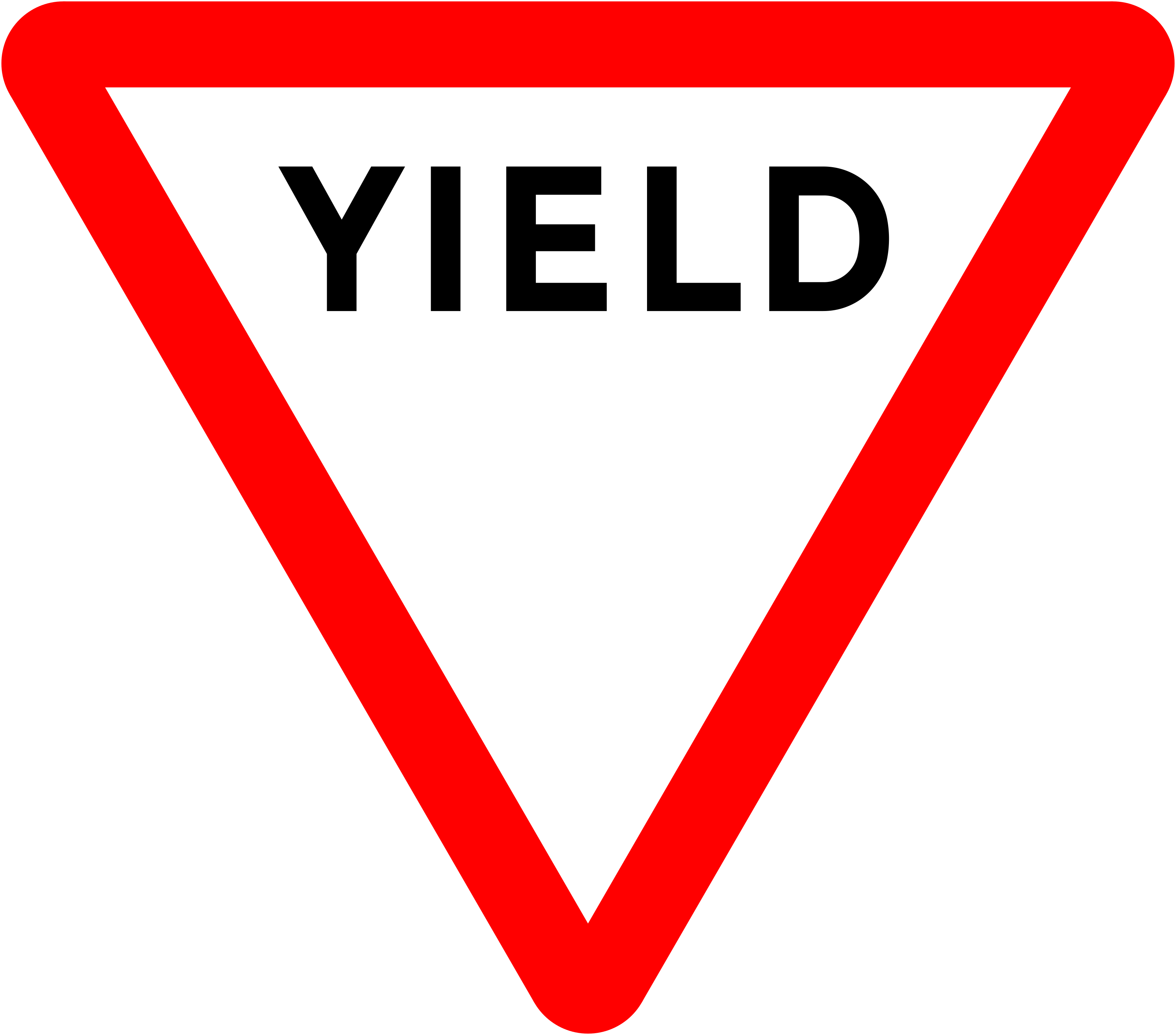
  8. Question 8Road sign

    How must you act at this sign?

    • AYield right of way to traffic on the major road aheadCorrect answer
    • BYield only to pedestrians crossing in front of you
    • CCarry on, as traffic on the major road must yield to you
    • DYield only to vehicles turning into your road
    Show the answerHide the answer

    Correct answer: A

    Regulation 29(2) of the Road Traffic (Traffic Signs) Regulations 2025 provides that the yield sign tells traffic to yield right of way to traffic on the major road ahead. The duty is yours, not the major road's, and it is owed to that traffic, not only to turning vehicles or pedestrians.

    Citation

    Source: Road Traffic (Traffic Signs) Regulations 2025 (S.I. No. 433 of 2025), Regulation 29(2), (3); Schedule 2, Part 3, checked on 2026-09-16.

  9. Question 9

    You have only a short local run today. Must you still use a record sheet or your driver card?

    • ANo, because records are needed only on days with a long run
    • BNo, because records are needed only on international work
    • CYes, because you must use a record sheet or driver card every day you driveCorrect answer
    • DNo, because the office keeps the record instead of you
    Show the answerHide the answer

    Correct answer: C

    A record sheet or driver card is used every day on which you drive, including a short local run. The duty is not confined to long runs or international work, and the office keeping a copy does not replace your use of the record. This is the recording duty in Article 34 of Regulation (EU) No 165/2014.

    Citation

    Source: Regulation (EU) No 165/2014 on tachographs in road transport, Article 34(1), checked on 2026-09-15.

  10. Question 10

    A mobile phone rests on a driver's lap while the driver reads its screen. Does this count as holding the phone?

    • AYes, the body is supporting the phoneCorrect answer
    • BNo, because the driver's hands are free
    • CNo, if the message is short
    • DYes, but only when travelling above 50 km/h
    Show the answerHide the answer

    Correct answer: A

    Road Traffic Act 2006, section 3 includes supporting a mobile phone with another part of the body, so a phone on the lap is held.

    Citation

    Source: Road Traffic Act 2006 (No. 23 of 2006), Section 3(1), (3), (7) and (9), checked on 2026-09-15.

  11. Question 11

    You hold no driving licence at all and you want a first learner permit for a bus. What must you hold first?

    • AA pass in the theory test on its own
    • BA learner permit for category B
    • CA full driving licence for category BCorrect answer
    • DA letter from your employer
    Show the answerHide the answer

    Correct answer: C

    A first learner permit in category D1 or D is not available until you already hold a full category B driving licence. A theory test pass, a car learner permit, or an employer's letter does not meet that gate. This is the first permit rule in the Road Traffic (Licensing of Drivers) (Amendment) (No. 2) Regulations 2025.

    Citation

    Source: Road Traffic (Licensing of Drivers) (Amendment) (No. 2) Regulations 2025 (S.I. No. 527 of 2025), Regulation 19(2)(a), (b), checked on 2026-09-15.

  12. Question 12

    A person does not hold a Driver CPC. What is the minimum age for category DE?

    • A18
    • B21
    • C23
    • D24Correct answer
    Show the answerHide the answer

    Correct answer: D

    The table that applies where the person does not hold a CPC sets 24 for category DE. Category D carries the same age. The age of 21 in that table is for the light bus categories D1 and D1E. The source is the licensing regulations for drivers.

    Citation

    Source: Road Traffic (Licensing of Drivers) (Amendment) (No. 2) Regulations 2011 (S.I. No. 483 of 2011), Regulation 2(d), substituting Regulation 9(1) of S.I. No. 537 of 2006, checked on 2026-09-16.

  13. Question 13

    How far back must the copies of the journey form go when you carry them on the vehicle?

    • AThe previous 28 days, because that is the review period
    • BThe previous 12 days
    • CThe previous 56 daysCorrect answer
    • DThe previous 90 days
    Show the answerHide the answer

    Correct answer: C

    The driver must carry a completed journey form for the current service and copies covering the previous 56 days. That period matches the length of time the enforcement authorities may ask to see. A shorter period would leave part of the relevant record missing. The source is the amended Regulation on social legislation relating to road transport.

    Citation

    Source: Regulation (EC) No 561/2006 on the harmonisation of certain social legislation relating to road transport, Article 16(4), checked on 2026-09-16.

  14. Question 14

    Who pays for the accommodation used for a regular weekly rest away from base?

    • AThe driver, and the cost may be claimed back quarterly
    • BThe consignor of the load being carried
    • CThe driver and the employer split the cost equally
    • DThe employer, because the cost of the accommodation outside the vehicle is the employer responsibilityCorrect answer
    Show the answerHide the answer

    Correct answer: D

    The employer covers the cost of accommodation taken outside the vehicle for a regular weekly rest, or for a weekly rest of more than 45 hours taken as compensation. The driver should not carry that cost. This is Article 8(8) of Regulation (EC) No 561/2006.

    Citation

    Source: Regulation (EC) No 561/2006 on the harmonisation of certain social legislation relating to road transport, Article 8(8), checked on 2026-09-16.

  15. Question 15

    Does the bus lane marking work on its own, or with the upright bus lane sign?

    • AThe words alone make the lane a bus lane without any upright sign
    • BThe marking is advisory and does not indicate a bus lane on its own
    • CThe marking and the upright sign work together to indicate a bus laneCorrect answer
    • DThe marking means taxis only, without any bus being allowed in the lane
    Show the answerHide the answer

    Correct answer: C

    Under Regulation 75 of the Road Traffic (Traffic Signs) Regulations 2025, the bus lane marking indicates a bus lane in association with the nearside, offside or contra-flow bus lane sign. The words alone do not make the lane, the marking is not advisory, and it does not mean taxis only.

    Citation

    Source: Road Traffic (Traffic Signs) Regulations 2025 (S.I. No. 433 of 2025), Regulation 75(1), (2), checked on 2026-09-15.

  16. Question 16

    May you park fully on a grass verge to keep a narrow carriageway clear?

    • AYes, because the road is narrow
    • BNo, parking on a grass verge is prohibitedCorrect answer
    • CYes, for up to 30 minutes
    • DYes, because a verge is different from a footpath
    Show the answerHide the answer

    Correct answer: B

    The verge-parking rule in article 36 prohibits parking on a footpath, grass margin or median strip.

    Citation

    Source: Road Traffic (Traffic and Parking) Regulations 1997 (S.I. No. 182 of 1997), Article 36(2)(i), as substituted by S.I. No. 332 of 2012, reg. 16(m), checked on 2026-09-15.

  17. Question 17

    Category D covers a passenger vehicle with accommodation for how many persons?

    • ANot more than 8 persons
    • BNot more than 16 persons on the lower deck
    • CMore than 8 personsCorrect answer
    • DMore than 16 persons
    Show the answerHide the answer

    Correct answer: C

    Category D is the licence category for a passenger vehicle with accommodation for more than 8 persons. A vehicle with accommodation for not more than 8 persons falls outside category D. The number of persons is the accommodation the vehicle provides, not the number of people on board at any one time. The source is the licensing regulations for drivers.

    Citation

    Source: Road Traffic (Licensing of Drivers) (Amendment) (No. 2) Regulations 2011 (S.I. No. 483 of 2011), Regulation 2(b), substituting the Table in Regulation 6 of S.I. No. 537 of 2006, categories D, D1, DE and D1E, checked on 2026-09-16.

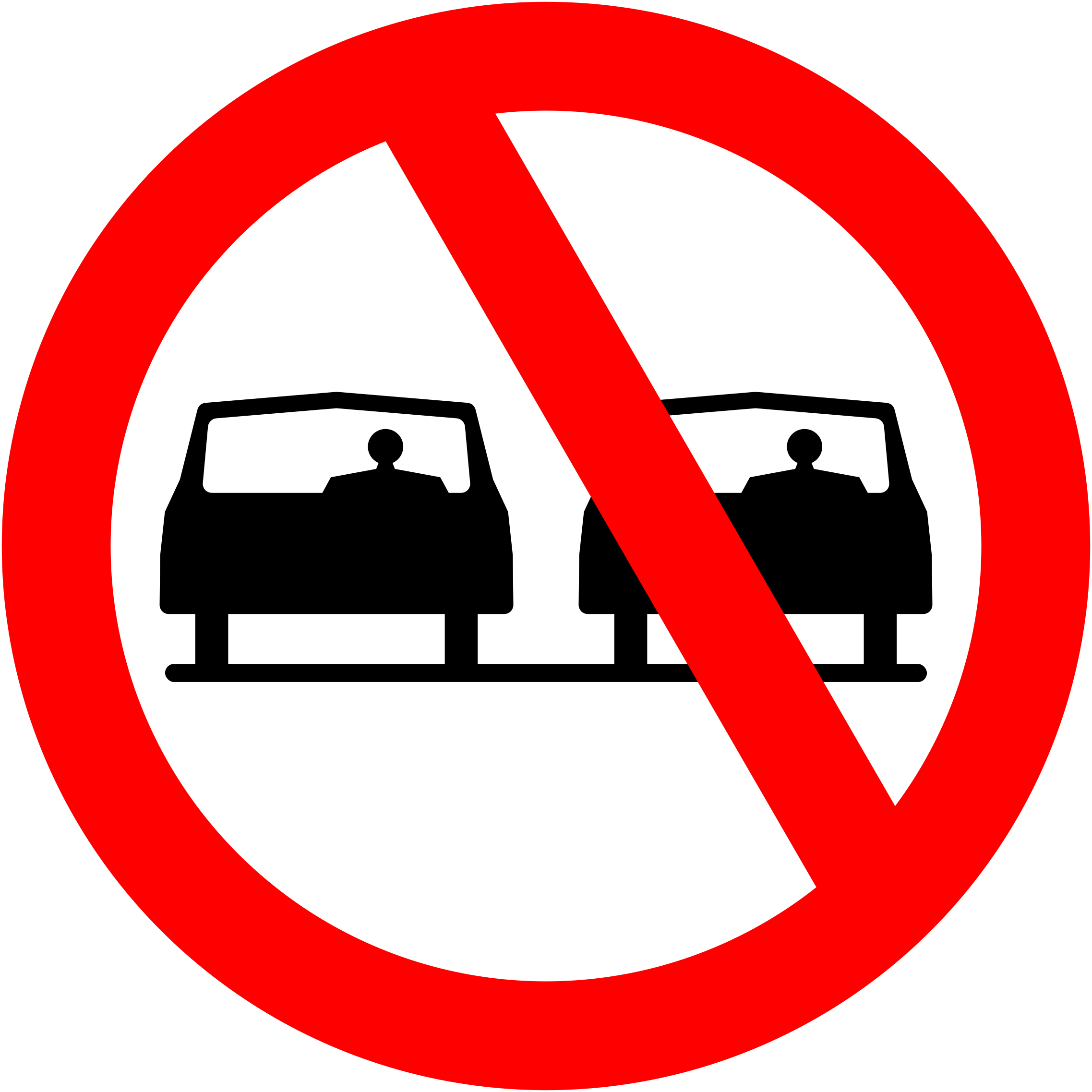
  18. Question 18Road sign

    From which point does this sign apply?

    • AFrom the point on the road where the sign is providedCorrect answer
    • BFrom the last junction you passed
    • COnly while another vehicle is in sight
    • DOnly on a road with a continuous centre line
    Show the answerHide the answer

    Correct answer: A

    Article 10(3) of the Road Traffic (Traffic and Parking) Regulations 1997 bans overtaking on the stretch of road where the no overtaking sign is provided, so the ban runs from the sign itself. It does not reach back to the last junction you passed, it is not limited to times when another vehicle is in sight, and it does not depend on a continuous centre line.

    Citation

    Source: Road Traffic (Traffic and Parking) Regulations 1997 (S.I. No. 182 of 1997), Article 10(3), as substituted by S.I. No. 473 of 2025, reg. 2(c), checked on 2026-09-15.

  19. Question 19

    The daily inspection items are set out in groups in the check schedule. How are those groups described?

    • ABrakes, lights and mirrors
    • BIn cab, exterior and engine runningCorrect answer
    • CTyres, doors and seats
    • DFuel, oil, water, tyres, lights and mirrors
    Show the answerHide the answer

    Correct answer: B

    The items in the inspection schedule fall into the in cab group, the exterior group and the engine running group, so far as they apply to the vehicle. The schedule covers the check a driver carries out before driving, not a service or a repair. The source is the vehicle maintenance and repair regulations.

    Citation

    Source: Road Safety Authority (Commercial Vehicle Roadworthiness) (Vehicle Maintenance and Repair) Regulations 2013 (S.I. No. 348 of 2013), Regulation 8(1) and (2), Regulation 8(3), Regulation 8(5) and Schedule 1, Regulation 8(6) and (7)(a), checked on 2026-09-16.

  20. Question 20

    A white arrow painted in your lane points right and straight ahead. What must traffic in that lane do?

    • ATreat the arrow as a suggestion when the lane is empty
    • BGo right or straight aheadCorrect answer
    • CRead it as showing where other traffic will go
    • DObey it only at traffic lights
    Show the answerHide the answer

    Correct answer: B

    Regulation 60 of the Road Traffic (Traffic Signs) Regulations 2025 provides that a white arrow pointing right and straight ahead shows those two permitted directions for traffic in that lane. It is a different arrow from left and straight ahead. It is not a suggestion and not limited to traffic lights.

    Citation

    Source: Road Traffic (Traffic Signs) Regulations 2025 (S.I. No. 433 of 2025), Regulation 60, checked on 2026-09-15.