The motorcycle theory test in Ireland (AM) asks 40 questions in 45 minutes, and 35 correct answers pass it, so 5 mistakes are allowed. It covers licence categories AM, A1, A2 and A. Source: Citizens Information, page edited 6 May 2026, checked on 15 September 2026.

Official format

The test format

The format of the real test, with the source and the date we checked it.

Theory test formats
TestQuestionsMinutesCorrect to pass
Motorcycle and moped (AM)404535

Source: Motorcycle and moped (AM), 2026-05-06, checked on 2026-09-15

Study areas

What the motorcycle and moped theory test covers

Every question in our bank for this test, grouped by the study area it belongs to.

Before you book

What you need to know

Licence categories covered

A, A1, A2 and AM

Source: Prometric Ireland Ltd (Driver Theory Test Service), Driver Theory Test FAQs, dated 2026-08-14, checked on 2026-09-15

Which licence categories each driver theory test covers

A: AM, A1, A2, A. B: B, BE, W. C: C, C1, CE, C1E. D: D, D1, DE, D1E. CD: all C and D categories

Source: Citizens Information, Driver theory test, dated 2026-05-06, checked on 2026-09-15

Test fee

€45

Source: Prometric Ireland Ltd (Driver Theory Test Service), Driver Theory Test Car or Bike, dated 2025-02-20, checked on 2026-09-15

Availability in Irish

yes

Source: Prometric Ireland Ltd (Driver Theory Test Service), Driver Theory Test FAQs, dated 2026-08-14, checked on 2026-09-15

Validity from the test date

2 years

Source: Prometric Ireland Ltd (Driver Theory Test Service), Driver Theory Test FAQs, dated 2026-08-14, checked on 2026-09-15

First learner permit, all categories

A theory test pass is needed before a first learner permit in any category

Source: Citizens Information, Learner driving permits for cars and work vehicles, dated 2025-09-29, checked on 2026-09-15

Minimum age, category AM (mopeds and light quadricycles)

16 years

Source: Citizens Information, Categories of motor vehicles and minimum age of drivers in Ireland, dated 2025-07-07, checked on 2026-09-15

Minimum age, category A1 (motorcycles up to 125 cc and 11 kW; motor tricycles up to 15 kW)

16 years

Source: Citizens Information, Categories of motor vehicles and minimum age of drivers in Ireland, dated 2025-07-07, checked on 2026-09-15

Minimum age, category A2 (motorcycles of 35 kW or less)

18 years

Source: Citizens Information, Categories of motor vehicles and minimum age of drivers in Ireland, dated 2025-07-07, checked on 2026-09-15

Minimum age, category A (any motorcycle)

20 (progressive access); 24 (direct access); 21 for motor tricycles years

Source: Citizens Information, Categories of motor vehicles and minimum age of drivers in Ireland, dated 2025-07-07, checked on 2026-09-15

Motorcycle Initial Basic Training (IBT) for a first AM or A1 learner permit

16 hours in 4 modules

Source: Citizens Information, Learner permit rules for specific vehicle categories, dated 2025-09-29, checked on 2026-09-15

Motorcycle Initial Basic Training (IBT) for a first A2 or A course

18 hours: modules 1, 3 and 5

The official sources disagree

The authority's IBT page and the 2018 Regulations give modules 1, 3 and 5 for a first A2 or A course, which comes to 18 hours, or 16 where IBT was done before. Citizens Information describes 16 hours in four modules.

Source: Road Safety Authority, Motorcycling lessons (IBT), undated, checked on 2026-09-15

Source: Irish Statute Book, Road Traffic (Courses of Instruction) (Motorcycles) (Amendment) Regulations 2018, S.I. No. 433 of 2018, reg. 2(d), (h) (S.I. No. 681 of 2011, reg. 5(3) and Sch. 1), undated, checked on 2026-09-15

Source: Citizens Information, Learner permit rules for specific vehicle categories, dated 2025-09-29, checked on 2026-09-15

Motorcycle learner permit holder with a valid IBT certificate

May ride unaccompanied on public roads; L plates on a yellow fluorescent hi-viz tabard; no passengers; no motorway

Source: Citizens Information, Learner permit rules for specific vehicle categories, dated 2025-09-29, checked on 2026-09-15

Official or standard price of a motorcycle Initial Basic Training (IBT) course

Not published. There is no set price for a motorcycle Initial Basic Training course. The authority's own page says each instructor sets their own fee, and the Citizens Information learner permit page gives no price. Any prices we show come from named training schools.

Source: Road Safety Authority, Motorcycling lessons (IBT), undated, checked on 2026-09-15

One motorcycle training provider's published IBT prices

A1 IBT (16 hours) €495; A2 IBT (18 hours) €550; A IBT (18 hours) €550; school bike supplied

Secondary source: Two Wheels Training

Source: Two Wheels Training, Prices, dated 2026-06-02, checked on 2026-09-15

One Dublin motorcycle training provider's published IBT prices

A and A2 IBT €650; A1 manual and scooter IBT €600; Module 5 €450

Secondary source: Irish Motorcycle Training

Source: Irish Motorcycle Training, Motorcycle lesson prices, dated 2025-12-31, checked on 2026-09-15
Sample questions

Try some questions

Choose an answer, then open the explanation to see the rule it comes from.

1 of 20
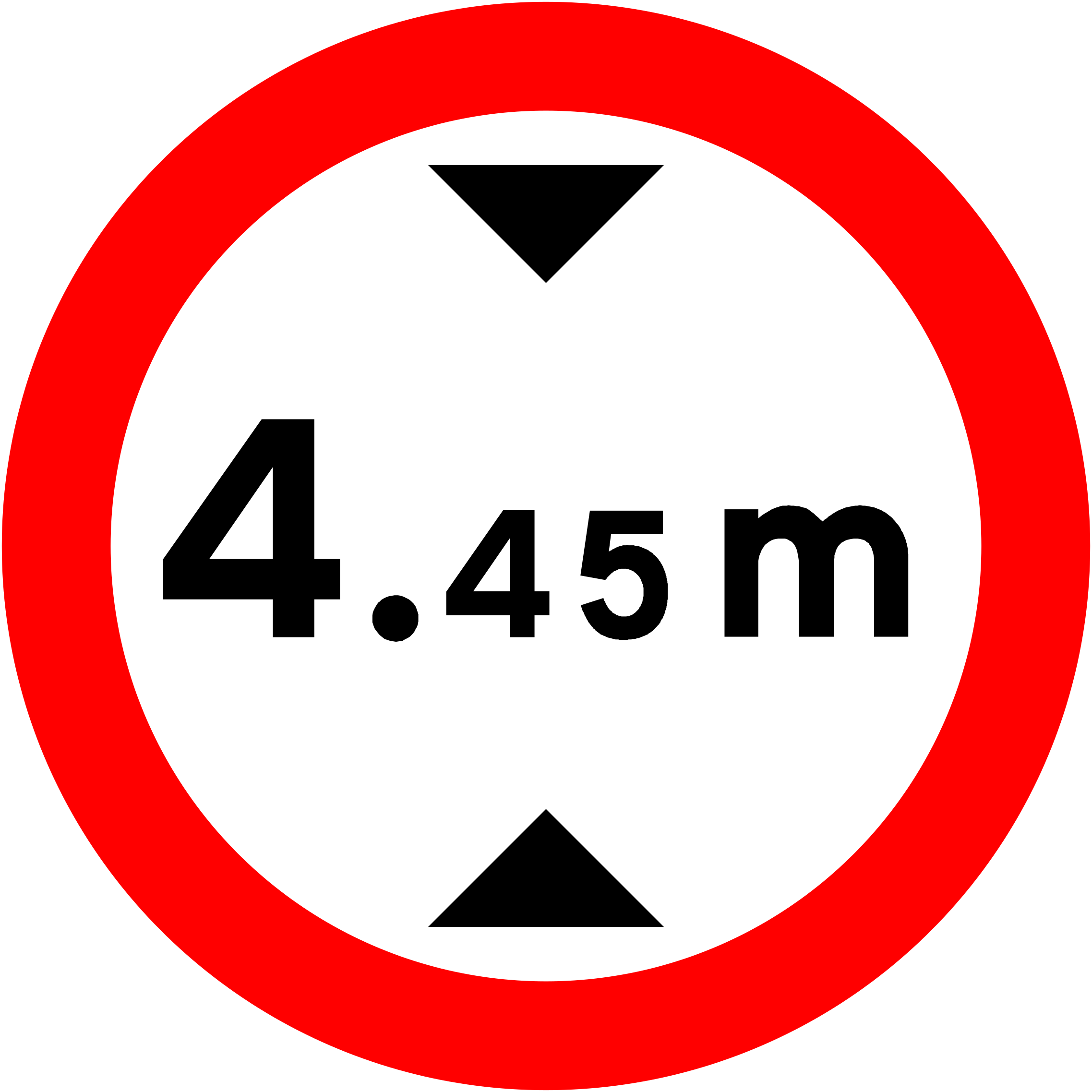
  1. Question 1Road sign

    What message does this sign give?

    • AA speed limit of 20 km/h
    • BThe height of the structure ahead, in metresCorrect answer
    • CVehicles with at least the axles shown must not use the right-hand lane
    • DOvertaking is not allowed
    Show the answerHide the answer

    Correct answer: B

    The picture shows the height restriction sign. Regulation 23 of the Road Traffic (Traffic Signs) Regulations 2025 provides that, on or near a structure, it shows the height of that structure, with the figure given in metres.

    Citation

    Source: Road Traffic (Traffic Signs) Regulations 2025 (S.I. No. 433 of 2025), Regulation 23(1), (2); Schedule 2, Part 2, checked on 2026-09-16.

  2. Question 2

    You miss a turn and consider reversing from a side road onto the major road. What does the reversing rule require?

    • AReverse after checking mirrors carefully
    • BReverse if no traffic is visible
    • CDo not reverse onto the major roadCorrect answer
    • DReverse with hazard warning lights on
    Show the answerHide the answer

    Correct answer: C

    The reversing rule in article 12 prohibits reversing onto a major road from another road, even when the road appears clear.

    Citation

    Source: Road Traffic (Traffic and Parking) Regulations 1997 (S.I. No. 182 of 1997), Article 12(1) to (3), checked on 2026-09-15.

  3. Question 3

    What makes a lane a bus lane?

    • AThe painted line alone
    • BThe bus lane sign together with the bus lane markingCorrect answer
    • CThe colour of the lane surface
    • DA sign at either end of the street, without the marking
    Show the answerHide the answer

    Correct answer: B

    Regulation 10 of the Road Traffic (Traffic Signs) Regulations 2025 provides that the nearside or offside with-flow bus lane sign, together with the bus lane marking, indicates a bus lane, and that the contra-flow sign with that marking indicates a contra-flow bus lane. The line alone, the surface colour, or a sign without the marking is not enough.

    Citation

    Source: Road Traffic (Traffic Signs) Regulations 2025 (S.I. No. 433 of 2025), Regulation 10(1), checked on 2026-09-15.

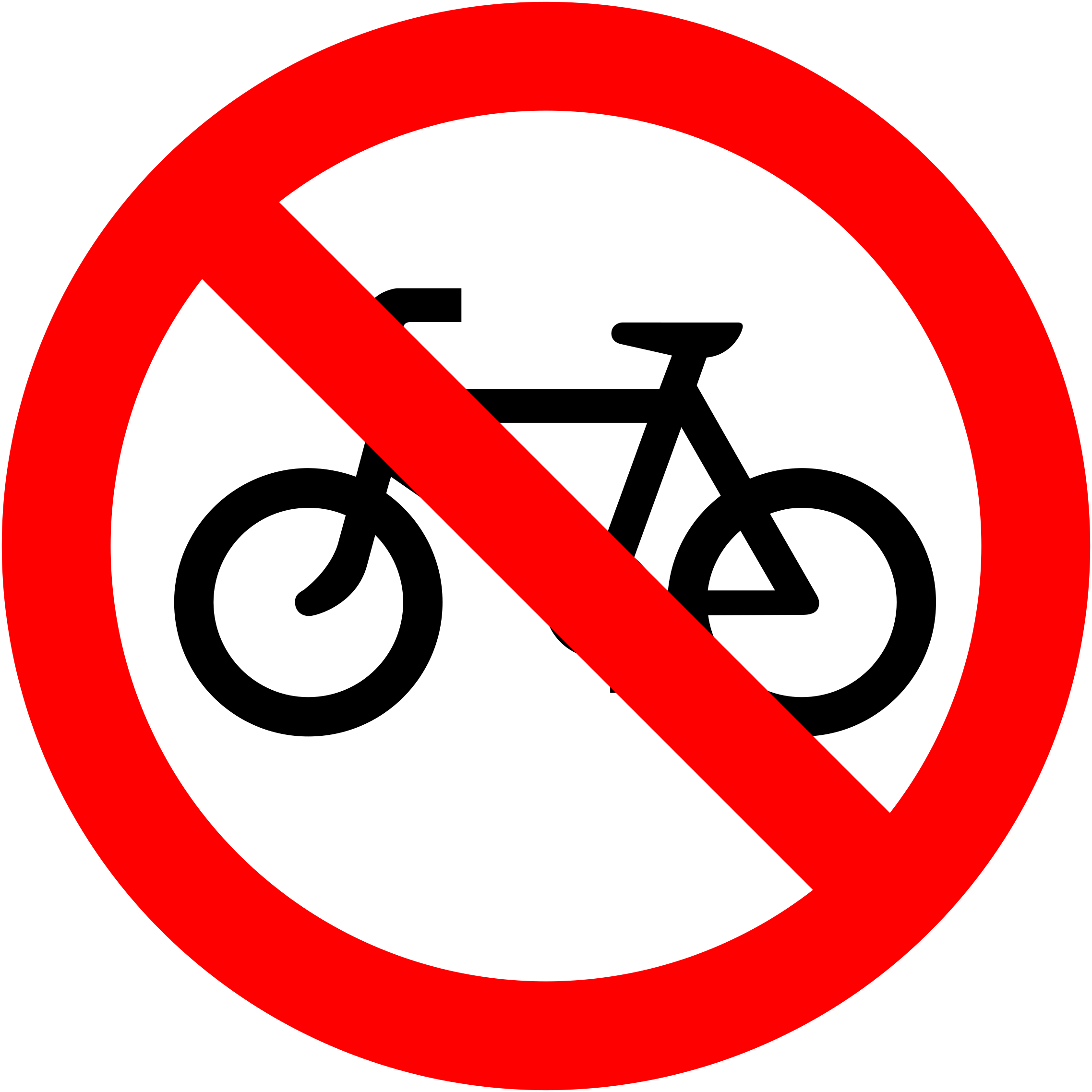
  4. Question 4Road sign

    Does this sign catch a motorcyclist or a moped rider?

    • AYes, it stops motorcycles
    • BNo, it does not bind motorcyclists or moped ridersCorrect answer
    • CYes, it stops all two-wheeled vehicles
    • DIt is advisory for cyclists and binding for motorcyclists
    Show the answerHide the answer

    Correct answer: B

    Under Regulation 17 of the Road Traffic (Traffic Signs) Regulations 2025, the sign binds a person driving a pedal cycle, e-moped or electric scooter. A motorcyclist or a category AM moped rider is not in that list. The sign is not a ban on all two-wheeled vehicles, and it is not advisory.

    Citation

    Source: Road Traffic (Traffic Signs) Regulations 2025 (S.I. No. 433 of 2025), Regulation 17(1), checked on 2026-09-15.

  5. Question 5

    You are on an e-scooter and want to overtake a line of stopped cars. How must you ride?

    • AIn single fileCorrect answer
    • BTwo abreast so you are more visible
    • CThree abreast on a wide road
    • DAny number abreast if the cars are stopped
    Show the answerHide the answer

    Correct answer: A

    When overtaking other traffic, e-scooter users must ride in single file. Article 47A of the Road Traffic (Traffic and Parking) Regulations 1997, inserted in 2024, mirrors the pedal cycle rule: no more than two abreast in ordinary riding, and single file when passing other traffic, even if that traffic is stopped.

    Citation

    Source: Road Traffic (Traffic and Parking) Regulations 1997 (S.I. No. 182 of 1997), Article 47A, inserted by S.I. No. 222 of 2024, reg. 4(j), checked on 2026-09-15.

  6. Question 6

    How does an electrically powered vehicle recharging bay marking differ from a car share recharging bay?

    • ABoth mark a parking bay for any small vehicle, with no further distinction between them
    • BBoth mark a disabled persons' bay, whether or not the electrically powered vehicle symbol is shown
    • CBoth mark a bay for hybrid vehicles as well as for fully electric vehicles
    • DThe recharging bay is the symbol alone; the car share recharging bay adds the car share wordsCorrect answer
    Show the answerHide the answer

    Correct answer: D

    Under Regulation 85 of the Road Traffic (Traffic Signs) Regulations 2025, the recharging bay is the electrically powered vehicle symbol in white. Regulation 84 adds the words Car Share to that symbol for the car share recharging and parking bay. Neither marking is a small-vehicle bay, a disabled persons' bay, or a hybrid-vehicle bay.

    Citation

    Source: Road Traffic (Traffic Signs) Regulations 2025 (S.I. No. 433 of 2025), Regulation 85(1), (2), checked on 2026-09-15.

  7. Question 7

    A vehicle is already travelling on a mini-roundabout as you arrive. What must you do?

    • AEnter because approaching traffic has priority
    • BEnter if the other vehicle is on your left
    • CEnter if you reached the sign first
    • DYield to the vehicle already on the mini-roundaboutCorrect answer
    Show the answerHide the answer

    Correct answer: D

    The mini-roundabout rule in regulation 5 requires entering traffic to yield to any traffic already on the mini-roundabout.

    Citation

    Source: Road Traffic (Traffic and Parking) (Amendment) (No. 2) Regulations 2012 (S.I. No. 332 of 2012), Regulation 5(1), (2), checked on 2026-09-15.

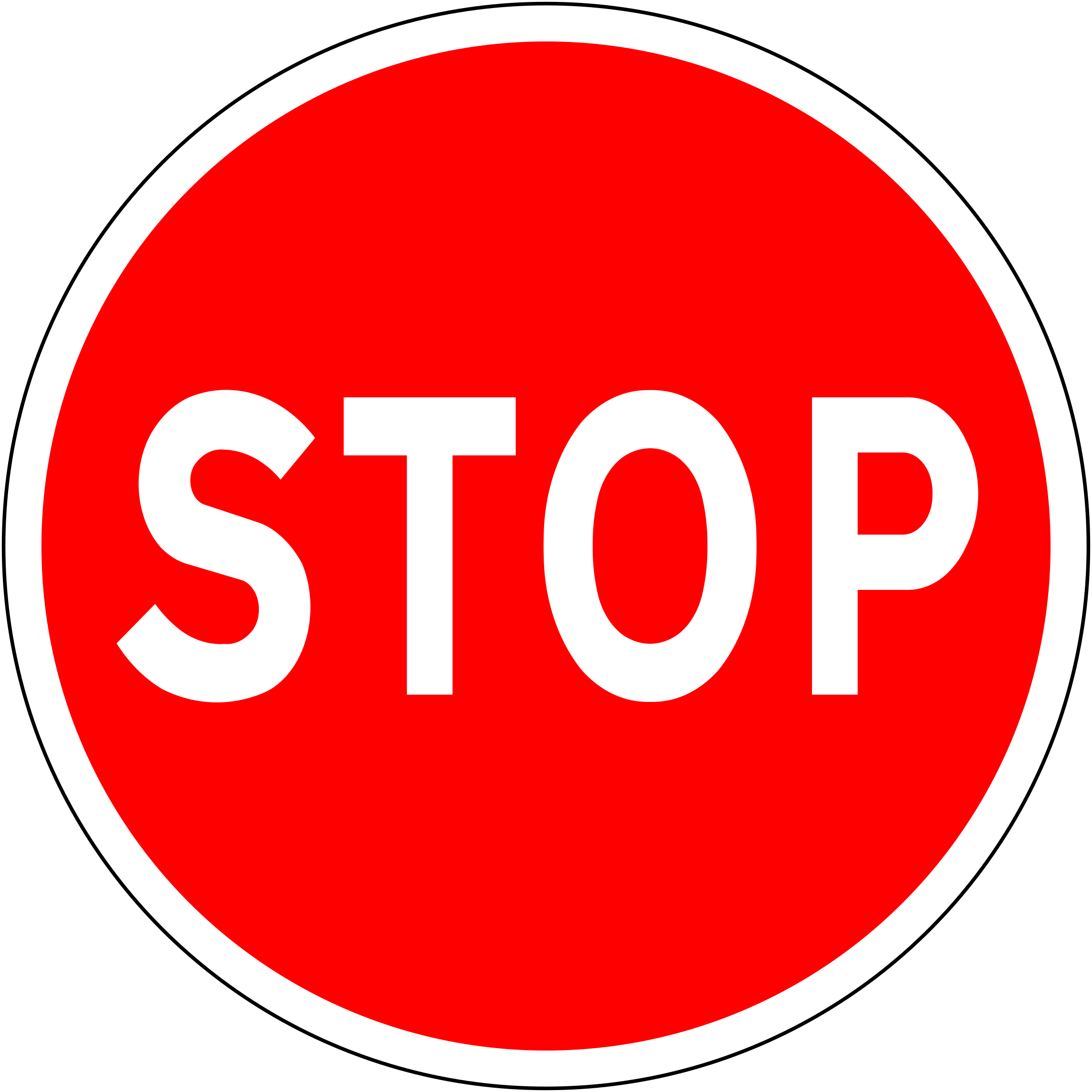
  8. Question 8Road sign

    At roadworks, this disc is shown facing your stream of traffic. Where must you stop?

    • ALevel with the person holding it
    • BWherever the road ahead looks clear
    • COnly if you are in a heavy vehicle
    • DIn advance of the signCorrect answer
    Show the answerHide the answer

    Correct answer: D

    Regulation 32 of the Road Traffic (Traffic Signs) Regulations 2025 provides that when the STOP disc is exhibited facing your stream, traffic must stop in advance of the sign. Stopping level with the person, rolling on because the road looks empty, or treating it as a heavy-vehicle rule does not meet that requirement.

    Citation

    Source: Road Traffic (Traffic Signs) Regulations 2025 (S.I. No. 433 of 2025), Regulation 32(1), (2), checked on 2026-09-15.

  9. Question 9

    After completing IBT, what document must you carry while riding on your first motorcycle or moped learner permit?

    • AA valid IBT certificateCorrect answer
    • BAn EDT logbook
    • CA certificate for any vehicle category
    • DA receipt for private lessons
    Show the answerHide the answer

    Correct answer: A

    Regulation 4 of the Road Traffic (Courses of Instruction) (Motorcycles) Regulations 2011 requires a first motorcycle or moped learner to carry a valid IBT certificate while riding after the course.

    Citation

    Source: Road Traffic (Courses of Instruction) (Motorcycles) Regulations 2011 (S.I. No. 681 of 2011), Regulations 3, 4(1), 4(4) and 4(7), as amended by S.I. No. 433 of 2018, checked on 2026-09-15.

  10. Question 10

    A novice driver fails to display the required N plate or tabard. Which penalty points apply?

    • A3 points on a fixed charge and 5 on conviction
    • BNo points on a fixed charge and no points on conviction
    • C2 points on a fixed charge and 4 on convictionCorrect answer
    • D7 points on a fixed charge and 12 on conviction
    Show the answerHide the answer

    Correct answer: C

    Section 10(b) of the Road Traffic Act 2014 sets the points for failing to display an N plate or tabard at 2 on payment of a fixed charge and 4 on conviction.

    Citation

    Source: Road Traffic Act 2014 (No. 3 of 2014), Section 10(b), inserting Road Traffic Act 2002, Schedule 1, Part 1A, reference 1 (failure to display N plate or tabard), checked on 2026-09-15.

  11. Question 11

    For the yield and stop signs, does traffic include a tram?

    • AYes, it includes trams
    • BYes, but only on a tram-only street
    • CYes, except where trams have their own signals
    • DNo, traffic does not include a light rail vehicleCorrect answer
    Show the answerHide the answer

    Correct answer: D

    Regulation 29 of the Road Traffic (Traffic Signs) Regulations 2025 says that, for the yield and stop signs, a reference to traffic does not include a light rail vehicle. The provision does not add a tram driving rule, and it does not bring trams in on tram-only streets or outside their own signals.

    Citation

    Source: Road Traffic (Traffic Signs) Regulations 2025 (S.I. No. 433 of 2025), Regulation 29(1), checked on 2026-09-15.

  12. Question 12

    Who has right of way when you turn right at a junction and an oncoming vehicle continues straight ahead?

    • AYield to the oncoming vehicleCorrect answer
    • BTurn first because you arrived earlier
    • CTurn first because right-turning traffic has priority
    • DWait only if the oncoming driver sounds the horn
    Show the answerHide the answer

    Correct answer: A

    The right-turn rule in article 8 requires a driver turning right to yield to an oncoming vehicle that is going straight ahead.

    Citation

    Source: Road Traffic (Traffic and Parking) Regulations 1997 (S.I. No. 182 of 1997), Article 8(7), checked on 2026-09-15.

  13. Question 13

    You are on the footpath facing a red traffic light and want to cross. What does the law require?

    • ACross if the road looks clear
    • BDo not start to cross while the light facing you is redCorrect answer
    • CCross if vehicles have stopped in the other direction
    • DStart to cross and finish quickly if the light stays red
    Show the answerHide the answer

    Correct answer: B

    A pedestrian facing a red traffic light must not start to cross. Article 46(2) of the Road Traffic (Traffic and Parking) Regulations 1997 is a ban on setting off against red, not a gap-in-traffic rule or a race to finish before the light changes.

    Citation

    Source: Road Traffic (Traffic and Parking) Regulations 1997 (S.I. No. 182 of 1997), Article 46(2), as substituted by S.I. No. 332 of 2012, reg. 16(r)(i), checked on 2026-09-15.

  14. Question 14

    You and another driver arrive together at an unsigned crossroads where neither road ends and neither vehicle has started to cross. The other driver is on your right. Who should go first?

    • AYou, because you are going straight on
    • BYou, if your road appears wider
    • CThe driver on your rightCorrect answer
    • DThe driver who signals first
    Show the answerHide the answer

    Correct answer: C

    The unsigned-junction rule in article 8 requires you to yield to traffic and pedestrians coming from your right when neither road ends.

    Citation

    Source: Road Traffic (Traffic and Parking) Regulations 1997 (S.I. No. 182 of 1997), Article 8(5), as substituted by S.I. No. 332 of 2012, reg. 16(c), checked on 2026-09-15.

  15. Question 15

    A variable speed limit is displayed electronically on a national managed road. Which limit applies while it is shown?

    • AThe ordinary road limit regardless of the display
    • BThe vehicle limit even if the display is lower
    • CThe limit shown on the electronic displayCorrect answer
    • DThe highest limit shown earlier that day
    Show the answerHide the answer

    Correct answer: C

    Section 10B of the Road Traffic Act 2004, inserted by the Road Traffic and Roads Act 2023, makes the electronically displayed variable limit the applicable limit while it is displayed.

    Citation

    Source: Road Traffic Act 2004 (No. 44 of 2004), s. 10B, inserted by Road Traffic and Roads Act 2023 (No. 16 of 2023), s. 56, checked on 2026-09-15.

  16. Question 16

    You realise that your vehicle is facing against the motorway traffic flow. What does the motorway rule require?

    • AContinue against the flow until the next service area
    • BUse the hard shoulder to travel against the flow
    • CDo not drive against the direction of trafficCorrect answer
    • DProceed against the flow when no vehicle is visible
    Show the answerHide the answer

    Correct answer: C

    Article 33 of the Road Traffic (Traffic and Parking) Regulations 1997, as substituted by the current rule, prohibits driving against the direction of traffic flow on a motorway.

    Citation

    Source: Road Traffic (Traffic and Parking) Regulations 1997 (S.I. No. 182 of 1997), Art. 33(1)(a), as substituted by S.I. No. 222 of 2024, reg. 4(g), checked on 2026-09-15.

  17. Question 17

    How does a turn right ahead sign differ from a turn right sign placed at the junction itself?

    • AThe ahead sign requires the right turn at the junction ahead, not at the signCorrect answer
    • BBoth signs require you to turn as soon as you pass them on the road
    • CThe ahead sign is only a warning of a right-hand bend in the road
    • DThe ahead sign marks a slip road starting at the sign itself
    Show the answerHide the answer

    Correct answer: A

    Under Regulation 4 of the Road Traffic (Traffic Signs) Regulations 2025, turn right applies at the sign and turn right ahead applies at the junction ahead. They are different mandatory signs. The ahead sign is not a bend warning and does not mark a slip road.

    Citation

    Source: Road Traffic (Traffic Signs) Regulations 2025 (S.I. No. 433 of 2025), Regulation 4(1)(a); Schedule 1, Part 1, checked on 2026-09-15.

  18. Question 18

    Why may there be no fixed speed limit sign inside a road tunnel?

    • ABecause the lit sign is only advisory, so every vehicle keeps the usual road limit in the tunnel
    • BWhere the tunnel speed limit sign is provided, the fixed speed limit signs are not required in that tunnelCorrect answer
    • CBecause the usual road limit still applies inside the tunnel even while the sign is lit
    • DBecause the lit sign applies to goods vehicles only and other traffic keeps the usual limit
    Show the answerHide the answer

    Correct answer: B

    Under Regulation 35 of the Road Traffic (Traffic Signs) Regulations 2025, where the road tunnel speed limit sign is provided, the fixed speed limit signs are not required in that tunnel. The lit sign is the limit for the road in the tunnel, not advice, not a goods-only rule, and not a reason to keep applying a different usual limit.

    Citation

    Source: Road Traffic (Traffic Signs) Regulations 2025 (S.I. No. 433 of 2025), Regulation 35(1), (4), checked on 2026-09-15.

  19. Question 19

    You parked in a pedestrianised street at 9.00. The plate shows the restriction starting at 11.00. What must you do?

    • ALeave the vehicle, because you arrived before the hours began
    • BStay parked if you display hazard lights
    • CStay parked if the vehicle is under 3,500 kg
    • DMove the vehicle before the restricted hours beginCorrect answer
    Show the answerHide the answer

    Correct answer: D

    During the hours on the plate nobody may drive into a pedestrianised street, and a vehicle already parked there must be taken out before those hours start. Article 45 of the Road Traffic (Traffic and Parking) Regulations 1997 does not let you stay because you arrived early, show hazard lights, or sit under 3,500 kg.

    Citation

    Source: Road Traffic (Traffic and Parking) Regulations 1997 (S.I. No. 182 of 1997), Article 45(1) to (3), as amended, checked on 2026-09-15.

  20. Question 20

    Which material does RSA training advise for improving your visibility at night?

    • AFluorescent material only
    • BMatt black material
    • CReflective materialCorrect answer
    • DTransparent material
    Show the answerHide the answer

    Correct answer: C

    RSA IBT advice on being seen recommends reflective material at night because it returns light towards approaching road users.

    Citation

    Source: Road Safety Authority, Initial Basic Training course syllabus (guidance), Module 3, Objective 3 (being seen), checked on 2026-09-15.

Riders of every size of machine sit the same theory test in Ireland. One exam covers the moped and motorcycle categories, so a learner who starts on a scooter and a rider going straight for a big bike answer questions from the same bank. Pass it once and it stands for every category in that group.

One test for the whole motorcycle group

The moped and motorcycle categories are grouped together for theory, so one exam serves the lot. The rider who wants a scooter for the commute and the rider aiming at a large machine book the same test. There is no separate moped exam to go looking for, and none for the step up either.

That grouping shapes what you should revise. A test written for a group is built around rules that hold whatever you are riding: speed limits, signs and road markings, yielding at junctions, and what each aspect of a set of traffic lights asks of you. A rider who assumes the questions will mostly be about bikes spends revision time in the wrong place.

The rider-specific material is real, though, and it is the part a car driver moving to two wheels has never had to learn. A learner motorcyclist wears a yellow fluorescent tabard carrying L to the front and rear instead of fixing plates to a vehicle, and may not carry a passenger at all. The tread depth the law demands of a motorcycle tyre is not the one it demands of a car tyre. Those three rules sit in three different instruments, and a question can turn on any of them.

What has to be in place before you ride

Two separate requirements sit either side of this test, and they run in a fixed order. Theory first, then the first learner permit for the category, then Initial Basic Training before the machine goes near a public road.

Initial Basic Training is a course of instruction under the Road Traffic (Courses of Instruction) (Motorcycles) Regulations 2011. A first motorcycle learner permit holder may ride on a public road only while taking the course or while carrying a valid certificate for the category, and cannot sit the driving test without that certificate in hand. The course is built from modules, and the pattern for the smaller categories is not the pattern for the larger ones, which is why the two course lengths above are stated separately. The official sources disagree on the longer one, and the notice above says so rather than picking a side.

Once the certificate is issued the rider does not need an accompanying driver. That is where motorcycle learning parts company with car learning, where a learner is accompanied throughout. A rider with a valid certificate rides alone, in the tabard, carrying the certificate, and with nobody on the pillion. There are also two routes into the largest category, one built on time already held on A2 and one open on age alone, which is why the minimum age above is given twice.

Where riders come unstuck

The commonest mistake is treating the test as a formality because you already drive a car. A full car licence takes nothing off the motorcycle theory requirement. The next commonest is choosing the wrong category at the point of booking, which buys a pass that does not open the permit you actually want.

Riders also underestimate how much of the exam is about everyone else on the road. Questions about cyclists, pedestrians at crossings and other vulnerable road users sit in the same test as questions about your own machine. The Road Traffic (Traffic and Parking) Regulations 1997 have since been amended to name e-moped and electric scooter users expressly in the overtaking rules, the cycle track rules and the traffic light rules, so a rider working from an old memory of the rules of the road will meet wording that has moved on.

Last, the pass does not sit on file indefinitely. The validity period is above. Work back from it when you plan the permit application and the training course, because passing early and then letting the clock run down means paying the fee and sitting the whole thing again.

Sources

FAQ

Motorcycle and moped theory test: questions people ask

How many questions are on the motorcycle theory test, and how many do you need to pass?

The motorcycle theory test has 40 questions in 45 minutes, and you pass with 35 correct answers.

Source: Prometric Ireland Ltd (Driver Theory Test Service), Driver Theory Test FAQs, dated 2026-08-14, checked on 2026-09-15

How much does the motorcycle theory test cost?

The test fee is €45. No limit on the number of attempts; the fee is paid each time.

Source: Prometric Ireland Ltd (Driver Theory Test Service), Driver Theory Test Car or Bike, dated 2025-02-20, checked on 2026-09-15

Source: Prometric Ireland Ltd (Driver Theory Test Service), Driver Theory Test FAQs, dated 2026-08-14, checked on 2026-09-15

Which licence categories does the motorcycle theory test cover?

One pass of this test covers licence categories A, A1, A2 and AM.

Source: Prometric Ireland Ltd (Driver Theory Test Service), Driver Theory Test FAQs, dated 2026-08-14, checked on 2026-09-15

What is the minimum age to drive in the motorcycle categories?

The minimum age for category AM (moped) is 16 years. The minimum age for category A1 is 16 years. The minimum age for category A2 is 18 years. The minimum age for category A is 20 years (progressive access), 24 years (direct access) or 21 years for motor tricycles.

Source: Citizens Information, Categories of motor vehicles and minimum age of drivers in Ireland, dated 2025-07-07, checked on 2026-09-15

Can you take the motorcycle theory test in Irish?

Yes, the test is available in Irish as well as English.

Source: Prometric Ireland Ltd (Driver Theory Test Service), Driver Theory Test FAQs, dated 2026-08-14, checked on 2026-09-15

What training do you need after the motorcycle learner permit?

For a first AM or A1 learner permit, Initial Basic Training (IBT) is 16 hours in 4 modules.

Source: Citizens Information, Learner permit rules for specific vehicle categories, dated 2025-09-29, checked on 2026-09-15

What can you do on a motorcycle learner permit once IBT is done?

With a valid IBT certificate you may ride unaccompanied on public roads. The conditions that still apply: L plates on a yellow fluorescent hi-viz tabard, no passengers and no motorway.

Source: Citizens Information, Learner permit rules for specific vehicle categories, dated 2025-09-29, checked on 2026-09-15

How long does a new motorcyclist wear an N tabard?

A new motorcyclist wears an N tabard for 2 years from a first full licence, and the novice period applies only once.

Source: Citizens Information, Full driving licence, dated 2025-02-18, checked on 2026-09-15

What do the learner permit and the motorcycle driving test cost after you pass?

A learner permit application to the NDLS costs €45, and the motorcycle driving test fee is €85. Your theory test pass certificate is valid for 2 years from the date of the test.

Source: National Driver Licence Service (NDLS), Fees, undated, checked on 2026-09-15

Source: Citizens Information, Driving test, dated 2026-02-25, checked on 2026-09-15

Source: Prometric Ireland Ltd (Driver Theory Test Service), Driver Theory Test FAQs, dated 2026-08-14, checked on 2026-09-15