Car theory test

Driver Theory Test Practice Ireland: Free Practice Sets by Topic

Work through the numbered sets, drill a topic, then sit a full mock.
Start set 1Take a full mock test14 numbered sets · 4 topics · free

These practice sets prepare the car theory test in Ireland (BW), which asks 40 questions in 45 minutes and takes 35 correct to pass. Each set gives the answer, the reason and the rule behind it as you go. Source: Citizens Information, page edited 6 May 2026, checked on 15 September 2026.

Step two

Practise by topic

Go deeper on one study area at a time, then read the lesson for anything you get wrong.

Step three

Then sit the real thing

A full mock in the real format of the Car/Tractor & Work Vehicles Theory Test: 40 questions, 45 minutes, 35 correct to pass.

Start the mock test
After the real test

What the test tells you about weak areas

The score report sent after the test

An emailed score report shows the category areas answered correctly or incorrectly

Source: Prometric Ireland Ltd (Driver Theory Test Service), Driver Theory Test FAQs, dated 2026-08-14, checked on 2026-09-15

Written feedback after a fail

Candidates who fail are given general topic areas of weakness in writing

Source: Prometric Ireland Ltd (Driver Theory Test Service), Policy and customer charter, dated 2025-06-13, checked on 2026-09-15

Try it now

Sample questions and answers

1 of 20
  1. Question 1

    Choose the sign that tells traffic to turn left where the sign stands.

    • ASign ACorrect answer
    • BSign B
    • CSign C
    • DSign D
    Show the answerHide the answer

    Correct answer: A

    Sign A is the turn left sign. Under Regulation 4(1) of the Road Traffic (Traffic Signs) Regulations 2025, this mandatory sign from Part 1 of Schedule 1 shows the direction traffic must take: a left turn at the sign.

    Citation

    Source: Road Traffic (Traffic Signs) Regulations 2025 (S.I. No. 433 of 2025), Regulation 4(1)(a); Schedule 1, Part 1, checked on 2026-09-16.

  2. Question 2

    Before moving into another traffic lane, to whom must you yield?

    • AOnly to vehicles behind you in your present lane
    • BOnly to vehicles travelling faster than you
    • COnly to traffic entering from a side road
    • DTraffic already travelling in the lane you want to enterCorrect answer
    Show the answerHide the answer

    Correct answer: D

    Article 8(8) of the Road Traffic (Traffic and Parking) Regulations 1997 requires a driver changing lanes to yield the right of way to traffic already in the other lane.

    Citation

    Source: Road Traffic (Traffic and Parking) Regulations 1997 (S.I. No. 182 of 1997), Art. 8(8), checked on 2026-09-15.

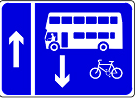
  3. Question 3Road sign

    At the entrance to a one-way system you see this sign, and the right-hand gap looks shorter. Which side must you pass?

    • AOn either side because the system is one-way
    • BThe sign applies to cyclists only at this entrance
    • CTo the left of the signCorrect answer
    • DThe sign marks the road edge, so the shorter gap is allowed
    Show the answerHide the answer

    Correct answer: C

    Under Regulation 4 of the Road Traffic (Traffic Signs) Regulations 2025, the keep left sign requires traffic to pass to the left of the sign. A shorter gap on the other side does not change that. The sign is not limited to cyclists and it does not mark the edge of the road.

    Citation

    Source: Road Traffic (Traffic Signs) Regulations 2025 (S.I. No. 433 of 2025), Regulation 4(1)(a); Schedule 1, Part 1, checked on 2026-09-15.

  4. Question 4

    The word LOADING is painted in white on the roadway between two end lines. What does that marking show?

    • AA bus stop
    • BA lay-by for any vehicle
    • CA taxi rank
    • DA loading bayCorrect answer
    Show the answerHide the answer

    Correct answer: D

    Regulation 64 of the Road Traffic (Traffic Signs) Regulations 2025 provides that the loading bay marking consists of the word LOADING in white, with two end lines. It shows where a loading bay is. It is not a bus stop, not a lay-by for any vehicle, and not a taxi stand.

    Citation

    Source: Road Traffic (Traffic Signs) Regulations 2025 (S.I. No. 433 of 2025), Regulation 64(1), (2), checked on 2026-09-15.

  5. Question 5Road sign

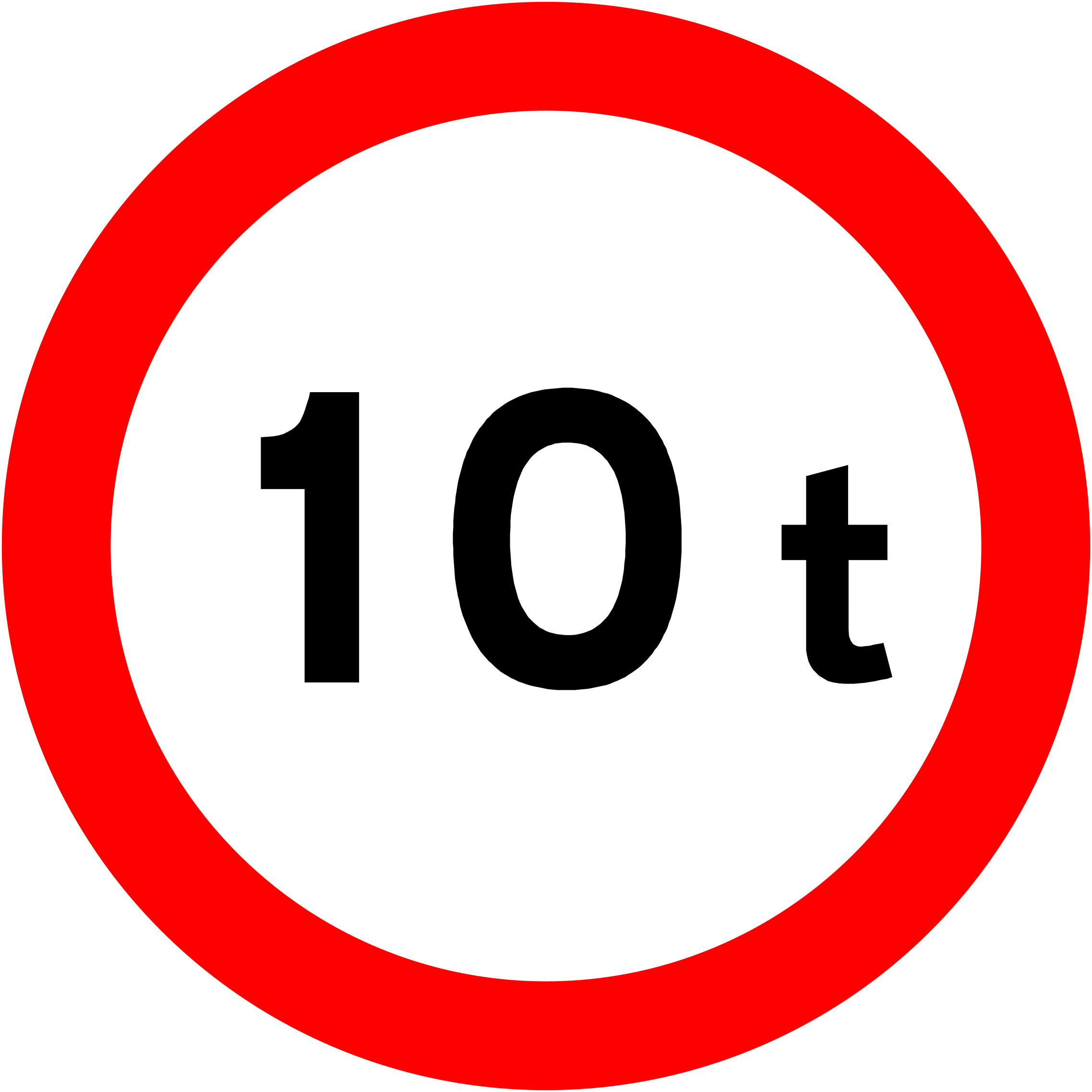
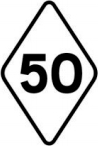
    Which meaning does this sign carry?

    • AA speed limit that applies to tramsCorrect answer
    • BTrams must yield to other trams or to traffic on the road ahead
    • CTrams must stop and not go on until it is safe
    • DStop, and stay stopped while the disc is shown
    Show the answerHide the answer

    Correct answer: A

    You are looking at the speed limit sign for light rail vehicles. Regulation 87 of the Road Traffic (Traffic Signs) Regulations 2025 describes a white diamond with a black border and figures, showing a speed limit that applies to a light rail vehicle, in other words a tram.

    Citation

    Source: Road Traffic (Traffic Signs) Regulations 2025 (S.I. No. 433 of 2025), Regulation 87(1); Schedule 7, Part 2, checked on 2026-09-16.

  6. Question 6

    A car learner is caught driving without the qualified person required beside them. Which penalty points apply?

    • A2 points on a fixed charge and 4 on convictionCorrect answer
    • B3 points on a fixed charge and 5 on conviction
    • C1 point on a fixed charge and 2 on conviction
    • D5 points on a fixed charge and 7 on conviction
    Show the answerHide the answer

    Correct answer: A

    Section 10(d) of the Road Traffic Act 2014 sets the points for driving unaccompanied in breach of a learner permit condition at 2 on a fixed charge and 4 on conviction.

    Citation

    Source: Road Traffic Act 2014 (No. 3 of 2014), Section 10(d), substituting Road Traffic Act 2002, Schedule 1, Part 5, references 1 and 2 (learner permit offences), checked on 2026-09-15.

  7. Question 7

    You want to move your vehicle a short distance in a public place, but no insurance policy is in force. What applies?

    • AInsurance is needed only when travelling more than 1 km
    • BInsurance is unnecessary if the vehicle is taxed
    • CAn approved insurance policy is required for any use in a public placeCorrect answer
    • DInsurance is required only when using a public road
    Show the answerHide the answer

    Correct answer: C

    Section 56(1) of the Road Traffic Act 1961 requires an approved policy of insurance whenever a vehicle is used in a public place, regardless of the distance travelled.

    Citation

    Source: Road Traffic Act 1961 (No. 24 of 1961), Section 56(1), checked on 2026-09-15.

  8. Question 8

    You are waiting to turn left across a cycle track. A flashing amber left arrow comes on, and a cyclist is approaching on the track. What must you do?

    • ATurn only after yielding to the cyclist on the cycle trackCorrect answer
    • BTurn at once, because the arrow gives you priority over the cycle track
    • CSound the horn to warn the cyclist and turn
    • DYield to pedestrians only, not to cyclists
    Show the answerHide the answer

    Correct answer: A

    A flashing amber arrow lets you go in that direction only after yielding to every vehicle using an adjacent cycle track and approaching the junction, cyclists included. Article 30(3)(c) of the Road Traffic (Traffic and Parking) Regulations 1997 does not give the arrow priority over the track or limit the yield to pedestrians.

    Citation

    Source: Road Traffic (Traffic and Parking) Regulations 1997 (S.I. No. 182 of 1997), Article 30(3)(c), as substituted by S.I. No. 473 of 2025, reg. 2(g), checked on 2026-09-15.

  9. Question 9

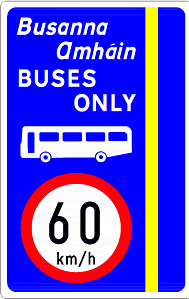
    Find the sign that marks a contra-flow bus lane.

    • ASign A
    • BSign B
    • CSign C
    • DSign DCorrect answer
    Show the answerHide the answer

    Correct answer: D

    Sign D is the contra-flow bus lane sign. Under Regulation 10(1) of the Road Traffic (Traffic Signs) Regulations 2025, together with the bus lane road marking, it indicates a contra-flow bus lane, where buses travel against the flow of the traffic beside them.

    Citation

    Source: Road Traffic (Traffic Signs) Regulations 2025 (S.I. No. 433 of 2025), Regulation 10(1); Schedule 1, Part 4, checked on 2026-09-16.

  10. Question 10

    What does a disabled persons' parking bay marking show?

    • AA loading bay
    • BA recharging bay
    • CAn advisory space unless an upright sign is also present
    • DA disabled persons' parking bayCorrect answer
    Show the answerHide the answer

    Correct answer: D

    Regulation 67 of the Road Traffic (Traffic Signs) Regulations 2025 provides that this marking indicates a disabled persons' parking bay. It is not a loading bay or a recharging bay, and the marking itself is what shows the bay.

    Citation

    Source: Road Traffic (Traffic Signs) Regulations 2025 (S.I. No. 433 of 2025), Regulation 67(1), checked on 2026-09-15.

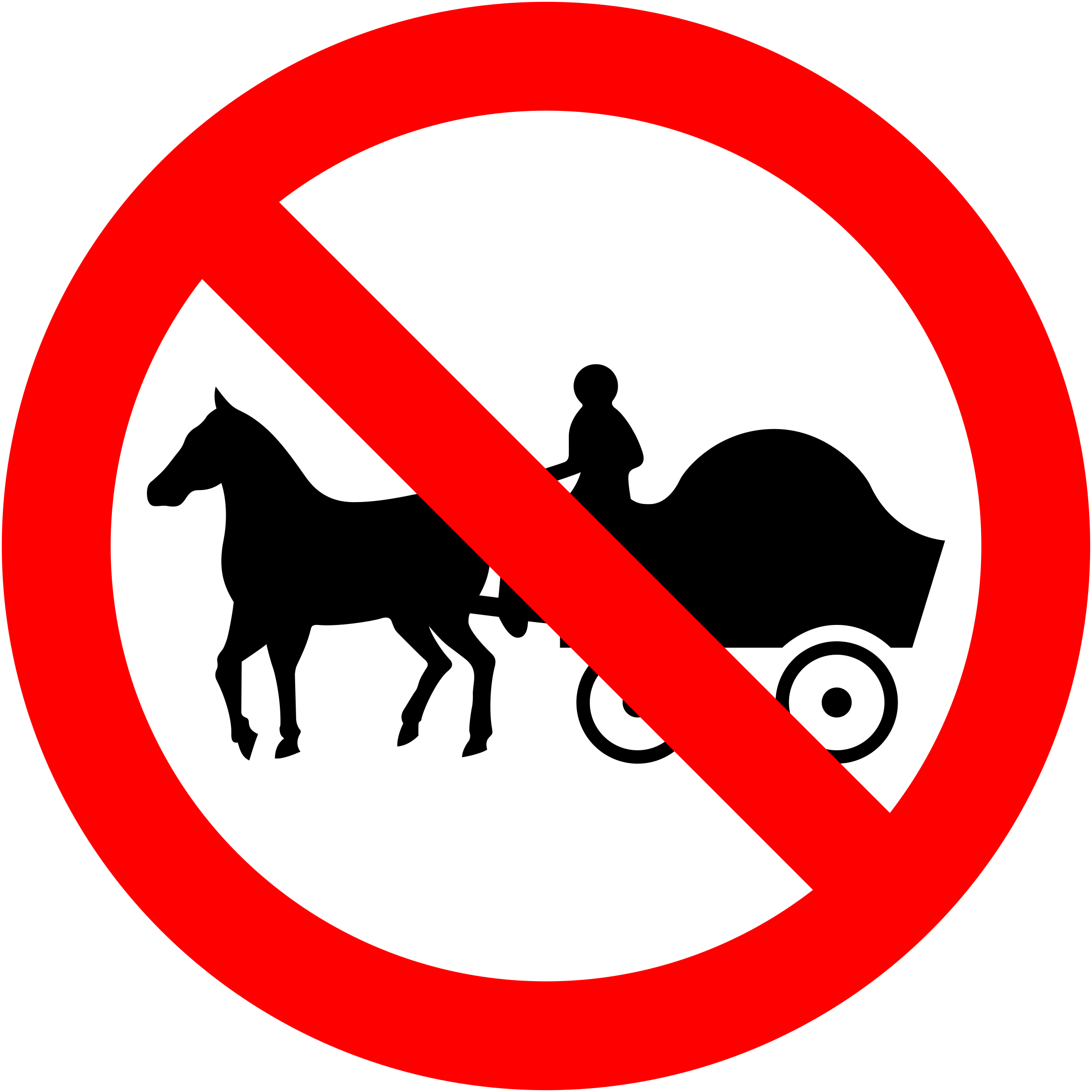
  11. Question 11Road sign

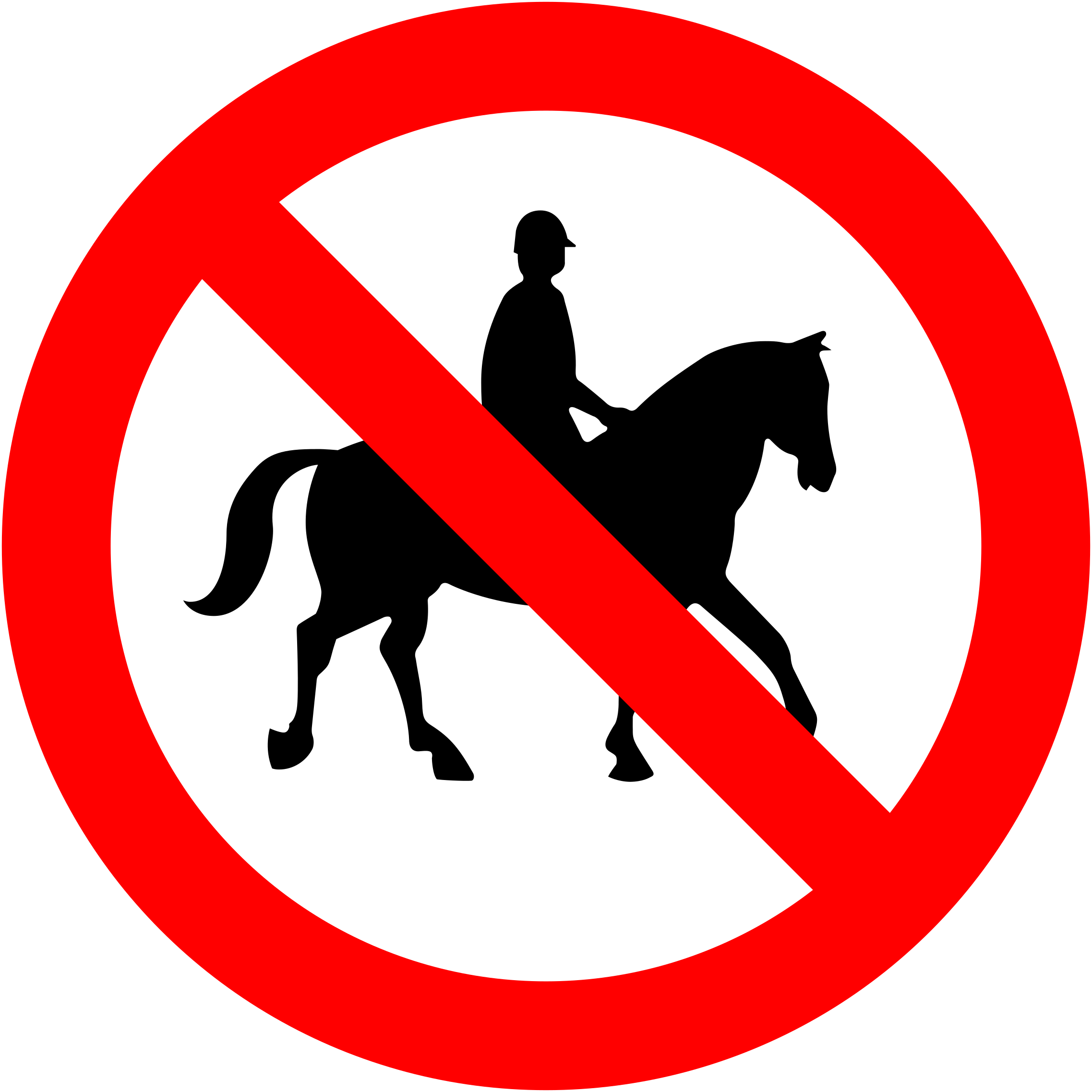
    A pony and trap is on a local road where this sign stands. What applies?

    • AThe sign bans horse riding, not a trap
    • BThe sign bans farm tractors
    • CThe person driving it must not go past the signCorrect answer
    • DThe sign applies only at night
    Show the answerHide the answer

    Correct answer: C

    Regulation 19 of the Road Traffic (Traffic Signs) Regulations 2025 provides that a person driving or in charge of an animal-drawn vehicle must not go past the sign. A pony and trap is such a vehicle. The sign does not ban horse riding as such, it does not ban farm tractors, and it is not limited to night.

    Citation

    Source: Road Traffic (Traffic Signs) Regulations 2025 (S.I. No. 433 of 2025), Regulation 19(1), checked on 2026-09-15.

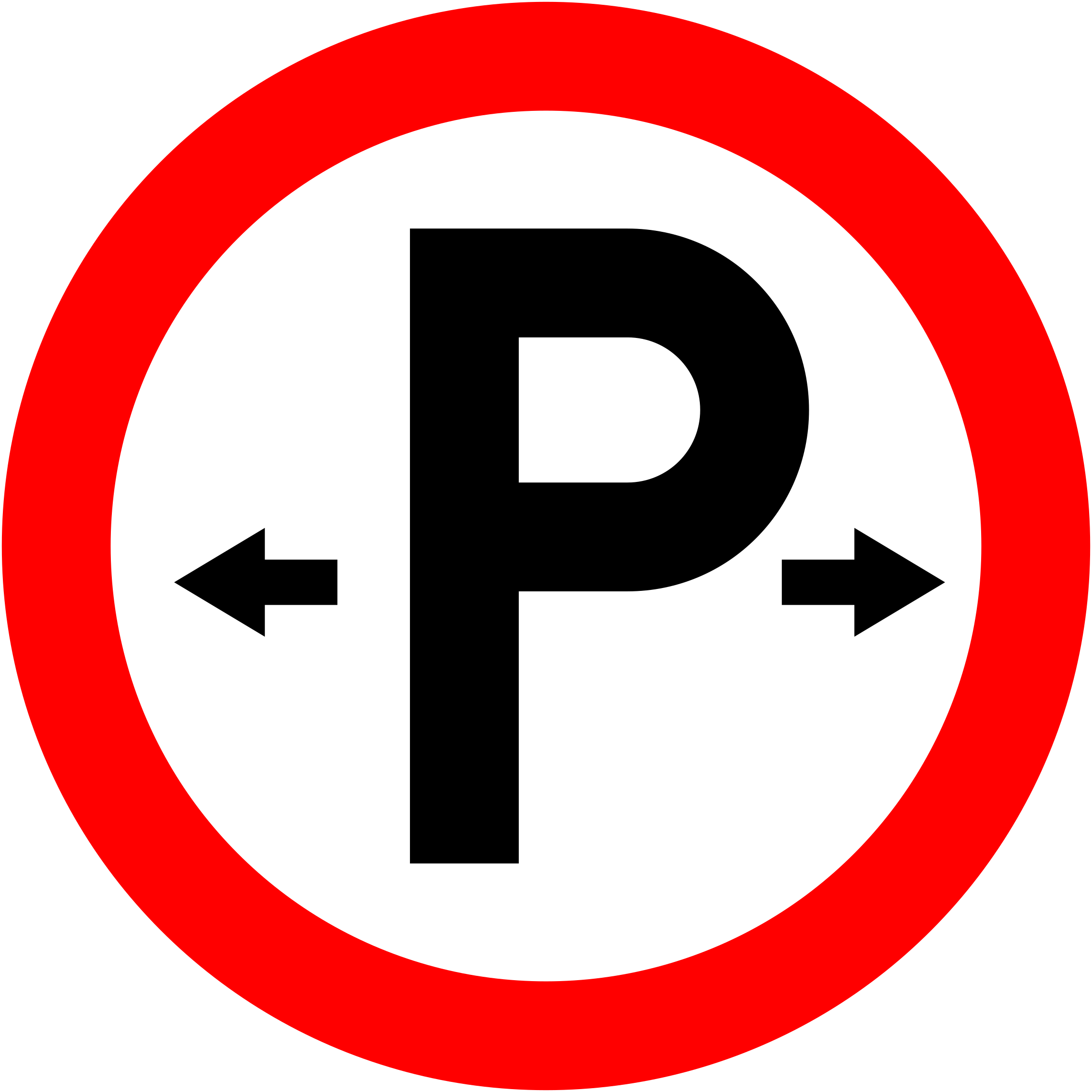
  12. Question 12Road sign

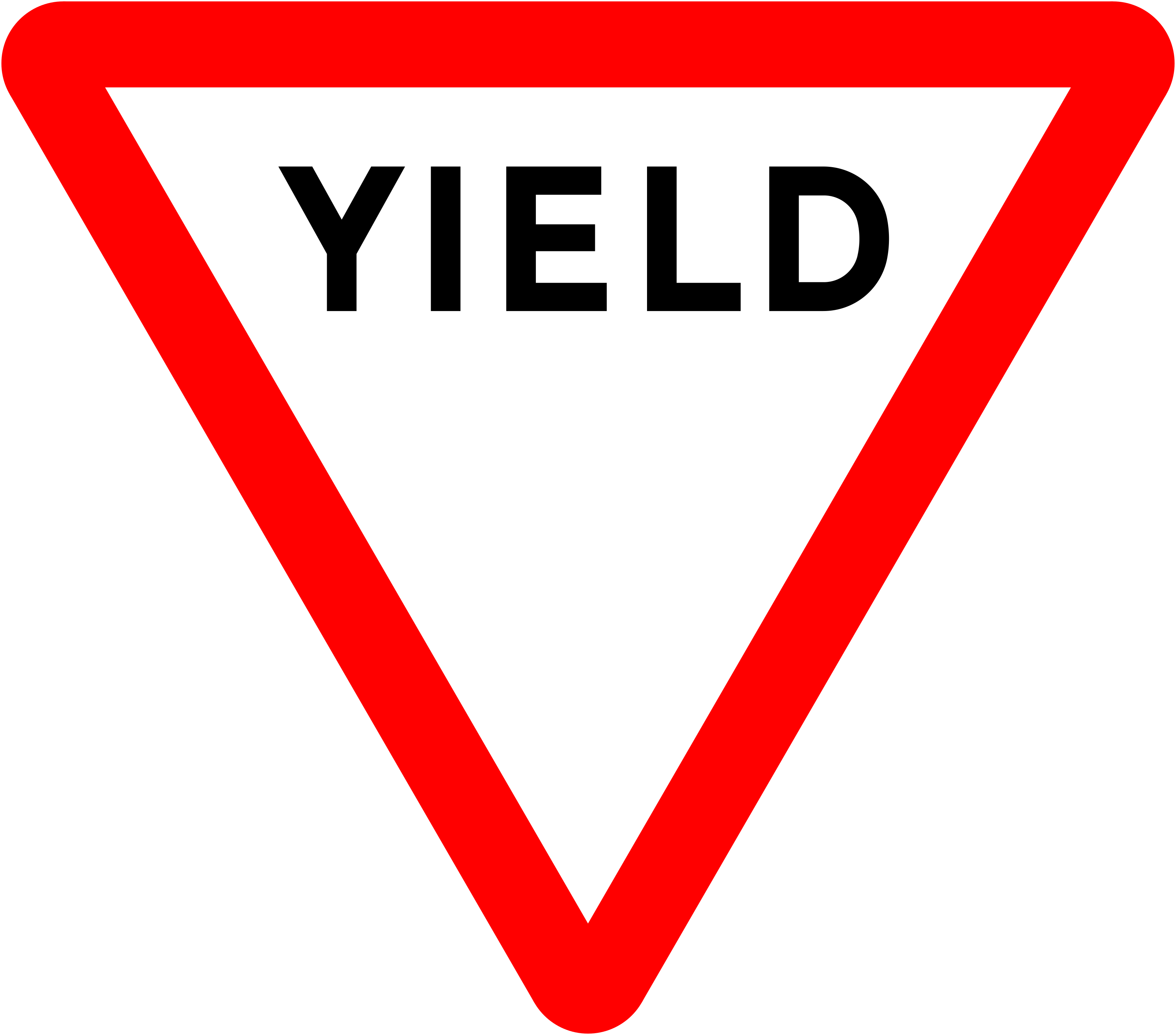
    You pull in at the kerb on a main street and then spot this sign. What does this sign mean?

    • AParking is permitted hereCorrect answer
    • BA bus lane running against the flow of traffic
    • CThis stretch of road is a clearway
    • DVehicles must not be parked here
    Show the answerHide the answer

    Correct answer: A

    This is the parking permitted sign. It is a restrictive sign in Part 2 of Schedule 2 to the Road Traffic (Traffic Signs) Regulations 2025. It marks where parking is permitted, and under Regulation 22(3) a plate can show the period or the kind of vehicle it covers.

    Citation

    Source: Road Traffic (Traffic Signs) Regulations 2025 (S.I. No. 433 of 2025), Regulation 22(1), (3); Schedule 2, Part 2, checked on 2026-09-16.

  13. Question 13

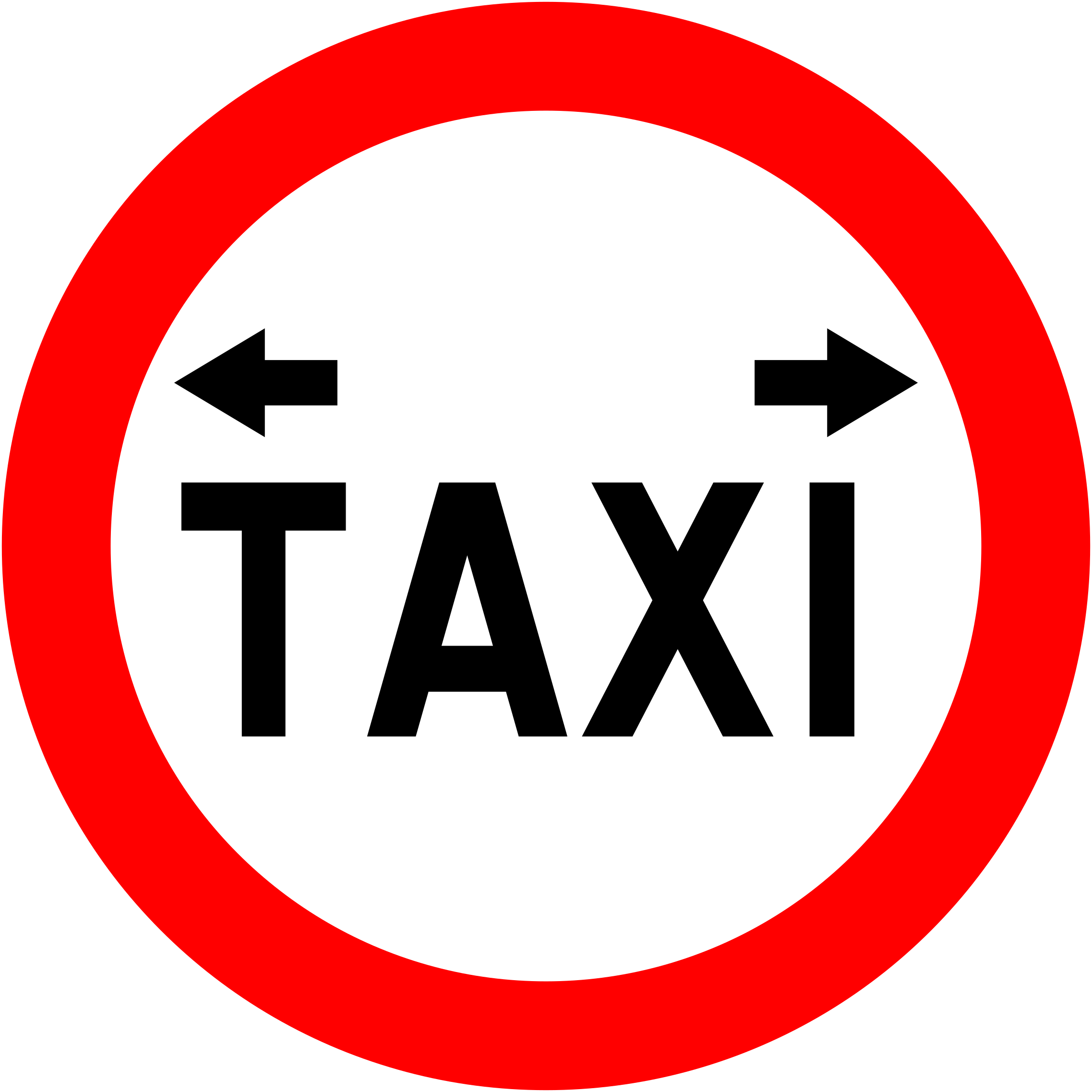
    Find the sign that marks a stand for taxis.

    • ASign A
    • BSign BCorrect answer
    • CSign C
    • DSign D
    Show the answerHide the answer

    Correct answer: B

    Sign B is the taxi stand sign. It is a restrictive sign in Part 2 of Schedule 2 to the Road Traffic (Traffic Signs) Regulations 2025, made under Regulation 22, and it marks a stand kept for taxis.

    Citation

    Source: Road Traffic (Traffic Signs) Regulations 2025 (S.I. No. 433 of 2025), Regulation 22(1); Schedule 2, Part 2, checked on 2026-09-16.

  14. Question 14

    You are turning into a side road and a pedestrian has already started to cross that road. What must you do?

    • AContinue because you are turning from the main road
    • BYield and let the pedestrian finish crossingCorrect answer
    • CContinue because your indicator gives you priority
    • DStop only if the pedestrian is in your lane
    Show the answerHide the answer

    Correct answer: B

    The junction right-of-way rule in article 8 requires you to yield to a pedestrian who has already started crossing at the junction.

    Citation

    Source: Road Traffic (Traffic and Parking) Regulations 1997 (S.I. No. 182 of 1997), Article 8(3), as substituted by S.I. No. 473 of 2025, reg. 2(b)(i), checked on 2026-09-15.

  15. Question 15

    A driver is found not wearing a seat belt. Which penalty point values apply?

    • A2 points on a fixed charge and 4 on conviction
    • B1 point on a fixed charge and 3 on conviction
    • CNo points on a fixed charge and no points on conviction
    • D3 points on a fixed charge and 5 on convictionCorrect answer
    Show the answerHide the answer

    Correct answer: D

    Section 10(f) of the Road Traffic Act 2014 sets the safety belt offence at 3 points when the fixed charge is paid and 5 points following conviction.

    Citation

    Source: Road Traffic Act 2014 (No. 3 of 2014), Section 10(f), setting the points for Road Traffic Act 2002, Schedule 1, Part 7, references 1 to 6 (safety belts and child restraints), checked on 2026-09-15.

  16. Question 16

    A continuous white line runs along a lane with the words LÁNA BUS painted in white. What is that?

    • AThe bus lane markingCorrect answer
    • BA marking that means taxis only
    • CAn advisory line with no legal meaning
    • DA marking that, by the words alone, makes the lane a bus lane
    Show the answerHide the answer

    Correct answer: A

    Regulation 75 of the Road Traffic (Traffic Signs) Regulations 2025 describes the bus lane marking as a continuous white line with the words LÁNA BUS in white. That marking, with the bus lane sign, indicates a bus lane. The words alone do not suffice, it is not advisory, and it does not mean taxis only.

    Citation

    Source: Road Traffic (Traffic Signs) Regulations 2025 (S.I. No. 433 of 2025), Regulation 75(1), (2), checked on 2026-09-15.

  17. Question 17

    At 80 km/h, how do the dry and wet total stopping distances compare in RSA guidance?

    • A36 metres dry and 52 metres wet
    • B52 metres dry and 65 metres wet
    • C70 metres dry and 81 metres wet
    • D52 metres dry and 81 metres wetCorrect answer
    Show the answerHide the answer

    Correct answer: D

    RSA guidance in the Rules of the Road gives a total of 52 metres in the dry and 81 metres in the wet at 80 km/h.

    Citation

    Source: Rules of the Road, Road Safety Authority, Revision No. 9, May 2026 (guidance, not law), Stopping distances in wet conditions, Table 6, PDF page 126, checked on 2026-09-15.

  18. Question 18Road sign

    What is this sign for?

    • ATrams must yield to other trams or to traffic on the road ahead
    • BA speed limit that applies to trams
    • CTrams must stop and not go on until it is safeCorrect answer
    • DThe end of a shared zone
    Show the answerHide the answer

    Correct answer: C

    This is the light rail vehicles stop sign. Regulation 88 of the Road Traffic (Traffic Signs) Regulations 2025 provides that it tells a light rail vehicle, a tram, to stop and not go on until it is safe to do so.

    Citation

    Source: Road Traffic (Traffic Signs) Regulations 2025 (S.I. No. 433 of 2025), Regulation 88(1), (2); Schedule 7, Part 3, checked on 2026-09-16.

  19. Question 19

    You are approaching a bend and can see only a short clear stretch ahead. How must you choose your speed?

    • AUse a speed that lets you stop within the clear distance you can seeCorrect answer
    • BKeep exactly to the posted limit even when the visible clear distance is shorter
    • CMatch the speed of the vehicle behind you
    • DMaintain one fixed speed until the bend ends
    Show the answerHide the answer

    Correct answer: A

    Article 7 of the Road Traffic (Traffic and Parking) Regulations 1997 requires a speed that allows you to halt within the distance you can see to be clear. A posted limit remains a maximum, not a target.

    Citation

    Source: Road Traffic (Traffic and Parking) Regulations 1997 (S.I. No. 182 of 1997), Art. 7, checked on 2026-09-15.

  20. Question 20

    A vehicle owner lends a car to someone who has no licence or permit covering it. Who commits an offence?

    • AOnly the person who drives the car
    • BThe owner only if a collision occurs
    • CThe owner only if travelling in the car
    • DThe owner as well as the unlicensed driverCorrect answer
    Show the answerHide the answer

    Correct answer: D

    Section 35A of the Road Traffic Act 1961, inserted by section 5 of the Road Traffic (Amendment) Act 2018, makes the owner liable for allowing an unlicensed person to drive.

    Citation

    Source: Road Traffic (Amendment) Act 2018 (No. 18 of 2018), Section 5(a), inserting section 35A of the Road Traffic Act 1961, checked on 2026-09-15.