Bus theory test

Bus Theory Test (Category D): Free Question Practice

Work through the numbered sets, drill a topic, then sit a full mock.
Start set 1Take a full mock test14 numbered sets · 6 topics · free

These practice sets prepare the bus theory test in Ireland (D), which asks 100 questions in 120 minutes and takes 74 correct to pass. Each set gives the answer, the reason and the rule behind it as you go. Source: Citizens Information, page edited 6 May 2026, checked on 15 September 2026.

Step two

Practise by topic

Go deeper on one study area at a time, then read the lesson for anything you get wrong.

Step three

Then sit the real thing

A full mock in the real format of the Bus Theory Test: 100 questions, 120 minutes, 74 correct to pass.

Start the mock test
After the real test

What the test tells you about weak areas

The score report sent after the test

An emailed score report shows the category areas answered correctly or incorrectly

Source: Prometric Ireland Ltd (Driver Theory Test Service), Driver Theory Test FAQs, dated 2026-08-14, checked on 2026-09-15

Written feedback after a fail

Candidates who fail are given general topic areas of weakness in writing

Source: Prometric Ireland Ltd (Driver Theory Test Service), Policy and customer charter, dated 2025-06-13, checked on 2026-09-15

Try it now

Sample questions and answers

1 of 20
  1. Question 1

    A Garda roadside check finds you have today's records, but last month's records were left at the depot. Have you carried what the law requires?

    • ANo, because you must also carry the records for the previous 56 daysCorrect answer
    • BYes, because records may be sent on from the depot afterwards
    • CYes, because only the current day must be in the vehicle
    • DYes, because 28 days of records is enough
    Show the answerHide the answer

    Correct answer: A

    You must have with you the records for the current day and the previous 56 days. Leaving last month's records at the depot does not meet that duty, and sending them on later is not enough. This is the carrying duty in Article 36 of Regulation (EU) No 165/2014.

    Citation

    Source: Regulation (EU) No 165/2014 on tachographs in road transport, Article 36(1), (2), checked on 2026-09-15.
  2. Question 2

    At 23:00 during lighting-up hours, you drive on an unlit rural road. What does the law require of your headlamps?

    • AThey are optional below 50 km/h
    • BThey must be lit while you are drivingCorrect answer
    • CThey are needed only when another vehicle approaches
    • DThey may remain off if the side lamps are lit
    Show the answerHide the answer

    Correct answer: B

    The 1963 Lighting Regulations, article 20(1)(b), require headlamps to be lit when the vehicle is being driven during lighting-up hours.

    Citation

    Source: Road Traffic (Lighting of Vehicles) Regulations 1963 (S.I. No. 189 of 1963), Article 20(1)(b), checked on 2026-09-15.

  3. Question 3

    Who must comply with directions given by a Garda to control traffic?

    • ADrivers and pedestriansCorrect answer
    • BOnly drivers of motor cars
    • COnly drivers near a marked patrol car
    • DDrivers but not pedestrians
    Show the answerHide the answer

    Correct answer: A

    The Garda-direction rule in article 6 requires both drivers and pedestrians to comply with directions used to regulate or control traffic.

    Citation

    Source: Road Traffic (Traffic and Parking) Regulations 1997 (S.I. No. 182 of 1997), Article 6(1), (2), checked on 2026-09-15.

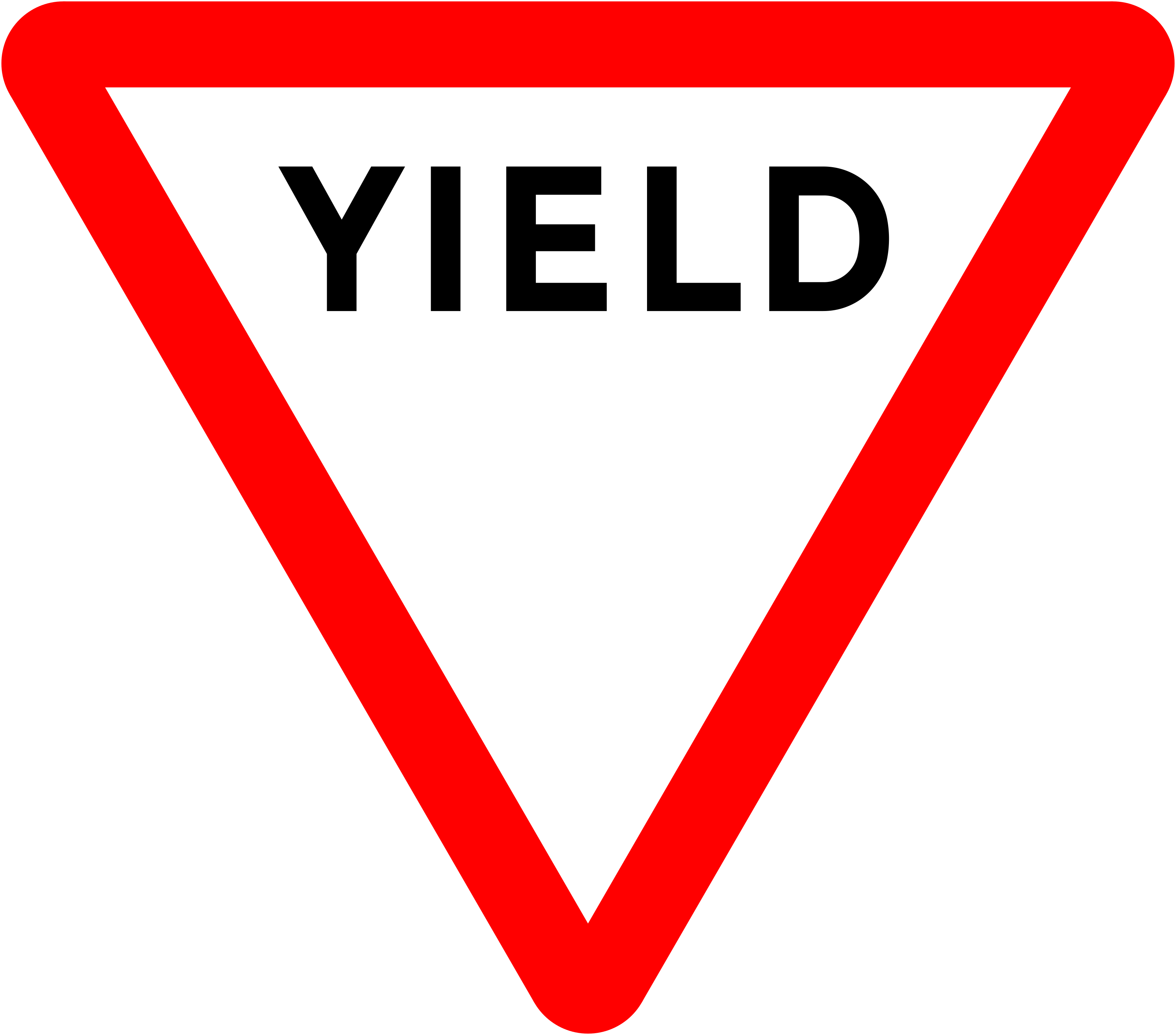
  4. Question 4Road sign

    The major road is clear and this sign faces you at the junction. Does it require a full stop?

    • AYes, it always means stop
    • BYes, except when you are turning left
    • CNo, it requires you to yield right of way, not always to stopCorrect answer
    • DYes, if you are driving a large vehicle
    Show the answerHide the answer

    Correct answer: C

    Regulation 29 of the Road Traffic (Traffic Signs) Regulations 2025 requires traffic facing the yield sign to yield right of way to traffic on the major road ahead. It does not always require a full stop, it does not give left-turn priority, and the rule is the same whatever you are driving.

    Citation

    Source: Road Traffic (Traffic Signs) Regulations 2025 (S.I. No. 433 of 2025), Regulation 29(2), (3), checked on 2026-09-15.

  5. Question 5

    A three axle articulated bus may exceed 25 tonnes but must not exceed which weight?

    • A25 tonnes, the general three axle limit for a bus
    • B28 tonnesCorrect answer
    • C26 tonnes
    • D19.5 tonnes
    Show the answerHide the answer

    Correct answer: B

    A three axle articulated bus may exceed 25 tonnes but must not exceed 28 tonnes. The figure of 25 tonnes is the point above which that vehicle may go, and 26 tonnes belongs to a different rule. The source is the construction and use regulations for vehicles.

    Citation

    Source: Road Traffic (Construction and Use of Vehicles) Regulations 2003 (S.I. No. 5 of 2003), Regulation 10(3A), as inserted by Regulation 8(c) of S.I. No. 320 of 2017, checked on 2026-09-16.

  6. Question 6

    When may daily driving run to 10 hours?

    • AWhenever your employer authorises a longer day
    • BOn any three days in a week
    • CWhenever the working day itself is longer than 9 hours
    • DNo more than twice in a weekCorrect answer
    Show the answerHide the answer

    Correct answer: D

    Daily driving may be extended to 10 hours no more than twice in a week. A third longer day is not allowed, and neither an employer nor a longer working day can raise the driving cap. This is the daily driving limit in Article 6 of Regulation (EC) No 561/2006.

    Citation

    Source: Regulation (EC) No 561/2006 on the harmonisation of certain social legislation relating to road transport, Article 6(1), checked on 2026-09-15.

  7. Question 7

    From every seat on a bus there must be unobstructed access to how many exits?

    • AAt least one exit, whatever the vehicle
    • BAt least three exits
    • CAt least two exits on the upper deck
    • DAt least two exits, or to one where only one is requiredCorrect answer
    Show the answerHide the answer

    Correct answer: D

    There must be unobstructed access from every seat to at least two exits, or to one exit where only one is required. A route to a single exit in every case, or a route to exits on one deck only, does not meet the rule.

    Citation

    Source: Road Traffic (Construction, Equipment and Use of Vehicles) Regulations 1963 (S.I. No. 190 of 1963), Article 73(1), (2) and (3), checked on 2026-09-16.

  8. Question 8

    For how long must the owner keep the bus inspection, maintenance and repair records?

    • AAt least 6 months after the journey ends
    • BAt least 1 year
    • CAt least 5 years
    • DAt least 2 yearsCorrect answer
    Show the answerHide the answer

    Correct answer: D

    The owner must keep the inspection, maintenance and repair records for at least 2 years. The records show how the vehicle has been maintained and are separate from the vehicle's test certificate. The source is the vehicle maintenance and repair regulations and the roadworthiness Act.

    Citation

    Source: Road Safety Authority (Commercial Vehicle Roadworthiness) Act 2012 (No. 16 of 2012) and Road Safety Authority (Commercial Vehicle Roadworthiness) (Vehicle Maintenance and Repair) Regulations 2013 (S.I. No. 348 of 2013), Section 30(1) and (2); Regulation 5 and Regulation 10(3), checked on 2026-09-16.

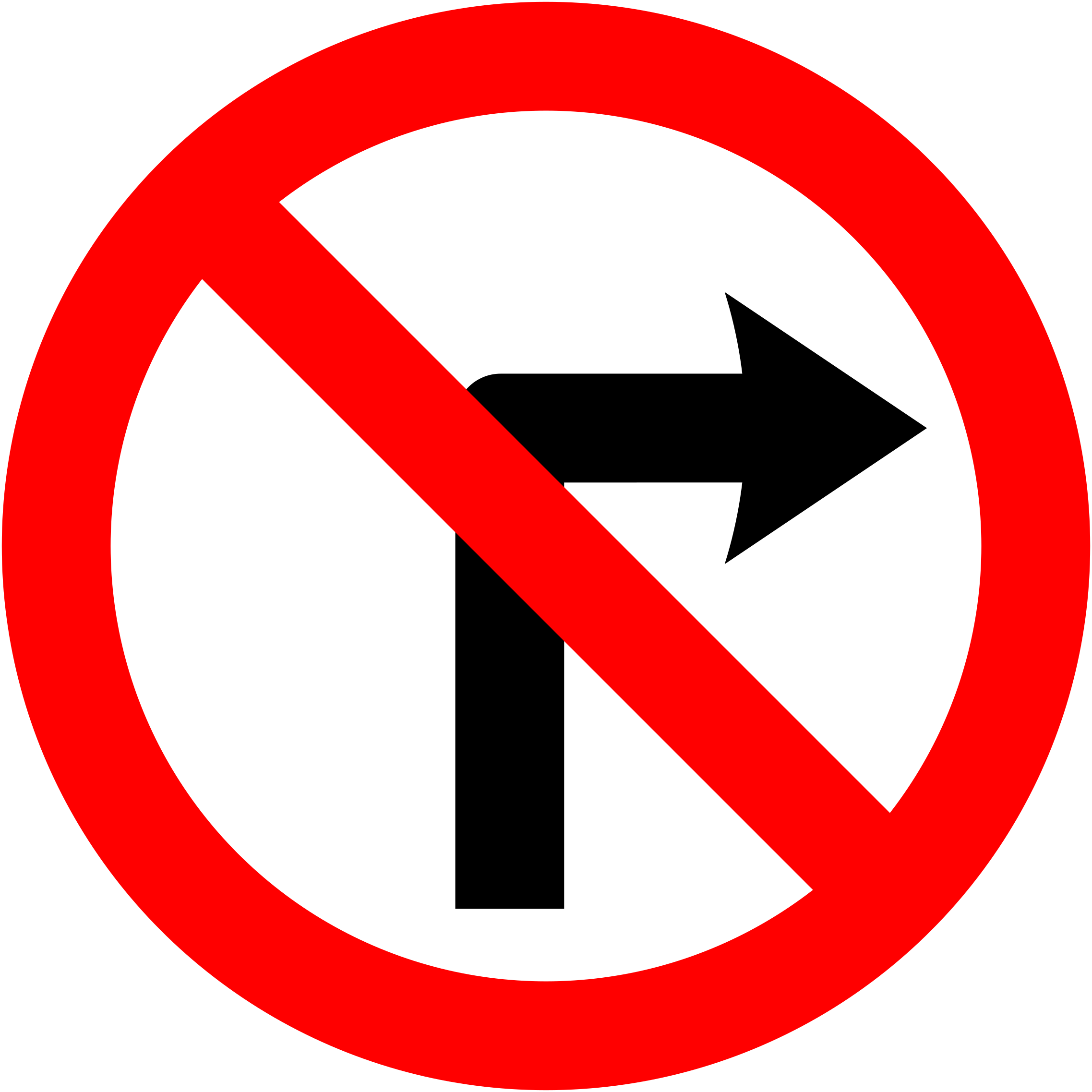
  9. Question 9Road sign

    Slowing down for a junction, you see this sign. What does this sign tell you not to do?

    • AOvertake another vehicle
    • BTurn left
    • CTurn rightCorrect answer
    • DGo straight ahead
    Show the answerHide the answer

    Correct answer: C

    Under Regulation 14(2)(a) of the Road Traffic (Traffic Signs) Regulations 2025, a prohibitory sign with an arrow means a vehicle must not go in that direction, and on the no right turn sign that is a right turn. The sign says nothing about turning left, going straight on or overtaking.

    Citation

    Source: Road Traffic (Traffic Signs) Regulations 2025 (S.I. No. 433 of 2025), Regulation 14(2)(a); Schedule 2, Part 1, checked on 2026-09-16.

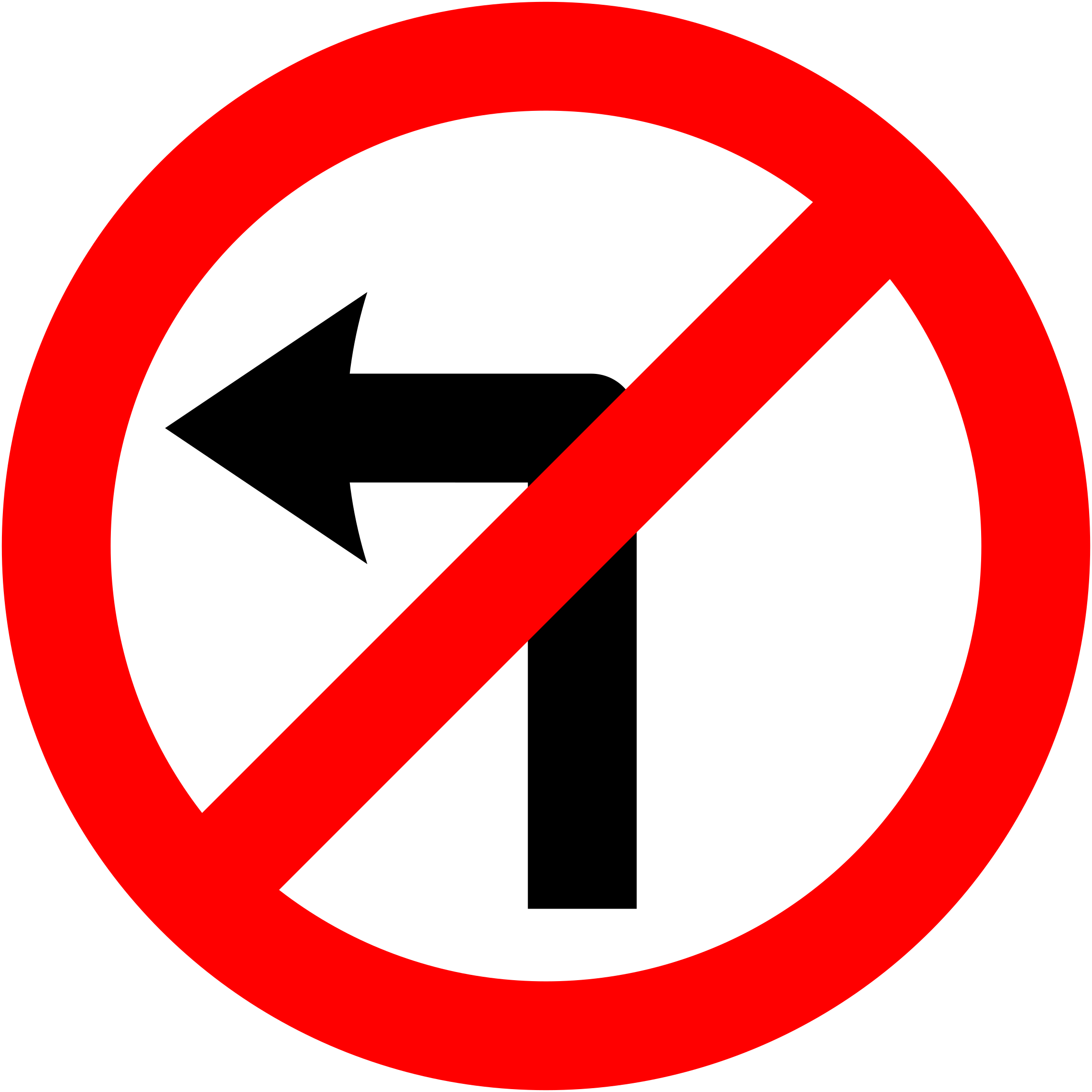
  10. Question 10Road sign

    In an industrial estate, this sign faces you at a junction. What manoeuvre must you not make past it?

    • AThe sign allows a left turn when nothing is coming
    • BThe sign allows a left turn for a quick drop off
    • CTurning left past the signCorrect answer
    • DThe sign applies to large vehicles only
    Show the answerHide the answer

    Correct answer: C

    Regulation 14 of the Road Traffic (Traffic Signs) Regulations 2025, Schedule 2, Part 1, makes the no left turn sign a prohibitory sign: you must not turn left past it. That is a different sign from no right turn. An empty road, a short drop off, or vehicle size does not lift the prohibition.

    Citation

    Source: Road Traffic (Traffic Signs) Regulations 2025 (S.I. No. 433 of 2025), Regulation 14(2)(a); Schedule 2, Part 1, checked on 2026-09-15.

  11. Question 11

    In the State, who has access to the driver CPC enforcement network?

    • AEvery employer of drivers
    • BThe Authority and members of the Garda SíochánaCorrect answer
    • CThe approved training centres
    • DAny member of the public who makes a written request
    Show the answerHide the answer

    Correct answer: B

    Access in the State to the enforcement network is limited to the Authority and members of the Garda Síochána, and the Authority exchanges CPC information with other Member States through it. This is Regulation 21A of S.I. No. 359 of 2008, as inserted by S.I. No. 380 of 2021.

    Citation

    Source: European Union (Vehicle Drivers Certificate of Professional Competence) (Amendment) Regulations 2021 (S.I. No. 380 of 2021), Regulation 2(b), inserting Regulation 21A of S.I. No. 359 of 2008, checked on 2026-09-16.

  12. Question 12

    What is the default speed limit on a town street when no different limit applies?

    • A80 km/h
    • B60 km/h
    • C50 km/hCorrect answer
    • D30 km/h
    Show the answerHide the answer

    Correct answer: C

    The built-up area speed limit under section 5 of the Road Traffic Act 2004 is 50 km/h. It applies to public roads in the area except motorways unless a special or roadworks limit applies.

    Citation

    Source: Road Traffic Act 2004 (No. 44 of 2004), s. 5, checked on 2026-09-15.

  13. Question 13

    What is the minimum age at which a person may apply for the initial driver CPC test in the passenger categories D and DE?

    • A21Correct answer
    • B18
    • C20
    • D23
    Show the answerHide the answer

    Correct answer: A

    The age below which a person may not apply for the initial CPC test is 21 for the passenger categories D, DE, D1 and D1E, while it is 18 for the goods categories. This is the table in Regulation 7(3) of S.I. No. 359 of 2008, as substituted by S.I. No. 178 of 2020.

    Citation

    Source: European Union (Vehicle Drivers Certificate of Professional Competence) (Amendment) Regulations 2020 (S.I. No. 178 of 2020), Regulation 2(d)(i), substituting the table in Regulation 7(3) of S.I. No. 359 of 2008, checked on 2026-09-16.

  14. Question 14

    A regular bus service has a route of exactly 50 kilometres. Do the EU drivers' hours rules cover the drivers on it?

    • AYes, because the route is long enough to need a tachograph and a record sheet
    • BYes, because the service is open to the public and a timetable is published
    • CNo, and the drivers have no protection at all
    • DNo, because the route does not exceed 50 kilometresCorrect answer
    Show the answerHide the answer

    Correct answer: D

    The Regulation leaves out a regular passenger service whose route does not exceed 50 kilometres, and a route of exactly 50 kilometres is within that limit. That does not leave the drivers unprotected, because the State must still protect their driving time, breaks and rest. The test is the length of the route, not who the passengers are or what equipment is on the bus. The source is the amended Regulation on social legislation relating to road transport.

    Citation

    Source: Regulation (EC) No 561/2006 on the harmonisation of certain social legislation relating to road transport, Article 3(a); Article 15, checked on 2026-09-16.

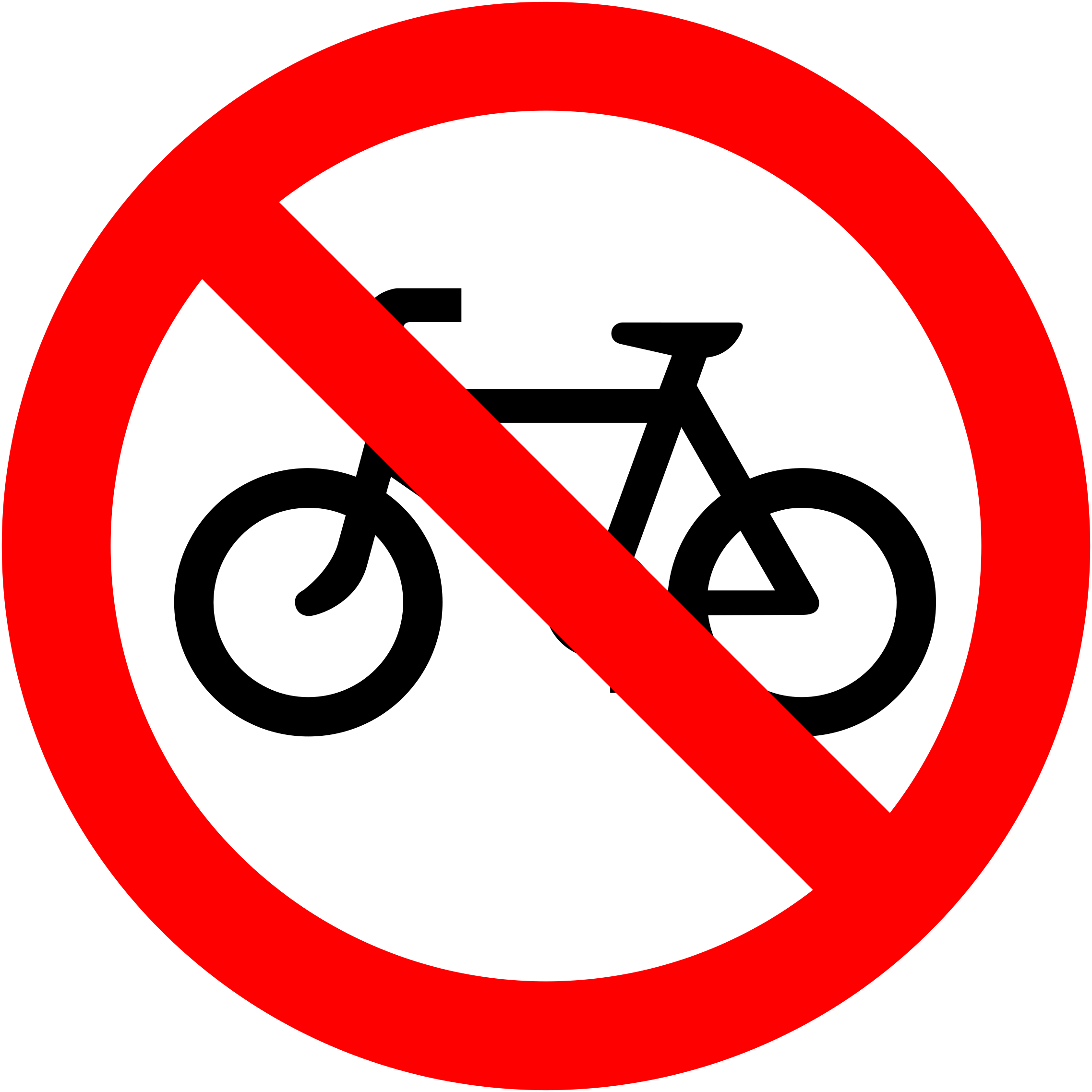
  15. Question 15Road sign

    Who must not go past this sign?

    • AMotorcyclists
    • BAll two-wheeled vehicles, including mopeds
    • CCyclists only as advice, so they may still go past
    • DPeople driving pedal cycles, e-mopeds and electric scootersCorrect answer
    Show the answerHide the answer

    Correct answer: D

    Regulation 17 of the Road Traffic (Traffic Signs) Regulations 2025 provides that a person driving a pedal cycle, e-moped or electric scooter must not go past the sign. An e-moped is a pedal assisted electric bicycle. Motorcyclists and category AM moped riders are not caught by this sign, and it is not advice.

    Citation

    Source: Road Traffic (Traffic Signs) Regulations 2025 (S.I. No. 433 of 2025), Regulation 17(1), checked on 2026-09-15.

  16. Question 16

    On a bus of category M2 or M3 with belts fitted, who must wear a safety belt or an appropriate child restraint?

    • AOnly adults, because a parent is fully responsible for a child on a coach
    • BOnly children under 3
    • COnly the passengers in the front rows
    • DEvery adult and every child aged 3 or over occupying a seatCorrect answer
    Show the answerHide the answer

    Correct answer: D

    Where belts are fitted on a bus or coach of category M2 or M3, every adult and every child aged 3 or over occupying a seat must wear a safety belt or an appropriate child restraint. The duty does not turn on who is responsible for the child or on where the passenger is seated.

    Citation

    Source: European Communities (Compulsory Use of Safety Belts and Child Restraint Systems in Motor Vehicles) Regulations 2006 (S.I. No. 240 of 2006), Regulation 9(1) and (2), checked on 2026-09-16.

  17. Question 17

    After leaving a parking place where the except buses plate applies, when may you return to that part of the roadway while the restriction applies?

    • ANot within an hour of leavingCorrect answer
    • BAfter 15 minutes
    • CAfter 45 minutes
    • DAt any time, because you drive a large public service vehicle
    Show the answerHide the answer

    Correct answer: A

    A large public service vehicle may park at the except buses plate for no more than one hour and may not return to that part of the roadway within an hour of leaving while the restriction applies. The restriction stops a bus from holding the same place all day by moving off and back again.

    Citation

    Source: Road Traffic (Traffic and Parking) Regulations 1997 (S.I. No. 182 of 1997), Article 37(3)(a), (b) and (c), checked on 2026-09-16.

  18. Question 18

    Which passenger vehicles come within the commercial vehicle roadworthiness test?

    • AOnly vehicles with more than 16 seats that are used to carry passengers on scheduled routes
    • BPassenger vehicles with more than 8 seats excluding the driver's seat and a design speed above 25 kilometres per hourCorrect answer
    • COnly vehicles used on scheduled routes
    • DAll passenger vehicles, whatever their design speed, weight or seating layout
    Show the answerHide the answer

    Correct answer: B

    The test covers passenger vehicles in categories M2 and M3 with more than 8 seats excluding the driver's seat and a design speed over 25 kilometres per hour. It is not limited to scheduled routes or to the largest buses. A vehicle whose design speed is at or below that figure is outside this test. The source is the commercial vehicle roadworthiness testing regulations.

    Citation

    Source: Commercial Vehicle Roadworthiness (Vehicle Testing) (No. 2) Regulations 2013 (S.I. No. 347 of 2013), Regulation 4(1)(a), as substituted by Regulation 4 of S.I. No. 117 of 2018, checked on 2026-09-16.

  19. Question 19

    What must you do when a light turns steady amber while you are well back from the stop line?

    • AAccelerate to cross before red appears
    • BContinue because amber means proceed carefully
    • CStop before the lineCorrect answer
    • DContinue unless another vehicle is waiting
    Show the answerHide the answer

    Correct answer: C

    The steady-amber rule in article 30 requires you to stop when you are far enough back to do so safely.

    Citation

    Source: Road Traffic (Traffic and Parking) Regulations 1997 (S.I. No. 182 of 1997), Article 30(2), as substituted by S.I. No. 473 of 2025, reg. 2(g), checked on 2026-09-15.

  20. Question 20

    The sign at a rural junction reads Géill Slí. What sign is that?

    • AA different sign used only in Irish-speaking areas
    • BThe same yield sign as one that reads Yield or Yield Right of WayCorrect answer
    • CA stop sign with an Irish legend
    • DA sign that always requires a full stop
    Show the answerHide the answer

    Correct answer: B

    Under Regulation 29 of the Road Traffic (Traffic Signs) Regulations 2025, the yield sign may show Yield, Yield Right of Way, or Géill Slí. All three legends are the same sign. The Irish legend is not a different sign and it does not turn the yield sign into a stop sign.

    Citation

    Source: Road Traffic (Traffic Signs) Regulations 2025 (S.I. No. 433 of 2025), Regulation 29(2), (3), checked on 2026-09-15.